
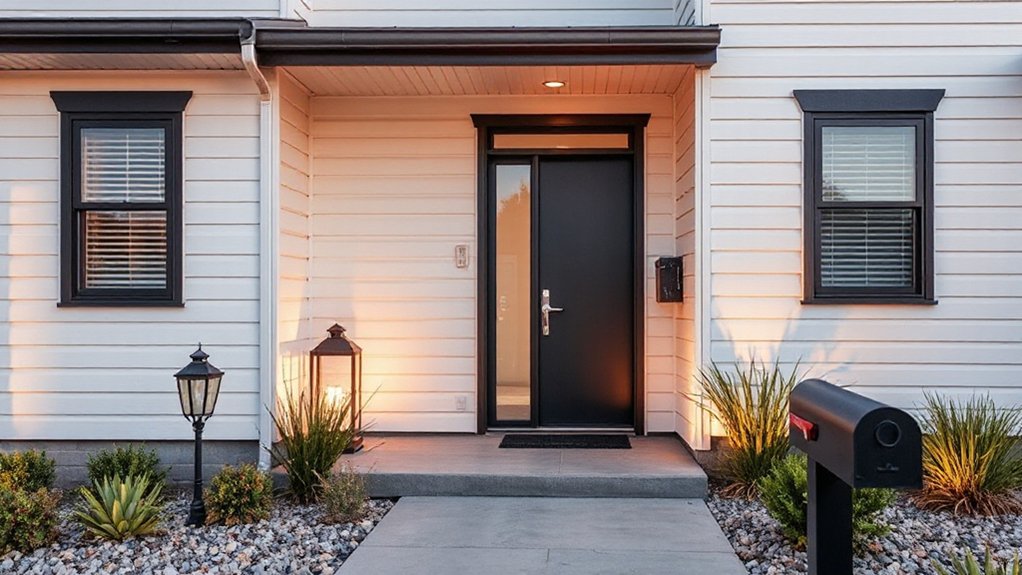

You can boost your townhouse’s curb appeal by updating architectural details, choosing a cohesive modern palette, and adding durable, low-maintenance lighting and materials. Start with clean lines, fresh paint, and streamlined hardware, then plan entryway upgrades and smart landscaping that thrives with minimal upkeep. Focus on weather-ready exteriors and a simple maintenance routine to keep the look polished year round. It’s all about subtle upgrades that make the facade feel purposeful—and you’ll spot the next step once you see the results.
Define Your Curb Appeal Goals for a Townhouse Exterior

To start, define what you want your townhouse exterior to achieve. You’ll specify measurable goals for curb appeal, durability, and maintenance. Consider visibility from the street, seasoning for weather, and ease of access for guests.
Set criteria for the garden pathways: even surfaces, slip resistance, and clear sightlines to entrances. Plan exterior signage that’s legible from a distance, aligns with your home’s style, and reinforces your brand at a glance.
Determine required lighting, height restrictions, and security concerns that affect design choices. Decide on material durability, repellents, and warranty expectations to reduce upkeep.
Prioritize a focal point, like a doorway or window grouping, to guide renovations. Establish a realistic timeline and budget, then assess tradeoffs between aesthetics and function.
Finally, document success metrics and revision triggers.
Choose a Cohesive, Modern Color Palette
Aim for proportional color balance so the main facade reads clearly while accents highlight details like trim, doors, and entryways.
Keep the palette simple and scalable, so you can evolve future updates without sacrificing cohesion.
Harmonious Hue Combinations
When selecting harmonious hue combinations, start with a cohesive base palette and build from there using a simple rule: limit color to three core tones plus two accent hues.
- Choose a main body color tied to the neighborhood vibe and your materials.
- Pick two accent colors that highlight architectural details without competing.
- Consider color psychology to evoke calm, warmth, or contrast.
- Test paint finish on small panels before full application.
- Reserve the deepest shade for trim and focal features.
For durability, select a low-sheen or satin finish to maintain modernity and ease cleaning.
Ensure the palette carries through doors, shutters, and railings.
Verify accessibility and light reflection with your painter.
Finalize with a cohesive swatch board to guide application consistency.
Proportional Color Balance
Aim for proportional color balance by distributing your three core tones so they relate to each other and the massing of the house. Choose a dominant hue for large areas, a secondary for trims and architectural features, and a tertiary for accents that highlight texture and depth.
Facilitate the values vary enough to read from street level while staying cohesive up close. Test color contrast at key points—entry doors, window frames, and soffits—to confirm legibility and visual rhythm across elevations.
Keep the palette limited to three to avoid clutter; tweak saturation rather than hue when necessary to preserve harmony as you refine details. Consider paint textures—matte uppers with satin accents—to enhance surface interest without creating busy progressions.
Finish samples on-site, observe in different light, and adjust accordingly.
Update Architectural Details With Timeless, Affordable Touches
- swap dated hardware for solid brass or matte-black finishes
- introduce vertical trim around doors or windows for subtle depth
- add a shallow cornice or trim cap to emphasize roofline
- install classic, energy-efficient storm doors with glass detailing
- repaint shutters in a timeless, complementary hue
These tweaks create cohesion and texture, guiding the eye along the façade.
Choose quality materials with clean lines, avoid novelty styling, and document each upgrade for future resale value.
Consistency wins, not complexity.
Light Up Your Façade: Safer, More Attractive Exterior Lighting
Position your lighting to cover key access points and walkways for safety, while highlighting architectural details without glare. Use a mix of wall-mounted, step, and landscape lights to create layered, practical illumination that guides you at night.
We’ll discuss placement strategies and ensuring safe, stylish illumination that enhances curb appeal.
Lighting Placement Tips
To illuminate your townhouse façade effectively, place lighting where it will deter intruders and highlight architectural features. Focus on entry points, steps, and any architectural details you want to showcase, while avoiding glare on neighbors’ windows.
Combine wall-mounted fixtures with ground path lights to guide visitors and improve safety. Balance brightness to prevent harsh shadows and guarantee even coverage around the door.
- Highlight the front door with a recessed or wall-wash fixture
- Use low-level pathway illumination to define walkways
- Install motion-activated lights at entry points
- Accent architectural features with targeted landscape lighting
- Integrate garden lighting to soften transitions and boost curb appeal
Safe, Stylish Illumination
Use warm, 2700K to 3000K LEDs to keep tones inviting yet practical. For garden pathways, install low-profile stake lights along edges and guarantee a clear sightline to entrances, reducing trip hazards.
Add a motion-activated flood at the front door for instant deterrence and convenience.
Avoid excessive glare by shielding fixtures and directing light downward. Accent architectural features with wall washers or step lights to create depth without over-lighting.
Consider outdoor furniture placement and lighting coordinates to avoid hotspots and shadows.
Integrate solar backups and timer controls for reliable, energy-efficient performance.
Refresh Doors, Trim, and Hardware for a Polished Entry
Revitalizing doors, trim, and hardware instantly elevates a townhouse entry by making the first impression cohesive and well-proportioned. You’ll focus on durable finishes, correct proportions, and easy maintenance to maximize curb appeal without overhauling the whole façade.
- Replace worn door hardware with a quality handle-set and smart lock
- Match trim accents to window surrounds for harmonious detailing
- Repaint doors in a durable, weather-resistant finish
- Add subtle contrast with brighter or darker trim colors
- Seal gaps around doors to improve insulation and appearance
Choose materials that resist weathering, clean hardware regularly, and test door operation after adjustments. Prioritize consistency in metal finishes and trim accents to create a polished, cohesive entry that greets visitors with confidence.
Improve Landscaping With Low-Maintenance, Curb-Friendly Plants
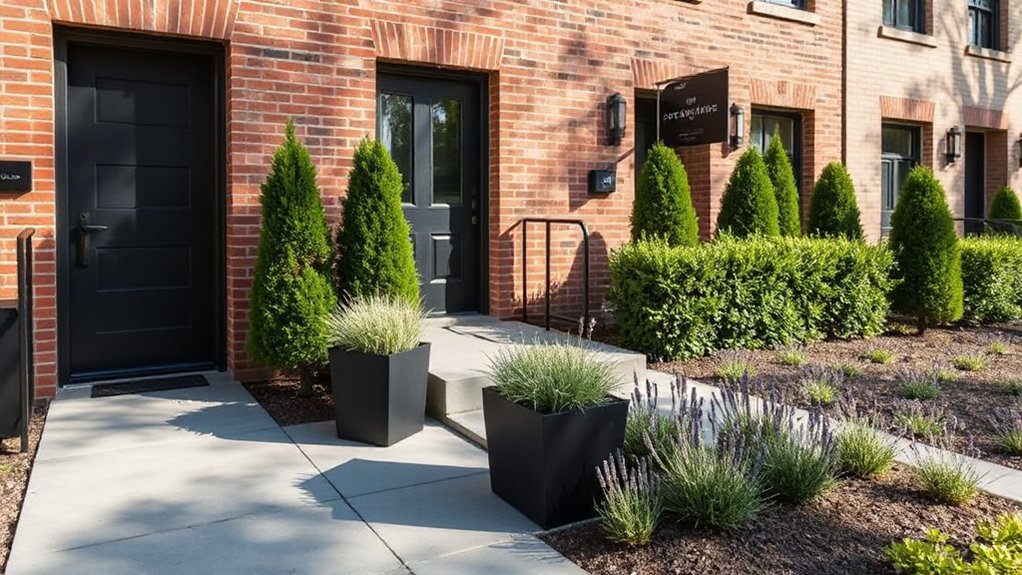
A practical approach starts with selecting curb-friendly, low-maintenance plants that thrive in your local climate and require minimal effort. You’ll choose species that stay compact, resist pests, and avoid frequent pruning.
Plan a linear, layered bed along the sidewalk edge to define the footprint without blocking sightlines. Use drought-tolerant perennial grasses, evergreen groundcovers, and a few seasonal bloom anchors for color with minimal irrigation.
Group plants by sun exposure and water needs to simplify maintenance and reduce waste. Integrate garden sculptures or a simple focal element to add personality without clutter, and place durable outdoor furniture nearby to anchor the space and encourage curb appeal.
Keep mulch thin, clean, and free of weed growth to preserve a crisp, modern look.
Choose Durable Exterior Materials That Weather Well
Choosing durable exterior materials that weather well starts with matching them to your climate and the home’s exposure. You’ll pick components that resist sun, rain, wind, and temperature swings, then align color and texture with your Townhouse’s lines. Focus on materials with proven performance and low maintenance to reduce future repairs.
- Weather resistant siding options that suit your climate
- Durable roofing choices rated for wind and hail
- Low-porosity, rot-resistant trim and fascia
- Proper sealing and flashing to prevent water intrusion
- Finish coatings that resist fading and mildew growth
Prioritize compatibility with existing structure, easy replacement parts, and contractor availability. Schedule proper installation details—drip edges, ventilation, and attic sealing—to maximize longevity and curb appeal, while avoiding overcapitalizing on ineffective trends.
Weather resistance, not novelty, drives lasting attractiveness.
Add Practical Outdoor Elements to Boost First Impressions
Adding practical outdoor elements right away signals that your townhouse is welcoming and well cared for. Start with durable, low-maintenance features that read as intentional upgrades.
Create clear entry points by aligning a garden pathway with the front door line, guiding visitors from curb to threshold without confusion. Choose materials that resist weathering, like modular pavers or stained concrete, and keep color schemes cohesive with the brick or siding.
Incorporate decorative planters at eye level to frame the doorway and balance the facade, selecting sizes that don’t overwhelm the entry. Use planters to introduce seasonal texture—evergreens for structure, flowering annuals for pop.
Guarantee edging is tight, joints are clean, and lighting highlights these elements without glare. This groundwork reinforces curb appeal without clutter.
Plan a Maintenance Routine to Preserve Curb Appeal Year After Year
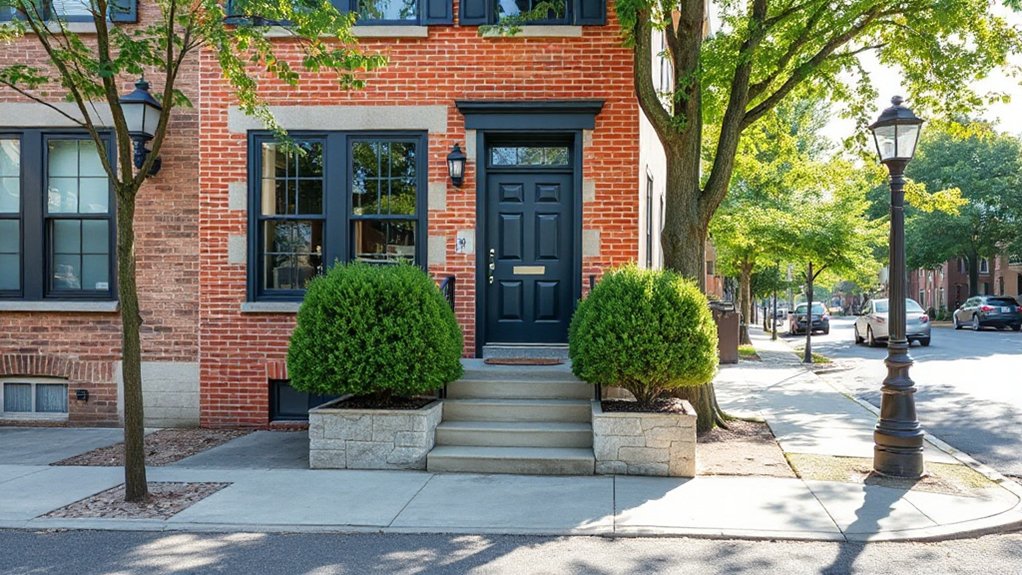
Maintaining curb appeal isn’t a one-off task—it’s a scheduled routine you’ll repeat seasonally. To keep your townhouse looking sharp, build a simple maintenance plan that targets key elements: paths, lighting, signage, and paint/woodwork.
Map tasks to weather windows and budget time blocks so nothing slips.
- Inspect and sweep garden pathways; reseal or repair cracks as needed
- Clean exterior signage and replace faded numbers or accents
- Repaint trim or refresh staining every 2–3 years
- Prune plants, mulch beds, and refresh edging for crisp lines
- Test gutters and downspouts, address leaks, and clear blockages
Document results and set reminders quarterly. Use a consistent approach to preserve the exterior’s cohesion, ensuring long-term curb appeal without major overhauls.
Frequently Asked Questions
How Long Does a Townhouse Curb Appeal Project Typically Take?
You’ll complete a townhouse curb appeal project in 2–6 weeks, depending on scope. Plan staging, permit windows, and weather. You’ll implement practical landscaping ideas and exterior lighting progressively, coordinating contractors. Expect progress checks, and adjust timelines as needed.
What Budget Ranges Are Realistic for Major Exterior Updates?
You’ll realistically budget $15k–$60k for major exterior updates, depending on scope, materials, and zoning. Avoid sticker shock by prioritizing landscape lighting and outdoor furniture, which deliver big curb-appeal boosts without overhauling structure.
Are There HOA Restrictions I Should Consider?
You should check HOA regulations and exterior restrictions before planning any changes, because violations can delay projects or incur fines. Review architectural guidelines, paint colors, and approved materials, and consult the management office for specifics and any variances you might need.
Which Permits Might Be Required for Exterior Changes?
Did you know 60% of municipalities require permits for exterior modifications? You’ll need to check permit requirements before starting, then secure approvals for exterior modifications to avoid fines and guarantee compliant, efficient renovations. Plan, document, and schedule inspections accordingly.
How Can I Assess Return on Curb Appeal Investments?
You’ll gauge ROI by tracking resale lift and buyer impressions; compare costs to estimated value increases. Prioritize landscaping enhancements and lighting improvements, measuring changes in curb appeal, speed of sale, and perceived quality for a practical, renovation-focused assessment.
Conclusion
You’ve got a clear road map to boost your townhouse’s curb appeal, so jump in with purpose. By aligning color, details, lighting, and landscaping, you’ll create a cohesive, inviting facade that lasts. Prioritize durable materials and a simple maintenance routine to protect your investment. Rhetorical device: envisioning—see your home transformed as you implement each step. Stay consistent, measure progress, and enjoy the transformed first impression it offers neighbors, buyers, and your daily living—practical beauty you can maintain.