
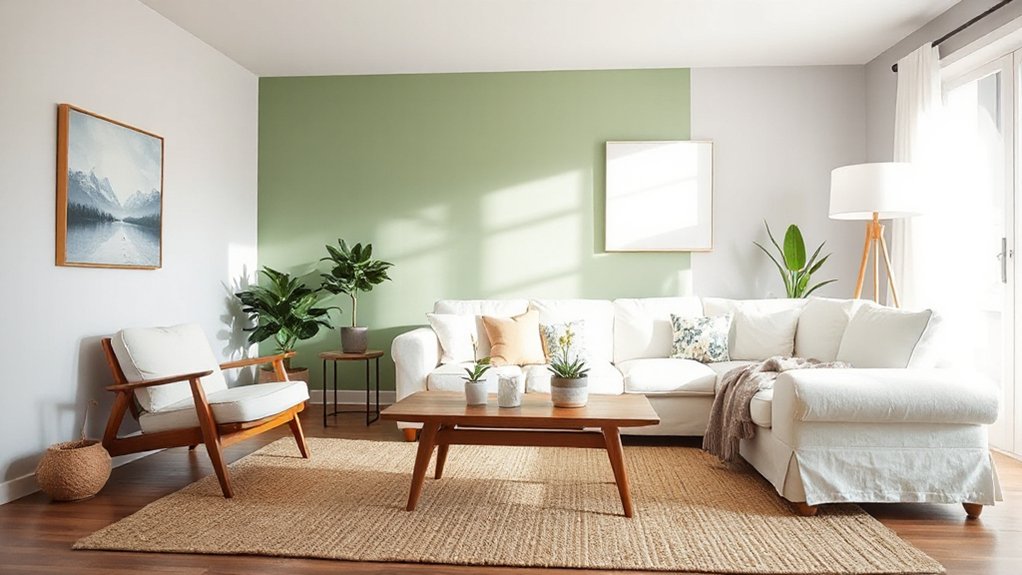

If you’re not ready to drop a ton, you can soften the room first with a few careful tweaks before big changes. Start by trimming clutter, rethinking furniture placement for better flow, and swapping in affordable textiles to shift the vibe without breaking your budget. You’ll find that small updates—lighting, cushions, and a focal piece—can feel like a fresh start, yet there’s still more to take into account before you commit to a full makeover. Let’s pin down practical, value-driven steps next.
Start With a Realistic Budget for Your Living Room Refresh
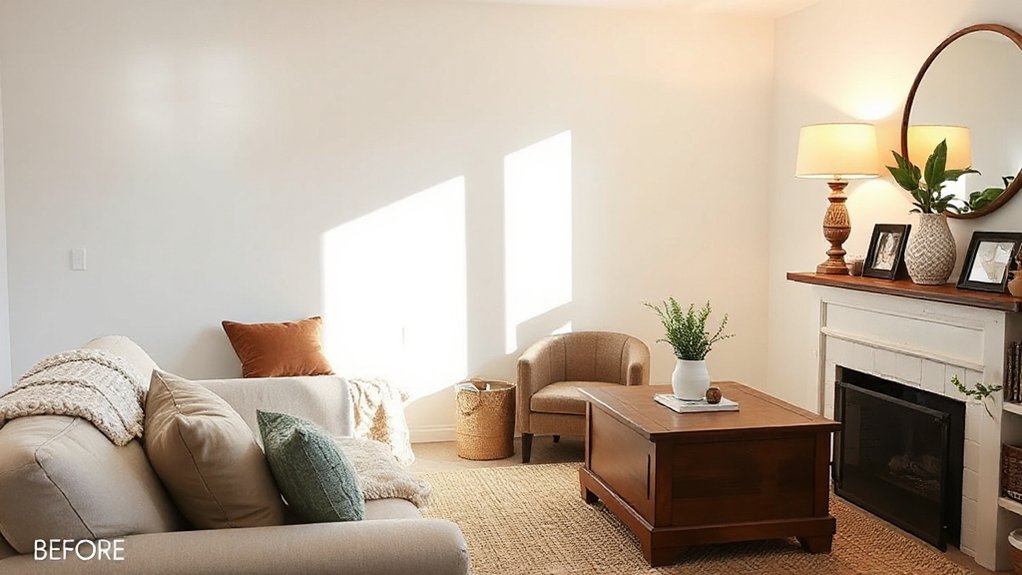
Before you pick paint colors or furniture, set a realistic budget for your living room refresh. You’ll start with Budget planning, outlining must-haves, nice-to-haves, and a ceiling you won’t exceed.
List current pieces you’ll keep and what you’ll replace, so you see the true gap. Measure the room and document doorways, outlets, and traffic flow to inform your Furniture arrangement early, preventing costly relocations later.
Prioritize functional basics—sofa support, seating for conversation, and lighting—before accents. Allocate a separate fund for delivery, taxes, and potential repairs.
Build in a 10–15% contingency for surprises. Compare prices, track every dollar, and avoid impulse buys. Revisit quarterly; adjust as needed.
A disciplined approach keeps you in control and achieves a cohesive, affordable refresh.
Refresh Textiles and Soft Furnishings for Big Impact
Now that you’ve set a realistic budget, invigorating textiles and soft furnishings can deliver a big impact without breaking the bank. You’ll shape mood fast with texture, color, and pattern, choosing pieces that wear well and last.
Focus on anchors: a bold throw, cohesive cushions, and a durable rug to ground the room. Swap in reversible or layered textiles to maximize change over time, and mix textures—linen, velvet, wool—for depth.
Pick textile patterns that echo the room’s palette to unify disparate furniture, while soft furnishings like lampshades, drapes, and poufs add personality without heavy investment. Prioritize machine-washable options for family homes.
Maintain balance by repeating a single motif across items for a polished, cohesive look.
- Bold throw and cushions
- Coordinated rug and drapes
- Textured fabrics pairings
- Reversible or washable options
Layout Tweaks That Open Up the Space
Open up the space without tearing out walls or spending a fortune by tweaking layout with purpose. You’ll start by reconnecting zones: place seating to face natural light sources and create clear sight lines to the main focal point.
Use furniture placement to define three distinct areas—conversation, reading, and a slim work or display nook—without crowding. Scale matters: choose low-profile sofas and slim coffee tables that stay under sightlines, preserving openness.
Angles matter too; angle a rug or sofa slightly to guide movement instead of forcing it. Leave at least 18 inches around every piece for walking flow.
Finally, maximize natural light by avoiding heavy drapes; sheer panels or none at all let daylight flood in, making the room feel larger.
Add Color Pops and Accessories on a Dime

Small bursts of color can transform a room without breaking the bank. Start with budget-friendly accents—think bold throw pillows, a vibrant rug, or a bright lampshade—and mix textures for depth.
Use DIY decor tricks like spray-painted frames or repurposed jars to create color pops with minimal cost and maximum impact.
Color Pop Ideas
Color pops don’t have to break the bank; start with small, high-impact accents that transform the room. You’ll shape color schemes with intentional contrast, not a wholesale redo, so every piece earns its keep. Think bold cushions, a bright throw, or a single vibrant vase to anchor the focal wall.
Wall art becomes a cost-effective hero when you mix sizes and align with your palette. Swap in a lightweight lamp with a colored shade to cast mood while you save on furniture.
Prioritize finishes that echo your accent hues for cohesion, and update accessories seasonally for freshness. Remember: thoughtful color choices amplify light, texture, and flow without overspending.
- Bold cushions and throws
- Accent vase and night-lamp shade
- Mixed-size wall art
- Coordinated accents for cohesion
Budget Accessory Tips
Now that you’ve got color pops dialed in, you can stretch those ideas into budget-friendly accessories that pull the room together without doubling your bill.
Start with artificial plants to add height and texture without watering or mess—choose matte pots and varied heights for depth. Swap out cheaply framed art for vintage finds: a small print, postcard set, or bold typography piece can anchor a wall without a big price tag.
Layer textiles like throw pillows and a cozy throw in your chosen accent color; aim for two to three patterns that repeat subtly.
Use task lighting with affordable lamps to spotlight focal corners.
Reorganize shelves with a few well-placed decor objects, keeping surfaces uncluttered for instant polish.
DIY Decor Tricks
Sprucing up on a dime comes down to smart swaps and deliberate layering. You’ll add color pops and texture with quick, affordable moves that feel intentional, not hurried. Focus on wall art and statement lighting to draw the eye and anchor the room without overspending.
- Replace generic frames with bold, gallery-style pieces you already own or find at thrift stores, keeping a cohesive color theme.
- Swap standard lampshades for patterns or solid colors that coordinate with your palette.
- Layer textiles: a bright throw, coordinating pillows, and a textured rug edge to ground the space.
- Create focal points with a single, oversized wall art piece or a trio of smaller prints for balance.
These steps deliver impact while staying budget-smart and details-driven.
Shop Smart: Where to Find Value and How to Judge Quality
Shop smart by recognizing value vs. quality tiers and setting a clear budget ceiling before you shop. I’ll show you budget-friendly upgrade tactics that maximize impact without overspending.
Plus, tips for spotting hidden costs hidden in shipping, assembly, or returns. You’ll learn concise ways to judge material, construction, and durability so every purchase earns its keep.
Value vs Quality Tiers
Value isn’t just about price—it’s about what you’re getting for what you pay. You’ll compare tiers by how long a piece lasts, how it’s built, and whether the look endures. They’re not just labels; they’re warranties, materials, and finish quality that save you future replacement costs.
When shopping, weigh Luxury branding and Material durability against cost. Ask how the item was joined, what core it uses, and what upgrades exist in the same tier. Focus on furniture that promises steadiness, easier maintenance, and reversible improvements for the room.
- Solid wood frames or high‑quality plywood core
- Reassuring seams, nails, or screws, not visible glue
- Finishes designed to resist scratches and moisture
- Replacement parts or full reversibility for upgrades
Budget-Friendly Upgrade Tactics
If you want big room updates without breaking the bank, start by prioritizing items that deliver the most impact for the least cost: a focal piece (like a sofa or rug) that anchors the space, versatile textiles, and smart storage solutions.
Look for value by evaluating construction, not just price. Choose wallpaper options with washable finishes or bold but timeless patterns to refresh walls without repainting.
When it comes to flooring alternatives, consider peel-and-stick vinyl, engineered wood, or luxury vinyl planks that mimic higher-end looks at a fraction of the cost.
Shop mid-season sales, compare warranties, and test samples in your lighting.
Prioritize durable fabrics for frequent-use zones and cleanable surfaces to extend life between upgrades.
Spotting Hidden Costs
Hidden costs sneak in when you don’t plan for every detail, so start by itemizing essentials and then add flexible buffers for surprises. Spotting Hidden Costs means you anticipate added fees, shipping, and assembly time, so you don’t derail your budget with Unexpected expenses.
Compare prices across stores, read return policies, and weigh quality vs. price to avoid early replacements. Track tax, delivery, and potential color-match tweaks before buying.
- A clear shopping map that shows each item, cost, and alternative
- Shipping and handling estimates plus in-store pickup options
- Quality checks you can perform now to prevent post-purchase regrets
- Contingency margins tied to your total budget and timeline
With discipline, you spot Hidden costs early, keeping your refresh on track and affordable.
Easy DIY Tricks to Refresh Without a Full Makeover
Want a quick refresh without gutting the room? Try simple, hands-on tweaks that deliver impact with minimal cost.
Begin with wall art: swap in a few affordable prints or create a cohesive gallery wall using mismatched frames, then group pieces at eye level for balance.
Update ceiling fixtures or swap shades to lift ambient light without heavy remodeling; choose warm bulbs for a cozy vibe.
Declutter surfaces, then replace a tired throw or cushion cover with a fresh color or texture to redefine the palette.
Rehang a mirror opposite a window to bounce natural light and enlarge the feel of the space.
Refresh textiles, add a small indoor plant, and trim cords for a cleaner, more polished look.
Frequently Asked Questions
How Can I Measure Room Lighting for Color Accuracy?
Yes, you measure room lighting by calibrating with a gray card and a color temp meter, then adjust to neutral white, using Lighting calibration and Color temperature as targets; document readings, recheck, and budget-friendly lamp swaps as needed.
What’s the Best Order to Refresh a Living Room?
First, plan your space by prioritizing functional zones, then declutter and refresh major pieces. Next, optimize a cohesive furniture arrangement, add decorative accents, and layer texture. Finally, budget-minded tweaks: swap lamps, cushions, and wall art strategically.
Can Small Spaces Benefit From Multi-Functional Furniture Tips?
Like a Transformer, your space adapts and saves. Yes, small spaces can benefit from convertible furniture and space saving solutions, you’ll gain function without clutter. You’ll pick modular pieces, dual-purpose coffee tables, and efficient storage, maximizing every square foot.
How Often Should I Repaint or Reseal Floors?
You should repaint every 5–7 years and reseal floors every 2–5 years, depending on wear. Floor maintenance matters for durability, and proper sealant boosts paint longevity; stick to low-VOC products, budget-friendly damp-mwipe prep, and touch-ups as needed.
Are Secondhand Purchases Truly a Safer Budgeting Option?
Yes, secondhand buys can dramatically stretch your budget. Thrift store finds and vintage furniture save money, but inspect for wear, plan repairs, and prioritize quality. You’ll optimize space, durability, and style without breaking the bank.
Conclusion
You’ve got the plan, now breathe life into your space without emptying your wallet. Picture sunlight stitching warm threads through your room, a fresh cushion or throw becoming a tiny lighthouse guiding the eye. Declutter, rearrange, and refresh textiles to transform mood with minimal spend. DIY touches—twine, paint, repurposed decor—add texture and character. Keep a realistic budget, shop smart, and trust the small, deliberate updates to redirect the whole room toward clarity, comfort, and confident style.