
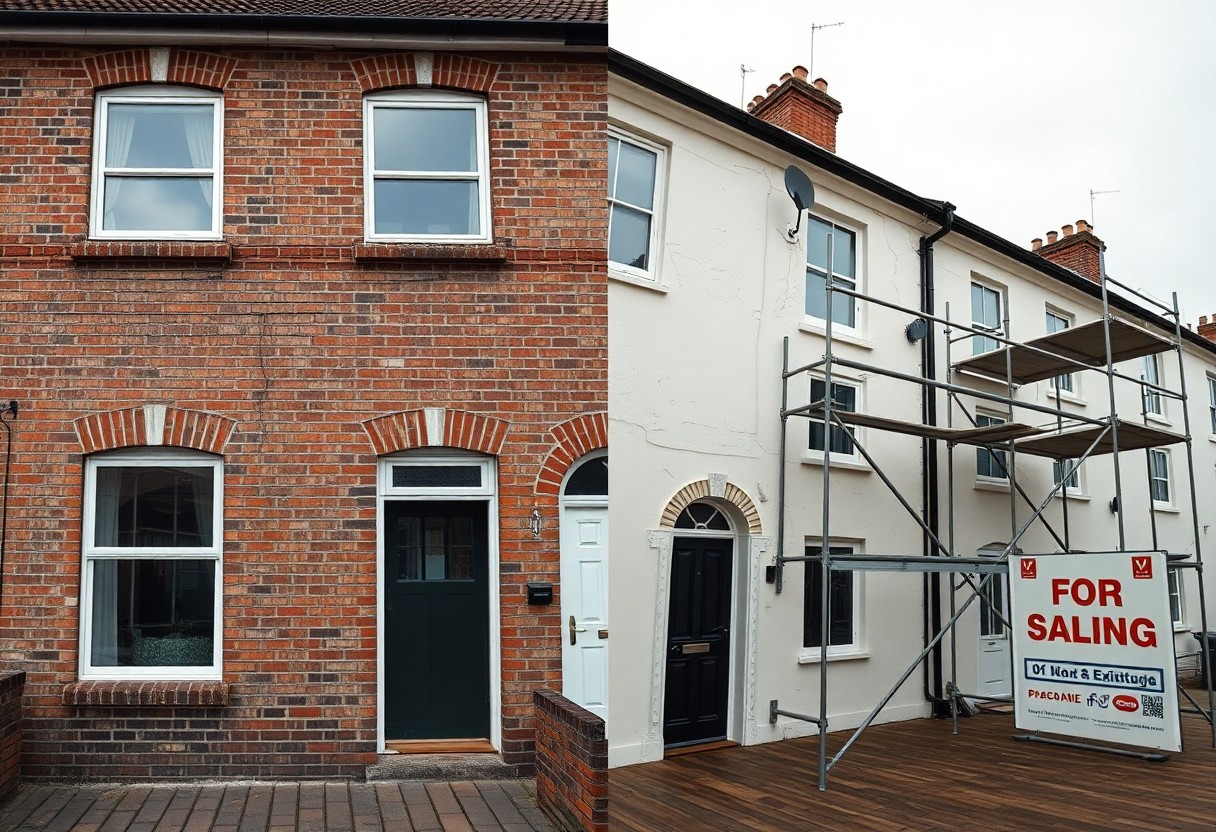

You should be aware that investing in older UK terraced properties, isn’t always straightforward. Take time to weigh structural risks like subsidence and asbestos and likely high renovation costs against strong rental demand, period charm premiums and potential steady capital growth in older UK terraced properties.
Financial Benefits of Terraced Property Investment
Terraced properties give you lower purchase prices and predictable repair cycles, enabling faster portfolio growth and improved cash returns for buy-to-let investors.
Competitive entry prices for portfolio diversification
Affordable entry prices let you spread risk by adding terraced units, so you can build a varied portfolio with less upfront capital and quicker scale.
Strong rental demand and consistent capital growth
Demand for terraced homes keeps yields steady, helping you secure consistent income and benefit from long-term capital growth.
Urban locations often show higher tenant interest, so you can expect low voids, predictable rent rises and easier re-letting, though you must budget for periodic repairs and licensing costs.
Structural Risks and Maintenance Obligations
Structural issues in older terraces can be hidden; you must budget for ongoing repair, subsidence, damp and timber decay, and meet statutory maintenance obligations to tenants and authorities.
Identifying common period property defects
Period properties often show damp, rotten joists, crumbling masonry and lead pipework, so you should commission a survey to quantify repair costs and any urgent safety hazards.
Managing shared boundaries and party wall agreements
Shared walls and gardens create legal exposure: you must secure party wall awards and agree costs before work to avoid disputes and possible injunctions.
If you plan structural work, serve notices early, get a party wall survey and schedule repairs to minimise disruption; failure can cost you thousands in compensation, court fees and forced delays, while documented agreements let you share costs and proceed legally.
Energy Efficiency and Environmental Regulations
You must weigh older terraces’ charm against poor insulation and high heat loss, which lower EPC ratings and can limit rental options; complying with rising standards often means investing in upgrades to avoid legal or financial penalties.
Challenges of meeting modern EPC standards
Meeting modern EPC standards forces you to confront expensive upgrades, tricky ventilation issues and potential planning barriers; older terraced layouts often make improvements harder and costlier than newer builds.
Cost-effective retrofitting for solid wall homes
Retrofitting solid walls can save you energy and cut bills when you use internal insulation or breathable external render, and by tapping available grants you can reduce upfront costs while achieving noticeable EPC gains.
Consider a phased retrofit: start with loft and heating controls, then trial internal wall insulation in a single room to compare comfort and cost. External wall insulation delivers the best performance but may trigger planning permission or change the façade, while internal systems are less intrusive to the exterior but cause loss of internal space and redecorating. You must use vapour-open materials and upgrade ventilation to prevent damp and cold bridges, obtain multiple quotes from experienced installers, check warranties, and apply for government or local grants to improve payback and reduce upfront burden.
Value-Add Potential and Expansion Strategies
Renovations and modest extensions can deliver substantial uplift, but you must budget for planning delays and unexpected structural costs. You can target lofts, rear extensions or HMOs to boost capital value and rental income, while keeping an eye on local restrictions and council policies.
Maximizing square footage through loft conversions
Loft conversions create extra bedrooms or study space, letting you charge higher rents and increase value; you should assess roof structure and party wall implications early to avoid costly surprises and planning refusals.
Adapting traditional layouts for the HMO market
Converting terraced houses into HMOs can deliver higher yields, but you must budget for licensing, fire-safety upgrades and room-size standards; you’ll gain income yet face increased management and compliance responsibilities.
Reconfiguring internal layouts for HMOs requires meeting minimum room sizes, creating adequate communal kitchens, and installing compliant fire detection and escape routes; you must secure an HMO licence, budget for fire-safety upgrades and ongoing inspections, and plan tenant turnover to protect rental income and long-term returns.
Essential Due Diligence for Older Assets
Carry out detailed checks on roof, chimneys and foundations so you spot structural defects, damp or asbestos early, and factor unexpected costs into your budget.
The importance of specialized RICS building surveys
Commission a RICS building survey so you get certified advice on hidden defects, necessary remedial works and the lender-compatible condition report you need.
Assessing long-term renovation ROI and contingencies
Weigh projected rental or resale gains against repair costs, disruption and tax, and always include a contingency fund for overruns.
Plan your figures using conservative estimates for rental growth, realistic timelines and a three-stage budget covering immediate repairs, medium-term upgrades and ongoing maintenance. You should stress-test returns against delays, planning refusals and hidden structural issues, and set a minimum contingency of 10-20% to protect projected ROI.
Final Words
You should weigh strong rental demand and period charm against higher maintenance, retrofit costs and planning limits; careful surveys, realistic budgets and targeted renovations protect returns while allowing capital growth.
FAQ
Q: What are the main advantages of investing in older UK terraced properties?
A: Older terraced properties often sit in established urban locations with good transport links, shops and schools, supporting steady rental demand. Character features such as original fireplaces, high ceilings and period details attract tenants and buyers and can increase sale value after sympathetic refurbishment. Lower purchase prices compared with newer builds can produce stronger initial yields, while simple rectangular layouts allow relatively straightforward extensions or conversions in many cases, subject to planning. Solid masonry construction typically performs well over time, reducing some types of routine repairs. Potential to convert to houses in multiple occupation (HMO) or to add a loft conversion can boost rental income where local rules permit.
Q: What are the common risks and drawbacks?
A: Older terraces typically carry higher maintenance and repair risk, with common problems including outdated electrics and plumbing, timber decay, rising damp and the presence of asbestos in older finishes. Poor thermal performance and low EPC ratings can create heavy retrofit costs to meet current letting standards and tenant expectations. Conservation area or listed status can restrict external changes and increase consent and compliance costs. Narrow plans, lack of off-street parking and limited private outdoor space reduce appeal for some tenant groups. Party wall issues with adjacent owners can add complexity and expense to structural work, and unexpected structural defects such as subsidence can erode projected returns if a full survey is not obtained.
Q: How should I assess whether a specific older terraced property is a good investment?
A: Carry out a full building survey and obtain written quotes for any recommended remedial or upgrading work. Check the property’s legal status for listing, conservation area controls and any restrictive covenants that affect permitted changes. Analyse the local rental market using recent comparable rents, vacancy rates and tenant profiles to test demand and achievable yields. Calculate all-in costs including purchase price, stamp duty, survey and legal fees, refurbishment, contingency (allow 10-20%), letting/management costs and ongoing maintenance. Request the EPC and estimate the cost to reach minimum letting standards. Make pre-application enquiries with planning and building control if you plan significant changes. Treat red flags such as a very low EPC with unaffordable retrofit costs, multiple neighbouring empty properties, evidence of recent major structural movement, or a restrictive heritage listing as reasons to pause or renegotiate.