


Period window restoration preserves historic character while boosting performance, or you can install double glazing for faster energy gains without changing exterior proportions. Restoration keeps original sightlines, joinery, and patina, with careful upgrades that respect era, materials, and crafts. Double glazing improves insulation, reduces noise, and can lower utility costs, though it may affect authenticity and long-term maintenance. Costs and incentives vary, as do code and preservation requirements. Both choices affect longevity and resale—and you’ll see more nuance if you keep reading.
Period Windows: What They Are and Why Homeowners Love Them

Period windows are the original design feature that defines period homes, combining historic charm with sturdy, time-tested craftsmanship. You’re drawn to their proportion, sash operation, and the way muntins divide glass into expressive panes. These elements convey historical authenticity, signaling a home’s era without saying a word.
You’ll notice timber frames, mortise-and-tenon joints, and glazing beads that reveal skilled craftsmanship preservation from skilled builders of the past. You value the timeless character that complements interior spaces and exterior façades.
You understand that period windows aren’t merely decorative; they’re an architectural language you can maintain with appropriate care. Your choice respects provenance, supports authenticity, and sustains the tangible skill of artisans who shaped these features for generations.
Restore Performance Without Sacrificing History
You can restore performance while protecting the historic fabric by applying targeted safeguards that respect original features. These safeguards help you maintain authentic materials, detailing, and proportion, so performance improvements don’t erase history.
Start by prioritizing noninvasive methods and rigorous documentation to guide decisions.
Restore Performance Safeguards
You approach safeguards as a disciplined process: define performance metrics, apply small, reversible adjustments, test outcomes, and document every step.
Prioritize actions that improve efficiency and stability without erasing historical context.
Favor upgrades that can be reversed if needed, ensuring continuity of records for future analysis.
When selecting methods, weigh craftsmanship appreciation against material durability, choosing techniques that respect original joinery and aging characteristics while enhancing long-term reliability.
Communicate trade-offs clearly to stakeholders, avoiding overreach.
In practice, maintain a rigorous audit trail, supporting repeatable results and consistent performance without compromising the window’s authentic narrative.
Preserve Historical Fabric
Preserving the historical fabric means you tailor upgrades to respect original materials, textures, and patina while boosting performance. You assess the window’s construct, seeking enhancements that don’t erase its character.
Prioritize Historical authenticity by selecting treatments that complement existing profiles rather than replace them. Favor material preservation over wholesale substitution, using compatible fasteners, paints, and finishes.
When glazing, preserve muntins and sash geometry, choosing options that minimize disturbance to the original layout. Implement airtight seals selectively, ensuring they don’t deform historic details.
Document choices and maintain provenance, so future conservators can trace decisions. Balance insulation gains with the visible evidence of age, avoiding modern aesthetics that clash with the period.
This approach protects value, legibility, and the window’s story while improving energy performance.
Double Glazing: Real Comfort Benefits Explained
Double glazing gives real comfort by dramatically reducing heat transfer and blocking outside noise. You’ll notice steadier indoor temperatures, lower drafts, and calmer rooms, especially in busy or windy settings.
The technology supports energy efficiency by limiting heat loss in winter and reducing cooling needs in summer, which translates to lower utility bills over time. It also helps preserve historical accuracy by using glazing options that respect original sightlines and patterns while delivering modern performance.
You gain improved security and reduced condensation, contributing to a healthier living space. The result is a more comfortable home without sacrificing authenticity or aesthetics.
- Energy efficiency benefits that translate to long-term savings
- Quiet interiors through effective sound reduction
- Improved thermal comfort across seasons
- Compatibility with historical fabric and appearance
- Enhanced overall building performance and value
Upfront Costs and Long-Term Value: Restoration vs. Glazing
When weighing upfront costs against long-term value, restoration and glazing each present distinct economics tied to durability, maintenance, and energy performance. You’ll compare initial expenditures, ongoing upkeep, and potential savings from reduced drafts and improved efficiency.
Restoration typically requires skilled labor and period-appropriate materials, which can elevate upfront costs but preserves authentic aesthetics and potential long-term durability if done correctly.
Glazing offers faster installation, lower immediate price and enhanced thermal performance when modern units are used, though long-term costs may rise with seal failures or more frequent replacements.
In your cost analysis, consider maintenance cycles, warranty terms, and resale value tied to aesthetic considerations.
Choose the option that minimizes total life-cycle expense while aligning with your home’s character and energy goals.
Thermal and Acoustic Realities: Which Reduces Noise Most?
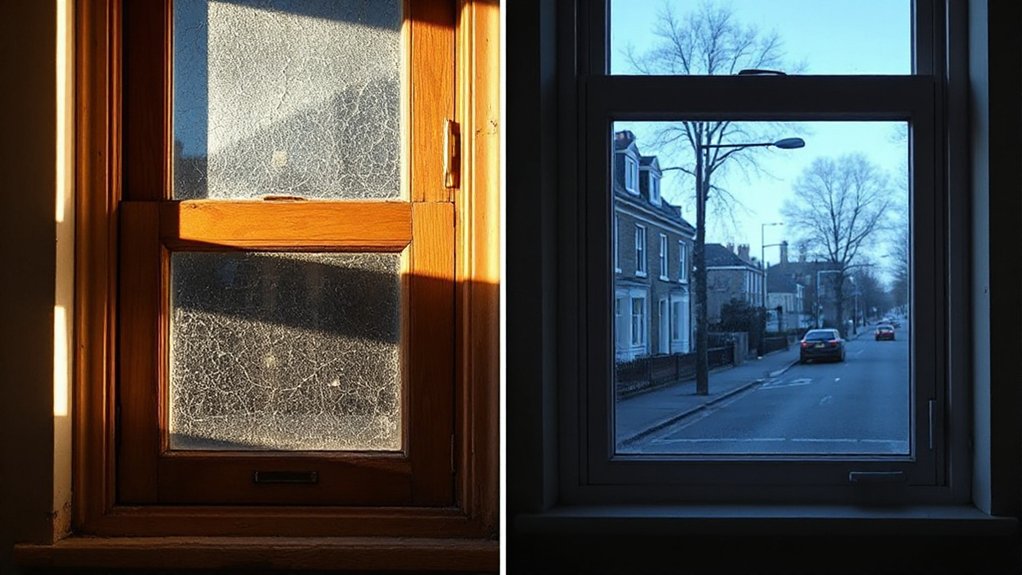
Consider how each option blocks air and sound transmission in real-world use. In practice, restoration often preserves frame mass and airtight seals, aiding noise reduction, but glazing can introduce air gaps if not meticulously fitted. Double glazing generally lowers transmitted sound more effectively than single panes, yet returns diminish when sashes are ill-fitting.
Thermal performance aligns with airtight integrity: denser materials and correct installation improve insulation, while historical authenticity and aesthetic harmony guide material choices that may trade a percent or two of noise reduction for stylistic fidelity.
The result is a nuanced balance between sound dampening and visual cohesion.
- Historical authenticity informs material and profile choices without sacrificing performance
- Aesthetic harmony supports consistent exterior and interior appearances
- Seal integrity remains the primary driver of acoustic gains
- Frame depth and glazing bead alignment affect transmission
- Proper installation trumps component specification alone
Long-Term Maintenance for Period Window Frames
Maintaining period window frames over the long term hinges on targeted care that preserves original materials while preventing deterioration. You should establish a routine of inspection, cleaning, and timely repairs that address wood rot, corrosion, and joint loosening before they escalate.
Prioritize materials durability by selecting compatible primers, paints, and sealants that don’t trap moisture or alter the wood’s natural movement. Avoid over-restoration; preserve authentic profiles, joints, and moldings to protect historical accuracy.
When repairs are necessary, use conservative methods and compatible replacements that respect original construction. Document interventions for future conservation decisions and adjust maintenance schedules with seasonal checks for humidity, UV exposure, and pests.
Regular lubrication of hardware prevents binding, extending service life without compromising the frame’s character.
Visual Impact: Curb Appeal and Historic Character After Upgrades
The visual impact of upgrades on period windows hinges on balancing historic character with modern performance, ensuring new elements read as respectful enhancements rather than replacements. You’ll aim for cohesive lines, materials, and profiles that echo original detailing while embracing improved energy efficiency and durability.
Prioritize aesthetic integration—matching muntin patterns, glazing beads, and sash geometry to the era, so updates feel intentional, not incongruent. Consider the surrounding streetscape and architectural rhythm to protect historic authenticity.
Subtle modern seals and interior finishes should be invisible from the curb yet contribute livability. Your choices must respect proportion, scale, and material warmth to preserve tone and texture. Thoughtful contrasts can highlight progress without overpowering the building’s legacy.
- Align muntins and profiles with era fixtures
- Choose authentic textures and finishes that read historic
- Integrate efficient glazing without visible hardware
- Maintain proportion, scale, and rhythm in openings
- Use discreet, reversible upgrades to preserve authenticity
Code, Conservations, and Permits: What You Need to Know

Code compliance isn’t optional when restoring period windows; it governs what you can install, how it’s installed, and the standards your project must meet. You’ll navigate local, state, and national codes, plus any historic district guidelines that apply to your property.
Expect permit reviews, plan checks, and possible waivers, all aimed at preserving character while ensuring safety and energy performance. Documented specifications for glazing, frame materials, and weather sealing help you meet expectations without delaying work.
Be prepared to justify choices with evidence, drawings, and performance data. Advanced techniques can improve performance without compromising historic integrity, but require careful validation.
Material selection matters—choose products that satisfy code, conservation standards, and long-term durability within your budget.
Longevity and Resale: How Each Path Affects Value
Choosing between period window restoration and double glazing isn’t just about look or compliance; it also shapes long-term value. You’ll weigh how each path signals energy efficiency, maintenance costs, and market appeal, which directly affect resale potential.
Restoration often boosts historical accuracy, attracting buyers who value authenticity. Meanwhile, double glazing emphasizes modern comfort and lower operating expenses, appealing to energy-conscious buyers.
Both paths influence insurance, tax incentives, and appraisal outcomes, so your choice can shift perceived longevity and marketability. Your goal is clarity in messaging to buyers and lenders about durability, upkeep, and compliant installation.
- Energy efficiency impact on operating costs and buyer appeal
- Historical accuracy as a value driver for period homes
- Maintenance cycles and long-term budgeting
- Appraisal cues for restoration vs modern glazing
- Market segmentation and resale timing considerations
Best-Case Scenarios: When Restoration Wins and When Glazing Makes Sense
When restoration shines, it’s because the house tells a more honest story: you preserve authentic architectural details, optimize period-accurate performance, and leverage incentives that reward heritage work.
In best-case scenarios, restoration wins when historical accuracy matters most: you maintain original sightlines, mouldings, and joinery that define the building’s character, while modern upgrades stay reversible.
Glazing makes sense when the goal is quick gains in energy efficiency without compromising exterior aesthetics or interior layout.
For properties with fragile frames or unique openings, careful restoration minimizes risk and preserves value.
Consider construction complexity, available skilled trades, and incentive programs.
If a structure relies on period-appropriate performance characteristics, restoration delivers durable authenticity; if you prioritize rapid energy improvements with minimal alteration, glazing is a practical path.
Historical accuracy, Energy efficiency.
Decision Framework: Choose Restoration or Glazing by Climate, Budget, and Style
A clear framework helps you decide between restoration and glazing by weighing climate impact, budget constraints, and stylistic goals. You evaluate energy efficiency, historical accuracy, and long-term value before you commit.
- Assess climate risk: heat, cold, humidity, and glazing’s effect on comfort and energy bills.
- Budget the full lifecycle: initial costs, maintenance, and potential incentives.
- Match architectural language: preserve or adapt period details and proportions.
- Prioritize user comfort: ventilation, glare control, and solar gain management.
- Plan for future upgrades: compatibility with retrofits and evolving energy codes.
With these checks, you align decision making to climate realities, budget realities, and your home’s character, ensuring a choice that respects energy efficiency and historical accuracy.
Frequently Asked Questions
Is Restoration Always Cheaper Than Double Glazing?
No, restoration isn’t always cheaper. It depends on scale and materials. A proper cost comparison shows trade-offs between historical accuracy and energy efficiency, plus ongoing upkeep. You weigh upfront restoration against double glazing’s longer-term savings and durability.
Can Glazing Be Reversed Without Damaging Period Frames?
Yes, glazing can be reversed without damaging period frames if you use careful, professional glazing techniques; you’ll preserve historical accuracy while removing modern panes and reinstalling compatible materials.
Do Period Windows Meet Modern Energy Codes After Upgrades?
Period windows can meet modern energy codes after upgrades, but it depends on proper methods. You’ll gain improved energy efficiency while preserving historic authenticity through compliant glazing, sealing, and insulation strategies tailored to your frame and climate.
How Does Glazing Affect Original Glass Authenticity?
Glazing can obscure true glass when modern panes replace originals, so it challenges historical accuracy. You should verify preservation techniques and document every change; careful glazing with reversible methods preserves authenticity while improving performance.
Are There Maintenance Differences Impacting Long-Term Durability?
Yes, maintenance differs: you’ll need regular seal checks and frame inspections with historical accuracy in mind, and guarantee material compatibility to avoid corrosion or glazing failure, preserving long-term durability without compromising authentic detailing.
Conclusion
Choosing between period window restoration and double glazing isn’t just a budget decision—it’s a bet on your home’s soul. You’ll weigh history against modern comfort, charm against efficiency. As climate and codes shape the path, one option may reveal a surprising edge you hadn’t expected. Stay curious: the right choice could change your daily life far more than you’d guess, and the final answer may hinge on a single, decisive detail you uncover right now. Ready to decide?