
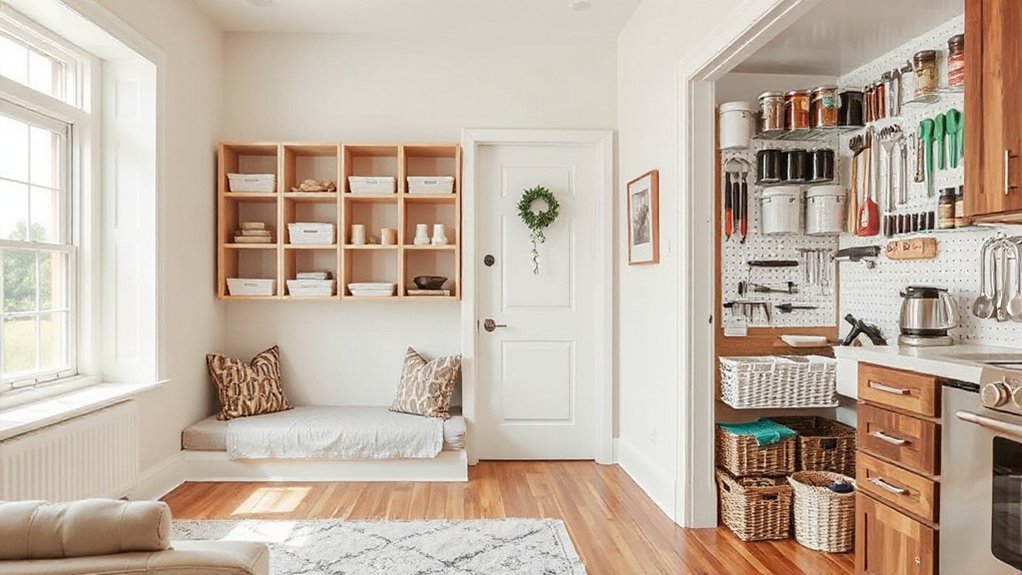

Like a well-placed hinge, your townhouse storage should pivot smoothly toward efficiency. You’ll map vertical space with wall shelves and pegboards, carve out under-stair nooks, and choose multi-use furniture that stays flexible as rooms shift. Corner benches, hidden compartments, and modular systems keep clutter out of sight while feeling intentional. Curious about how to tailor finishes and lighting to your decor so every inch earns its keep? Keep going.
Plan Tiny Townhouse Storage That Works
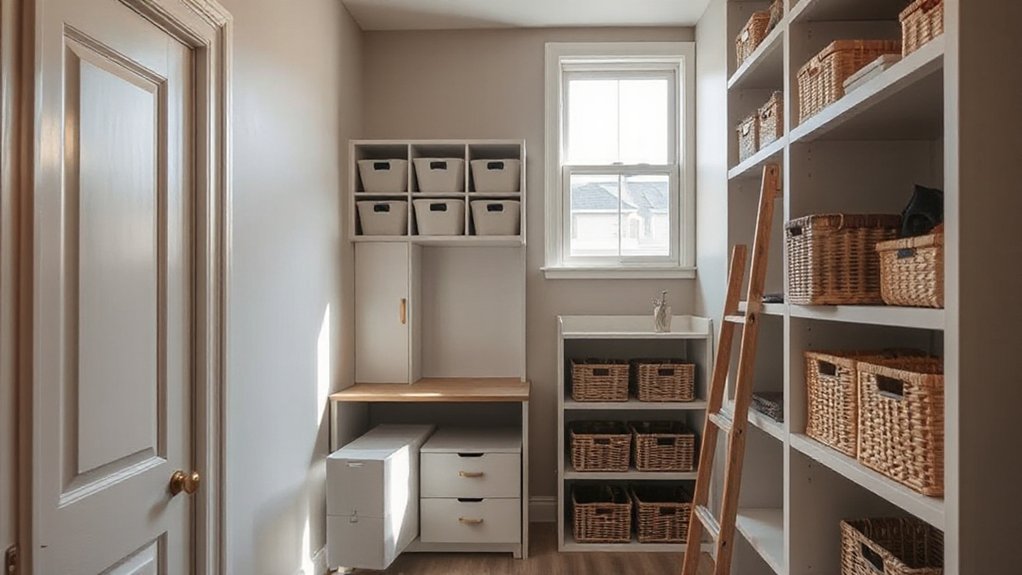
Think about how you live in a tight townhouse and design storage that serves daily routines, not just looks. You’ll map zones for cooking, cleaning, and charging, then tailor every inch to flow.
Prioritize verticality: tall, slim cabinets, wall-mounted pullouts, and ceiling-height shelving keep floors clear. Choose multi-purpose мебель that folds, tucks, or stacks, and label containers for quick access. Favor hidden hardware and soft-close mechanisms to keep pace with busy mornings.
For Creative decor, mix textures and color accents in storage fronts to feel intentional rather than cluttered.
Lighting solutions matter: install under-cabinet LEDs for task precision and ambient strip lighting to guide progressions between spaces.
Plan for enough outlets and charging docks integrated into storage towers to reduce cord chaos.
Keep a live checklist to refine as routines evolve.
Wall Storage for Narrow Walls: Shelves and Pegboards
Walls too narrow for big units? You can still maximize space with wall storage that’s practical and stylish. Install slim shelves that run vertically, creating vertical organization without crowding floor real estate. Choose decorative shelving in neutral tones or warm wood finishes to keep rooms feeling open rather than cluttered.
Use pegboards for flexible, modular storage—hang baskets, hooks, and small bins to hold tools, craft supplies, or cables. Pair shelves with labeled containers to maintain a clean look and ease of access.
Leave gaps above furniture to avoid visual bulk; stagger shelf heights to break monotony. Align hardware and mounting studs to guarantee stability, then prune often to preserve flow. This approach keeps narrow walls functional, trendy, and effortless.
Under-Stairs Storage: Drawers, Cabinets, and Hidden Compartments
Under-stairs storage is a smart, high-impact upgrade that turns unused space into organized drawers, cabinets, and hidden compartments you can actually access daily. You’ll maximize tap-of-a-knee reach by choosing slim, shallow Under stairs drawers for everyday items like shoes, gloves, and charging cords.
If you need bulk storage, install pull-out shelves inside a shallow cabinet or a tilted rack for seasonal decor. Hidden compartments can hide cleaning supplies or emergency kits without cluttering the foyer.
Opt for soft-close drawers to reduce noise and wear, and choose a matte finish in neutral tones to keep the look modern. Label each section for quick retrieval, ensuring daily usability.
Prioritize accessible hinges and safe mechanisms to protect kids and pets. Hidden compartments stay tidy and discreet.
Multi-Use Furniture That Frees Up Floor Space
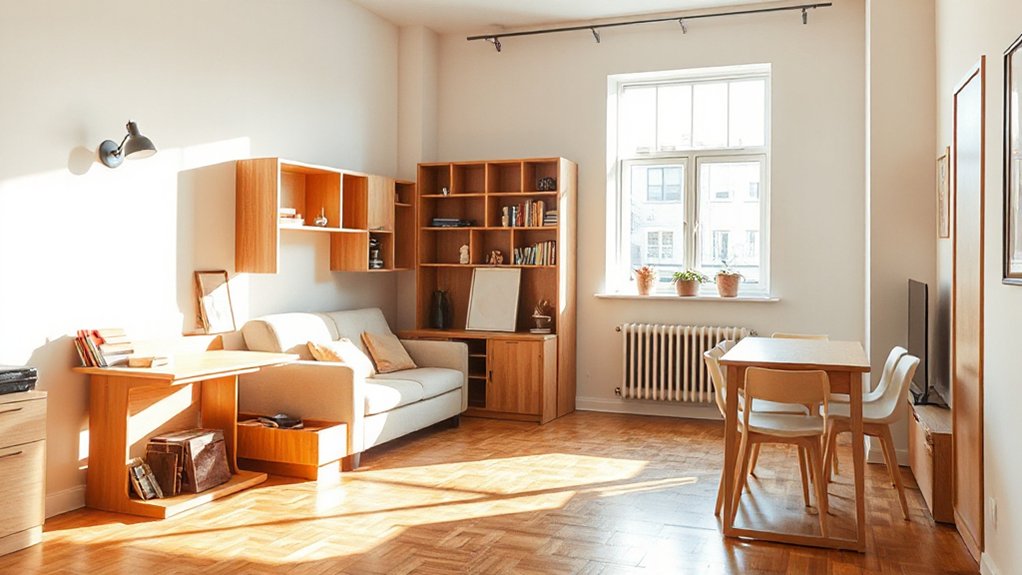
Think about how hidden bed storage and wall-mounted workstations can redefine tiny footprints without sacrificing function. You’ll gain floor space by tucking beds and desks into clever, foldable or recessed designs.
Let’s explore options that keep rooms open, organized, and ready for daily use.
Hidden Bed Storage
Ever wished for a guest bed that doesn’t steal your living space? Hidden Bed Storage answers that with clean, dual-purpose design. Choose a platform that tucks a full- or queen-size mattress beneath a sofa, slim ottoman, or wall unit, then incorporate a gas-lift or piston mechanism for smooth deployment.
For tight townhomes, prioritize vertical storage: built-in drawers above the bed frame and a fold-out headboard pocket keep linens, pillows, and essentials organized.
When selecting, guarantee a low-profile mattress to minimize bulk and a discreet, quiet mechanism to avoid waking guests. Finish with a neutral, durable upholstery that blends with living areas.
This approach delivers practical space saving, modern aesthetics, and ready accommodation without clutter.
Wall-Mounted Workstations
Choose wall mounted workstations with a fold-down surface to keep open floor area when not in use, or a slide-out desk for intermittent projects.
Pair them with magnetic strips, pegboards, and slim organizers to keep tools within arm’s reach without bulk. Build-in electrical outlets or USB hubs to power devices without tangles.
Opt for durable materials and a neutral finish to match modern interiors, then customize with hooks and cubbies for cables, notebooks, and chargers.
Space saving designs thrive in compact layouts, delivering efficiency without sacrificing style or flow.
Corner and Nook Solutions: Built-Ins, Shelves, and Benches

Corner and nook spaces offer underutilized real estate for built-ins, shelves, and benches that streamline storage without crowding rooms. You’ll maximize verticals with tall, shallow bookcases that pair with low, wide benches to create seating and hidden storage.
Use corner nooks for compact desks or craft stations, keeping electrical outlets and cable management in mind. Built-in benches provide seating while housing drawers or lift-lids for seasonal items, rarely used memorabilia, or shoes—great for entryways or mudrooms.
Install adjustable shelves to adapt to changing needs and avoid wasted space. Choose pale woods or matte finishes to keep the look airy, and add integrated lighting to highlight display areas.
Prioritize modular pieces you can reconfigure as your townhouse evolves. Corner nooks, built-in benches.
Sliding and Pocket Doors to Open Doors, Not Clutter
Sliding and pocket doors save space by opening doors, not clutter. You’ll gain floor area and cleaner sightlines by choosing sliding doors for rooms that fight for space.
Pocket doors hide behind a wall when open, so traffic flow stays smooth and clutter control improves instantly. For tight townhome layouts, install a high-quality track system and soft-close hardware to prevent slams and misalignment.
Match finishes to contemporary palettes for a seamless, modern feel that ages well. Use clear glass panels or slim French-stile options to preserve light.
If you repurpose existing frames, guarantee accurate measurements and seamless pocket depth. Prioritize smooth operation, minimal hardware, and durable materials to maintain a tidy, functional interior.
Sliding doors deliver practical style without crowding your spaces.
Closets Reimagined: Custom Rods, Organizers, and Zoning
Consider how you can tailor your closet with custom rod configurations that fit your daily routines and wardrobe shifts.
Then map zones for shoes, foldables, and long garments so every item has a home without crowding.
Custom Rod Configurations
You’ll map zones by item type, then install dual-height rods, rolling garment bars, and fold-down hangers for bulkier pieces.
Use corrosion-resistant finishes, quick-release brackets, and shallow shelves to keep airspace clear.
Integrate a slim pullout accessory rail for belts and scarves, plus a centered long-hang area to reduce wrinkling.
Label folders or bins at eye level to reinforce order, and keep seldom-used seasonal items in a top tier.
Aim for seamless flow between sections so you never search for essentials.
- Dual-height rods with staggered spacing
- Fold-down hangers for travel outfits
- Slim pullout accessory rail
- Centered long-hang zone
- Labeled bins at eye level
Zone-Based Closet Organizers
Use a modular approach: separate work clothes, everyday outfits, and seasonal items to reduce search time. Personal organization improves as you label zones and add clear bins, so you know where every piece belongs.
Incorporate pull-out baskets for small accessories and a hanging rod height system that fits shirts, dresses, and trousers without crowding. Space optimization comes from maximizing vertical real estate and folding surfaces, not stacking chaos.
Keep a dedicated micro-zone for accessories and a compact jewelry tray. With intentional layout, you’ll waste less time, face fewer clutter spikes, and free up room for daily routines.
Entryways That Stop Clutter at the Door
Ever wondered how to keep your entryway neat without cramping your daily routine? You can master clutter control with practical, ready-to-implement setups. Think compact storage, wall-mounted trays, and a dedicated drop zone that’s visible but tucked away.
Choose lightweight, slim-profile furniture and materials that resist scuffs. Use labeled baskets for keys, mail, and gloves, so you know where everything belongs. Pair these entryway accessories with a simple routine: drop, sort, store, repeat.
The result is a first impression that feels calm and organized, not crowded or chaotic.
- Slim console with a built-in charging station
- Wall-mounted hooks for coats and bags
- Labelled baskets for mail and accessories
- Quickslip catch-all tray for keys
- A small bench with hidden storage
Kitchen Storage That Saves Inch by Inch

If you loved the calm, clutter-free entryway, you’ll appreciate how small tweaks in the kitchen can yield big gains without crowding counters.
In tight spaces, practical storage shines when you prioritize efficiency over excess. Embrace creative containerization to group like items and keep shallow drawers readable at a glance.
Use stackable, transparent bins to reclaim shelf depth and track what you actually use, not what you think you should have.
Lightweight materials reduce stress on cabinet doors and ease reconfiguration as you upgrade appliances or layouts.
Invest in modular inserts that fit standard profiles, letting you tailor drawers without full remodeling.
Favor under-sink racks, door-mounted organizers, and hanging hooks for frequently used tools.
Small changes, clear results, lasting tidiness.
Laundry and Mudroom Hacks for Small Townhouses
When space is tight, smart laundry and mudroom hacks turn a few feet into a functional entry point you actually enjoy using. You’ll optimize flow with compact, high-impact solutions that feel premium and practical.
Focus on laundry organization to reduce chaos, and keep mudroom essentials within arm’s reach for quick shifts.
- Narrow cubbies with labeled bins
- Over-the-door rack for coats and bags
- Wall-mounted ironing board and pegboard
- Slim washer-dryer tandem or stacked units
- Pull-out hamper beneath a bench with charging station
These moves sharpen daily routines, minimize clutter, and maintain a tidy, efficient welcome.
You’ll appreciate deliberate placement, durable finishes, and a look that stays current without fuss.
Materials, Finishes, and Budget-Friendly Builds You Can Start Now
Choose finishes that resist humidity and fingerprinting, such as matte sealants or pre-finished laminates, to keep upkeep minimal.
Align your choices with budget planning: estimate per-project costs, factor in hardware, and reserve a small contingency.
Opt modular systems that you can expand as needs grow, minimizing waste and improving reusability.
For fast wins, repurpose crates or cabinetry components with simple joinery, then seal for durability.
Document costs and anticipated timelines to track value and stay on trend without overspending.
Customization Paths: Making DIY Storage Match Your Decor

Color-coordinated storage keeps rooms cohesive, so start by choosing a palette that echoes your decor and carries through shelves, bins, and cabinets.
Pair textural material mixes—like matte wood with woven baskets or metal accents—to add depth without clutter.
Scale each piece to fit your space so the storage feels intentional. This approach ties color, texture, and proportion to your overall style, making DIY solutions look built-in, not borrowed.
Color Coordinated Storage
- Calm neutrals with soft accent pops
- Labeled bins that mirror the room’s color scheme
- Matte finishes for a cohesive look
- Color-sorted categories for speed
- Swatch library for ongoing tweaks
Textural Material Mix
Start with a neutral base: matte plywood, linen totes, or ceramic jars, then layer with textiles and finishes that read as intentional contrasts.
Textural contrast helps highlight storage zones without shouting, guiding the eye to baskets on open shelving or a bench with a fabric cushion.
Material layering adds depth: stack a metal frame with wood slats, top a woven basket, and slip in a satin-lined box for delicate items.
Keep hardware simple and cohesive to maintain a clean feel while still delivering tactile interest.
Scale With Decor
If you want your DIY storage to blend with your decor, scale matters as much as style. You align size, proportion, and finish with your room’s vibes, so storage reads as part of the whole, not an afterthought. Choose pieces that mirror architectural lines, then add decorative accents to unify textures.
Prioritize low-profile units in tight townhouses, with vertical storage that doesn’t crowd floor space. Use consistent hardware and paint tones across projects to maintain coherence. Lighting solutions should highlight focal points without casting harsh shadows. Keep materials interchangeable to adapt as trends shift, not as a total rework.
- Sleek, wall-mounted shelves in a single finish that echoes trim
- Slim cabinets with hidden hardware for clean lines
- Floating consoles that double as display surfaces
- Reversible baskets and bins in cohesive colors
- Subtle, integrated LED lighting under shelves or inside cabinets
Frequently Asked Questions
How Much Does DIY Townhouse Storage Typically Cost?
DIY townhouse storage typically costs $200–$1,500, depending on materials and scope. You’ll gauge storage organization needs and do a practical cost estimation, balancing budget, style, and durability while staying trend-conscious and efficient.
What Tools Are Essential for Beginners?
You’ll start with essential fundamentals: a tape measure, utility knife, drill, level, saw, and stud finder. Use these for creative organization and space optimization, and you’ll stay practical, precise, trend-conscious, and quietly confident as you build.
Which Materials Are Best for Durability?
You should prioritize solid plywood or MDF with moisture-resistant coating and steel hardware, because materials selection drives longevity. Consider durability factors like load, humidity, and weight distribution; opt for high-quality finishes, reinforced joints, and modular, space-efficient designs.
How Long Does a Typical Project Take?
Storage organization takes time, typically a few hours to a weekend, depending on scope. You’ll optimize space efficiently, plan precisely, and pace steadily, embracing space optimization as you build, customize, and complete practical, trend-conscious DIY storage.
How Can You Maximize Small-Space Safety?
You maximize small-space safety by using space saving furniture and wall mounted solutions to keep floors clear, minimize tripping hazards, and secure heavy items high. Prioritize sturdy mounts, kid-safe hardware, and routed cords for clean, trend-conscious practicality.
Conclusion
You’ve got a toolbox of ideas to transform a tight townhouse into a calm, organized space. With vertical shelving, hidden compartments, and multi‑use furniture, you’ll reclaim floor area without sacrificing style. Think adaptable, modular systems and cohesive finishes that evolve with you. Like a well-planned blueprint, your home becomes calmer, more functional, and visually cohesive. The secret? Less clutter, smarter storage, and a dash of clever, everyday magic—your space, finally made to work for you.