


Edinburgh homes lose heat fast, but you can change that with a clear plan: start with solid insulation—loft, walls, and floors—then seal gaps around windows and doors. Add double glazing and an efficient ventilation system to balance airtightness with comfort. Tweak heating with smart thermostats and regular maintenance, and combine renewables like solar with steady energy-saving habits for resilience and long-term savings. Curious about the best sequence to implement first?
Why Edinburgh Homes Waste Heat: And How To Stop It

Edinburgh homes waste heat mainly through poor insulation, drafts, and inefficient heating systems. You’ll reduce heat loss by sealing leaks and upgrading insulation, targeting common hotspots first.
Start with doors and window frames, adding drafts excluders and weather strips to minimize cold air ingress. Use insulation techniques that fit your home’s structure, such as cavity wall insulation or loft insulation, ensuring fills meet latest building standards.
Address floor and pipework where heat seeps into unheated spaces, since these contribute to sustained heat loss. Choose materials with high thermal resistance and proper thickness, then verify performance with a simple heat-test after completion.
Regular maintenance of boilers and radiators controls efficiency. By prioritizing insulation techniques and eliminating leaks, you curtail heat loss and boost overall comfort.
Quick Wins To Cut Bills This Month
Here are quick, practical steps you can tackle this month to cut energy bills. Start with a simple energy audit of your home to pinpoint where heat leaks and standby losses occur.
Acknowledge doors, windows, and drafts; seal gaps with affordable measures, then adjust heating schedules to match occupancy.
Replace or clean easily accessible filters on boilers and heat pumps to maintain efficiency.
Switch to programmable thermostats so heat runs only when needed.
Optimize hot water use: lower the boiler temperature to around 60°C and insulate exposed pipes.
Use renewable sources when feasible, such as small-scale solar or solar hot water, to offset daytime demand.
Schedule follow-up energy audits to verify savings and identify further improvements.
Insulation First: Loft, Wall, And Floor Upgrades
Upgrading insulation should come before adding more heating capacity, since better envelopes cut heat loss and raise the effectiveness of any future improvements.
You should start with Attic insulation to stop warm air from escaping through the roof, then assess wall insulation to close gaps where heat leaks occur.
Priorities: identify uninsulated or poorly insulated loft spaces, seal penetrations, and fit approved insulation with the correct thickness for your climate and home type.
In walls, verify continuous insulation and proper weatherproofing, avoiding thermal bridges.
Floors over unheated spaces warrant insulation to reduce drafts and rising heat demand.
Contact a qualified installer for pressure tests and guidance on U-value targets.
These steps protect investments, improve comfort, and lower long-term energy use.
Windows, Drafts, And Seals: Save Heat Fast
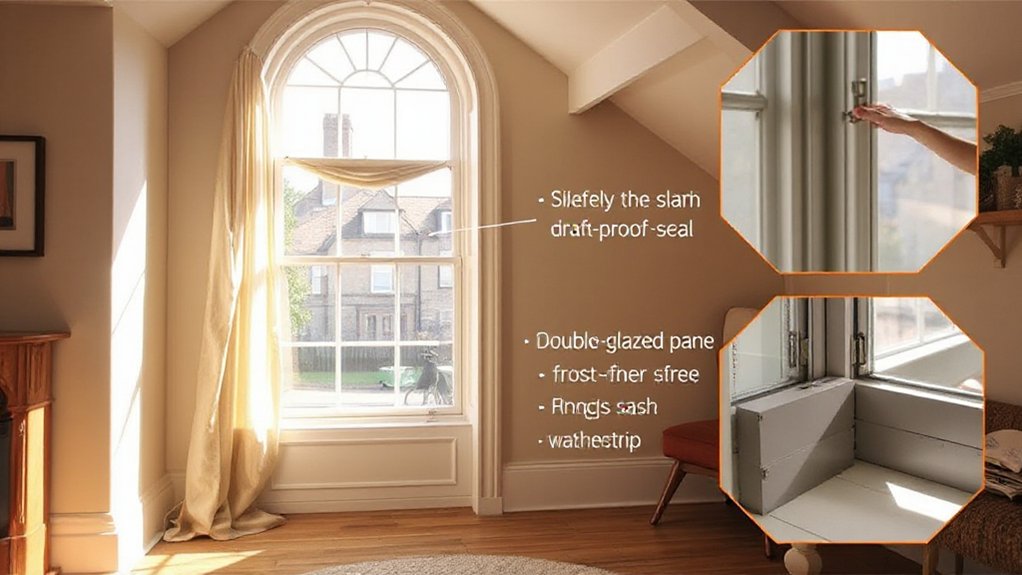
You can cut heat loss fast by sealing gaps around doors and windows and tackling obvious drafts today. Start with quick wins like weather-stripping and draft stoppers.
Then check window frames for looseness and add insulation where needed.
For long-term gains, prioritize proper window insulation tips and consistent sealing to keep Edinburgh homes warm and efficient.
Sealing Gaps Effectively
Sealing gaps around windows, doors, and other penetrations is one of the quickest ways to cut heat loss in Edinburgh homes. You’ll improve comfort and reduce drafts by applying targeted sealing techniques that address common leak points.
Start with door bottoms and window sashes, then move to electrical outlets and pipe penetrations. Choose materials appropriate for the gap size and exposure: low-expansion foam for large voids, caulking for narrow cracks, and weatherstripping where movement occurs.
Use proper surface prep: clean, dry surfaces; remove old sealant; and mask edges for clean lines. For durable results, follow caulking methods that ensure adhesion and flexibility without gaps.
Check for hidden drafts after initial sealing and reapply where needed to maintain an airtight envelope.
Window Insulation Tips
Window insulation can dramatically cut heat loss by stopping drafts at their source; start with the glazing, then address edges and frames to lock in warmth.
You should prioritize gaps around sashes and seals first, since drafts there undermine any insulation.
Use double glazing to halve heat transfer and reduce condensation, ensuring panes are intact and airtight.
If replacement isn’t feasible, consider supplementary options like window films to reflect radiant heat back into the room without obscuring visibility.
Apply clear or tinted films per preference, and seal edges thoroughly to prevent peel-back.
For attic or floor-level channels, add insulating drapes or blinds that trap air at the window cavity.
Regularly inspect frames for gaps and re-seal as needed to sustain efficiency.
Heating Options For Edinburgh’s Climate
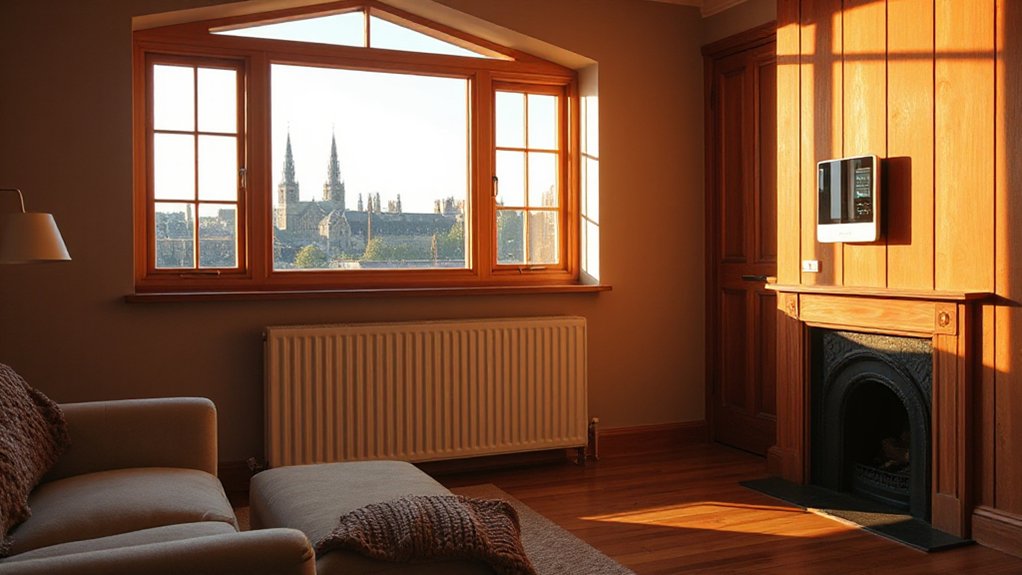
In Edinburgh’s climate, choose efficient heating options that fit your home and budget. Consider system efficiency upgrades and how they impact ongoing running costs, comfort, and resilience to cold snaps.
We’ll compare practical choices and outline what to ask installers to guarantee you get ideal performance.
Efficient Heating Options
Here are practical, efficient heating options suited to Edinburgh’s climate: focus on a well-insulated, well-sealed home paired with a mix of space heating and heat-recovery solutions. You’ll use targeted strategies that reduce heat loss while keeping comfort high.
Combine efficient radiators with smart controls and programmable heat schedules, then add a compact heat pump system for supplemental heating during cold snaps. Incorporate energy audits to identify gaps and prioritize improvements, including insulation upgrades and seal checks.
Integrate solar panels where feasible to offset daytime electricity use and support heat-recovery ventilation for year-round efficiency.
- Smart thermostats and zone controls for precise warmth
- Heat pumps paired with well-sealed insulation
- Solar panels and energy audits to optimize gains
Edinburgh Climate Considerations
Edinburgh’s climate demands adaptable heating that balances efficiency with comfort. You’ll prioritise systems that respond to rapid temperature shifts and overcast days, keeping dwellings warm without waste.
In practice, choose heating options that complement passive design: well-insulated envelopes, targeted controls, and efficient emitters. Solar photovoltaics can offset daytime electricity use for heat pumps or storage heaters, reducing running costs during sunier periods.
Prioritise heat pumps with variable-speed operation and smart thermostats to modulate output as outdoor conditions change. For reliability, pair renewables with a dependable backup, ensuring comfort during cold snaps or extended gloom.
Embrace renewable energy where feasible, aligning with Edinburgh’s investment in low-carbon infrastructure. This climate-aware approach supports steady warmth, predictable bills, and long-term energy resilience.
System Efficiency Upgrades
Which heating option delivers the best balance of comfort and efficiency for Edinburgh’s climate? You’ll want system efficiency upgrades that maximize climate adaptability and minimize waste. Upgrade paths emphasize intelligent controls, improved insulation, and heat source optimization aligned with renewable energy goals.
Prioritize high-efficiency boilers, heat pumps, or hybrid systems that respond to demand, while maintaining reliable supply during cold snaps. Integrate weather- and occupancy-sensitive controls to reduce standby loss and overshoot.
Embrace solar paneling as a complementary source, feeding the grid or storage when sunny. Use diagnostics to verify performance, calibrate thermostats, and ensure ducts are sealed.
- Improve insulation and airtightness for consistent indoor temperatures
- Install a well-mated heat pump or high-efficiency boiler with smart controls
- Combine renewables with solar paneling and energy storage where feasible
Smart Thermostats And Real Savings
Smart thermostats can deliver real savings when you use them correctly. In Edinburgh homes, these devices optimize heating schedules based on occupancy and outside temperatures, reducing waste without sacrificing comfort.
Start by setting clear daily and weekly routines, then enable adaptive learning so the system tunes itself over time. Use zoning where possible to limit heat to occupied rooms, lowering overall energy use.
Track real savings with your energy bill and the thermostat’s reporting tool to verify value. Don’t rely on single, drastic temperature changes; small, consistent adjustments compound over days and weeks.
Guarantee compatibility with your boiler and insulating upgrades, and keep firmware current for performance and security.
Smart thermostats deliver real savings when used as part of a deliberate efficiency plan.
Domestic Hot Water: Efficiency In Practice
Could you cut hot water waste without sacrificing comfort? In practice, you can optimize domestic hot water by targeting system design and usage habits. Focus on efficient storage and heat source choices to minimize losses, and verify insulation on pipes and tanks.
Solar thermal integration can reduce daytime grid demand, while properly sized hot water tanks match household demand to avoid standby energy. Regular maintenance keeps efficiency high and longevity long.
- Install solar thermal where feasible to preheat water
- Insulate hot water tanks and hot water pipes
- Size tanks and heaters to match peak usage without oversizing
Ventilation That Keeps Heat In

Ventilation should be airtight yet breezy, so you keep heat in while you refresh indoor air. Use heat‑recovering or balanced ventilation to maintain steady humidity and reduce drafts.
Start with a sealed envelope and controlled airflow to balance comfort with energy savings.
Heat-Loving Ventilation
- Use heat-recovery ventilation with high-efficiency heat exchange
- Set humidity targets and integrate moisture-sensing controls
- Regularly maintain filters and ducts to sustain performance
This approach keeps rooms comfortable, reduces heat waste, and supports a healthier home environment. Implement thoughtfully, and you’ll notice steadier temperatures, better air quality, and fewer damp spots without extra effort.
Airtight Yet Breezy Flow
When you want a home that stays warm without wasting energy, you need an airtight envelope paired with controlled airflow that’s still breathable. This balance isn’t about starving your house of air; it’s about smart exchange.
Use high-performance seals and an advanced mechanical ventilation system with heat recovery to preserve warmth while supplying fresh air. Target the right airflow rates to prevent condensation and maintain comfort without drafty spots.
Prioritize air quality by locating intakes away from pollutants and ensuring filters are accessible and changed regularly. Pair mechanical systems with occasional natural ventilation when outdoor conditions are favorable, to refresh air without opening windows wide.
Regular commissioning keeps performance precise, predictable, and aligned with Edinburgh’s climate.
Budgeting And Scottish Funding For Energy Upgrades
Where should you start when budgeting for energy upgrades in Scotland? You map costs against funding streams, prioritise high-impact upgrades, and use fixed timelines to avoid scope creep.
In Scotland, you’ll access grants and loans designed to boost efficiency without breaking the bank. Plan with evidence: estimate energy savings, equipment costs, and installation fees, then compare options on a cost-per-kW basis.
Consider how renewable energy and insulation work together for long-term payback, and note how property taxation can influence financial planning through energy-related reliefs.
Budgets should itemise grants, low-interest loans, and any council support. Be disciplined: secure quotes, track milestones, and verify eligibility before committing.
- Identify eligible funding sources and deadlines
- Align upgrades with energy-saving milestones
- Verify terms, timelines, and deliverables
A Year-Round Maintenance Plan For Efficient Homes
A year-round maintenance plan keeps energy savings on track between upgrades and helps you sustain efficiency without surprises. Schedule quarterly checks of insulation, seals, and vents, and log findings to track trends.
Conduct a formal energy audit at least once a year to identify hidden heat losses and opportunities for improvement. Prioritize weatherstripping, door sweeps, and attic access to minimize drafts, then verify radiator and boiler performance for consistent output.
Maintain your heating system with clean filters, proper venting, and annual servicing to prevent fuel waste.
Consider renewable energy options when upgrades align with your goals, evaluating feasibility and return on investment.
Document interventions, monitor utility bills, and adjust your plan to evolving needs and available funding.
Frequently Asked Questions
How Long Does It Take to See Real Savings From Upgrades?
You’ll start seeing savings within 1–2 billing cycles after upgrades, though larger investments may take 3–6 months to show steady impact. Do a cost comparison, monitor energy use, and consider environmental impact for ongoing adjustments.
Do Retrofit Projects Require Planning Permission in Edinburgh?
Yes, retrofit projects generally require planning permission if they affect building fabric or listed status, and you must follow Building Regulations; however, Historical restrictions may apply, so consult local authorities to confirm exemptions or permissions before starting work.
Which Grants Cover Both Installation and Labor Costs?
Grant eligibility covers installation costs, but not all programs include labor. You’ll likely qualify for grants that offset installation expenses; verify each scheme’s terms to guarantee both installation costs and eligible labor are fully covered.
Are There Seasonal Limitations to Energy Efficiency Upgrades?
Seasonal constraints exist, but upgrades can proceed with planning around weather impact. You should prefer mild, dry periods; avoid extreme cold or wet spells, and coordinate trades accordingly to minimize disruption and guarantee safe, efficient installations.
Can Tenants Access Funding Without Landlord Approval?
Like a steady lighthouse, you can’t access funding without landlord approval. You must know Tenant rights and Funding eligibility; you’re empowered to apply, but approvals may still be required, so verify conditions before pursuing grants or loans.
Conclusion
In Edinburgh, you’ll feel warmth settle in, like a welcomed glow after a long day. Picture your loft snug, walls sealed tight, windows whispering no drafts. Your boiler hums efficiently, a quiet rhythm you can trust, while solar panels drink the sun and your heat-recovery vents gift fresh air without leaks. With smart controls and steady maintenance, your home becomes resilient—cozy, cost-smart, and ready for any season. You’re not just saving energy; you’re shaping comfort that lasts.