


Did you know that up to 70% of garage conversions don’t require full planning permission, depending on location and scope? You’ll want to check how your project affects footprint, appearance, and use class, because even small external changes or structural work can push you into needing consent. Before you commit, weigh local rules, conservation or listing status, and any boundary issues—a quick call or check with the planning authority may save delays later. Let’s map out your exact constraints.
What Counts as a Garage Conversion Under Planning Rules
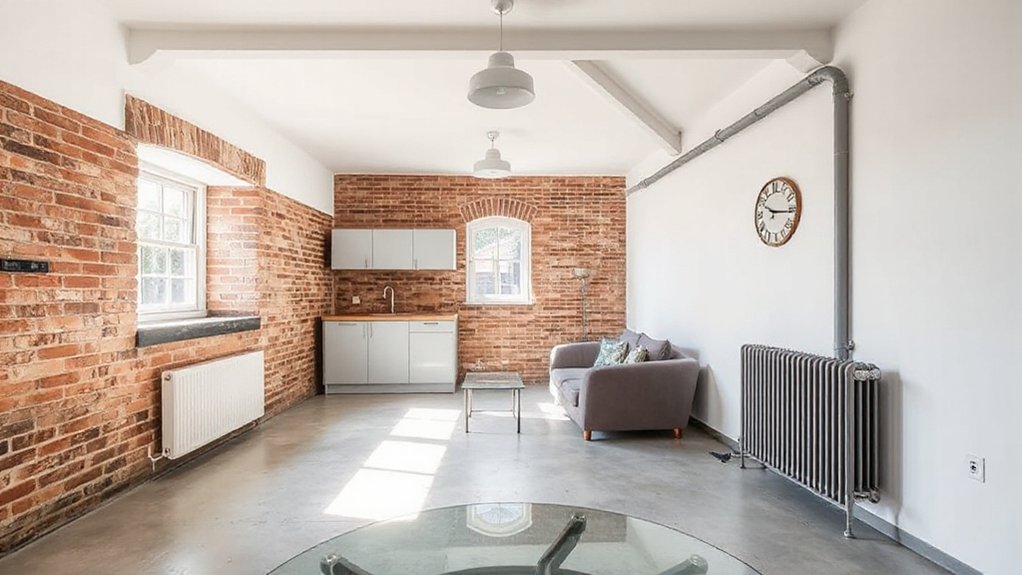
A garage conversion typically counts as a change of use or a substantial alteration to the building, depending on how you modify the space and its function. You evaluate whether the alteration affects building use, ventilation, drainage, or structural elements.
If you retain the external footprint and install headroom, lighting, and insulation improvements, many schemes qualify as a permitted development, though limits apply. You’ll consider floor area, ceiling height, and whether you convert ancillary storage into habitable space.
Garage aesthetics matter: finish choices, cabinetry, and integration with the dwelling influence decision-making. Storage solutions, like fitted wardrobes or built-in benches, should be planned before works start to minimize disruption.
Document existing services, confirm doors, windows, and fire safety meet criteria, and avoid enlarging the building envelope without consent.
Do You Need Planning Permission for Changing Use?
You’ll need to map whether your garage change qualifies as a change of use under the Rules and where Permitted Development limits apply.
We’ll focus on which uses count, what converts automatically, and where planning permission is still required.
This sets the groundwork for evaluating risk, documentation, and exemptions before you apply.
Change of Use Rules
The key test is whether the conversion creates a new dwelling or sustains a material change in character, intensity, or function. If you’re retaining a garage as utilitarian space or converting to habitable use, you may need to submit a planning application, especially if alterations affect access, lighting, or drainage.
You’ll document how the altered use impacts design, structure, and services. Consider garage aesthetics during the assessment, ensuring exterior appearances stay compatible.
Also verify insulation standards meet current requirements to avoid compliance gaps later. Consult local guidance for your jurisdiction.
Permitted Development Limits
Permitted development rules set clear limits on when you can change a garage’s use without a planning application. These limits hinge on use class allowances, size, and impact on neighboring properties.
You’ll assess whether a proposed conversion stays within “permitted development” boundaries for dwelling houses, avoiding extensions beyond the original footprint, roof alterations, or material changes that trigger permissions.
In practice, you must check local jurisdiction nuances, as thresholds vary by region and dwelling type.
Your plan should factor in structural reinforcement needs, especially if walls or ceilings carry loads beyond typical garage specs.
Address energy efficiency via garage insulation, ensuring compliance with thermal performance standards.
Remember that even permitted changes can require building regulations approval, particularly for electrical, plumbing, and fire safety.
Always document compliance steps and keep records for potential audits.
When Is Permitted Development Allowed for Garage Conversions?
When planning a garage conversion, you need to know when permitted development (PD) rights apply and what limits they impose. PD allows changes without full planning permission, but only under specific criteria and caps.
In most cases, you can convert a detached or attached garage for dwelling use if you keep within total floor space, maintain setbacks, and avoid enlargements beyond existing footprints. You typically can’t extend the external walls by more than a defined limit, and material changes must match surrounding facades.
PD also restricts bedrooms, bathrooms, and these works often exclude conservation areas or listed buildings.
To stay compliant, assess the garage’s current size, orientation, and potential impact on access. Plan careful Garage design and storage solutions that respect PD thresholds.
How Building Regulations Interact With Planning Rules
Building Regulations set the technical standards your garage conversion must meet, and they often run alongside planning rules rather than replace them.
You’ll find overlaps where work needs both planning permission and compliance with Approved Documents, especially around structure, fire safety, and access.
Understanding where Building Regulations boundaries sit and why they matter helps you navigate planning overlaps and prioritize compliance from the outset.
Building Regulations Boundaries
Although planning permission sets the overall site use and appearance, Building Regulations govern how the project is constructed and whether it’s safe, energy efficient, and accessible. You’ll see the boundaries between rules immediately: Regulations focus on structure, fire safety, insulation, damp, ventilation, and accessibility, while planning handles look and use.
For a garage conversion, you must guarantee the structural alterations meet load, fire resistance, and U-values targets, with appropriate ventilation and drainage changes where needed. Inspect elements like walls, roofs, and floors for compliance, and confirm that doors and escape routes satisfy egress standards.
Consider Garage aesthetics and Conversion materials early to avoid contradictions with prescriptive requirements. Document compliance with approved plans and amendments, coordinating with building control before work begins to prevent rework.
Planning Permission Overlaps
Is there overlap between planning permission and Building Regulations that you should expect in practice? Yes, and you’ll notice it in how requirements stack rather than replace each other.
Planning concerns focus on use, impact, and design, while Building Regulations target safety, energy, and structure.
When you’re converting a garage, some features may trigger both streams, but approval isn’t a guarantee of compliance with the other.
You’ll often navigate sequential checks: planning first (or sometimes concurrently with permitted development caveats), then Building Regulations certification.
Expect differences in timelines: planning can hinge on local design preferences, while regulations follow technical criteria and testing.
For garage aesthetics, design choices influence planning advice, but the Conversion timeline hinges on structure, insulation, ventilation, and fire safety compliance.
Approved Documents Importance
What role do the Approved Documents play when Building Regulations interact with planning rules? They set the technical baseline that guarantees safety, energy efficiency, and accessibility during a garage conversion.
You’ll reference Approved Documents Part A (Structure), Part B (Fire), Part L (Conservation of fuel and power), and others to confirm minimum standards before planning submission. Use them to verify that your Conversion design aligns with construction details, ventilation, insulation, damp protection, and electrical layouts.
They don’t replace planning conditions but help communicate compliance expectations to planners. Aligning with these documents supports garage aesthetics by defining tolerances and finishes, while preserving sensible Conversion design parameters.
Clear documentation, risk assessment, and consistent details streamline approvals and reduce post-approval changes.
How to Assess Impact on Eaves, Roofline, and Extensions

When you assess the impact on eaves, roofline, and extensions, start by mapping what’s visible from the ground and from neighboring properties. You’ll quantify changes to proportions, shadowing, and cadence of the facade, then compare against local guidelines for roof forms and eaves heights.
Focus on structural clarity: how extensions alter line-of-sight, drainage, and potential clutter at entry points. Assess materials, finish continuity, and the overall garage aesthetics to guarantee the design reads as cohesive rather than cobbled together.
Roof modifications should preserve drainage paths and avoid excessive massing. Consider potential overhangs and their effect on windows and boundary fences. Roofline alignment matters for permissions, so document variations with photos and measurements.
- Ground-level visibility and neighboring viewpoint checks
- Proportional changes to eaves height and extension length
- Material and finish continuity across the facade
- Drainage, overhangs, and shadowing implications
What to Know About Openings and Windows in a Converted Garage
Openings and windows in a converted garage must balance light, security, and fire safety while preserving the structure’s overall rhythm. You’ll evaluate size, placement, and orientation to maximize energy efficiency without compromising fire compartments or egress.
Prioritize window placement that enhances natural light while maintaining wall integrity and accessibility for future maintenance. Use fire-rated glazing where required by local codes, and verify workplace or living-area windows meet escape-height criteria if the space qualifies as a bedroom.
Consider insulation continuity; integrate garage insulation with adjacent habitable rooms to prevent cold bridges. Align glazing with eave lines and roof slope to minimize drafts and water ingress.
Confirm that openings don’t weaken structural supports or violate egress and ventilation requirements.
Required Plans and Documentation for a Garage Conversion
To obtain approval for a garage conversion, you’ll need a complete set of plans and documentation that prove compliance with local building codes and zoning rules. You’ll submit drawings, structural calculations, and energy performance data, plus a detailed existing- vs. proposed-floorplan comparison.
Confirm your documentation demonstrates fire separation, insulation, ventilation, and accessibility requirements. Include a site plan showing setbacks, drainage, and utilities. You’ll also provide a statement of work, contractor qualifications, and proof of insurer coverage.
Finally, address aesthetics and landscape integration to satisfy planning conditions related to street presence and property value.
1) Site and floor plans with dimensions
2) Structural and mechanical calculations
3) Energy efficiency and insulation specs
4) Landscaping planning and Garage aesthetics considerations
Impact on Parking and Site Access: What to Check

You’ll need to evaluate how the garage conversion affects on-site parking, driveway flow, and pedestrian access before you submit plans.
Assess current and post-conversion parking capacity, including potential loss or reallocation of space for vehicles, guests, and service deliveries.
Map driveway radii, turning circles, and visibility at junctions or footpath crossings to guarantee safe movement.
Check pedestrian routes from parking to entrances, noting any barriers or tripping hazards.
Consider landscaping features around the ramp or curb and how changes might impact drainage and maintenance.
Examine garage aesthetics in relation to the site line and street scene, ensuring the conversion doesn’t create awkward visual discontinuities.
Verify that landscaping features don’t obstruct sightlines or access, and document any required adjustments.
When You’ll Need a Planning Application for Alterations
Determining when you need planning permission for alterations hinges on how the changes affect the exterior appearance, footprint, and overall character of the building. You’ll generally need a planning application if alterations modify the built form, visibility, or materials in a way that changes street frontage or the building’s proportion.
If changes stay internal or use permitted development allowances, you may not. Consider garage aesthetics and how they influence the streetscape, plus interior design implications that still impact external perception. Be precise about how the alteration affects the planning constraints and nearby properties.
- Changes to external elevation or roofline
- Significant extensions or changes to footprint
- Alterations using non-compliant materials
- Impact on neighbours’ light, privacy, or access
How to Prepare a Planning Application for a Garage Conversion
Before you start the planning process, map out how the garage conversion will affect the building’s footprint, elevations, and streetscape, because these factors determine the information you’ll need to submit.
You’ll assemble a clear package: site plan, existing and proposed floor plans, elevations, and reduction of non-structural elements where possible.
Detail structural work, insulation, and ventilation changes, with specifications for any new services.
Provide design rationales that address local policy expectations, including energy efficiency and accessibility where applicable.
When describing garage aesthetics, specify material finishes, window treatments, and door replacements so reviewers understand the visual impact.
For conversion materials, itemize each material type, grading, durability, and fire safety compliance to avoid back-and-forth revisions.
Proofread for consistency and guarantee alignment across drawings, notes, and captions.
Typical Constraints: Consultees, Conservation Areas, and Listed Sites

Working through typical constraints, you’ll need to identify how consultees, conservation areas, and listed sites influence your garage conversion proposal. In practice, these factors shape consent routes, design scrutiny, and any required mitigations.
You’ll assess whether your project impacts historic character, local planning policies, or listed asset environments, and plan accordingly. Key implications include notification timelines, potential design amendments, and protected item considerations.
Planning authorities may demand extra documentation on materials, massing, and external alterations to protect streetscapes and heritage values. You’ll also address practical impacts on security and thermal performance during feasibility work, ensuring insulation requirements meet standards without compromising aesthetics or access.
1) Consultees’ input and engagement timing
2) Conservation-area design guidelines and sensitivities
3) Listed-site restrictions and exemptions
4) Security and insulation alignment with constraints
Party Walls and Neighbor Considerations
You’ll need to understand Neighbor Notice Requirements and how they trigger the start of a Party Wall Agreement process.
In practice, you’ll document thresholds, timelines, and who must be served, then coordinate before any work begins.
This sets the framework for permitted changes while protecting adjacent properties and clarifying responsibilities.
Neighbor Notice Requirements
Neighbors must be properly informed about your garage conversion plans, because party wall and notice requirements protect adjoining owners and compliance with the relevant statutory framework. You’ll need to understand who to notify, what information to include, and timing to avoid delays. Being precise helps you prevent disputes and streamlines the process.
1) Determine notice scope: identify affected walls and affected neighbors, including shared boundaries.
2) Prepare clear details: project start date, anticipated changes, and any construction methods that affect structure or noise.
3) Include material notes: specify Conversion materials and how they impact loads and aesthetics.
4) Track responses: document notices sent, receipts, and any required follow-ups to maintain compliance with regulations.
Garage aesthetics and Conversion materials influence neighbor communications and overall feasibility.
Party Wall Agreements
Expect schedules for notice periods, access rights, and the scope of work, including any demolition, underpinning, or reconfigurations that touch party walls. You’ll assess practical impacts on insulation and vibration, choosing compatible materials and methods to minimize disruption.
When planning Garage insulation, consider acoustic performance and fire safety as part of the agreement. For flooring options, specify load-bearing requirements, moisture protection, and finish tolerances adjacent to shared spaces.
*Guarantee* compliance with timelines, dispute resolution, and cost sharing.
Budgeting for Fees and Other Costs
1) Permit and plan check fees
2) Surveying, architect or design fees
3) Construction, electrical, plumbing, and finishing trades
4) Contingency and project management costs
Conversion financing options, payment schedules, and repayment timelines should align with cash flow to minimize interest burden.
What Happens After You Submit: Timelines and Decisions
Once you’ve submitted your application, the review process begins in earnest: plans are checked for compliance with local zoning, building codes, and permit requirements, and any deficiencies are identified for you to address. You’ll receive feedback outlining required changes, with a clear timetable for resubmission.
Expect a formal determination letter or notice of approval, conditional on satisfying specified conditions. The planning authority may request additional documentation, engineering reports, or energy-efficiency details; response times vary but are typically measured in weeks.
Final approval hinges on meeting all conditions and demonstrating that your garage conversion won’t adversely affect neighbors or infrastructure. During this phase, maintain documentation of every revision.
Consider garage aesthetics and conversion costs in your planning, as approvals sometimes influence design flexibility.
Common Pitfalls That Trigger Permission Requirements

1) Ignoring maximum built form or permitted floor area changes
2) Skipping required fire safety, ventilation, or escape provisions
3) Altering external appearance or materials without approvals
4) Underestimating services, drainage, or insulation implications
You’ll mitigate risk by documenting intent for finishes, glazing, and layout early, keeping details precise to prevent later redesigns.
How to Verify Local Authority Guidance for Your Area
To verify local authority guidance for your area, start by identifying the exact planning and building control requirements that apply to garage conversions in your jurisdiction and project type.
Next, consult the official planning portal, building regulations summary, and any local supplementary guidelines for site-specific constraints, such as setback rules, party-wall considerations, and permitted development limits.
Cross-check driveway, drainage, and energy-efficiency standards, then verify submitted material specs with your authority’s approved lists.
Compile a checklist of required documents, approvals, and submission timelines to avoid delays.
During design, consider Garage aesthetics to ensure visual harmony with the street scene, and plan Interior finishes that meet fire safety and acoustic criteria.
Document all correspondence for traceability and future inspections.
Frequently Asked Questions
Can a Garage Be Turned Into a Habitable Room Without Permission?
You can’t, you must obtain conversion permits; otherwise, you risk noncompliance. For solid garage aesthetics and code compliance, secure permits first, plan insulation and ventilation, then document structural changes to avoid delays during inspections.
Do Local Councils Require Plans for Garage Conversions?
Yes, local councils require plans for garage conversions in many cases. You’ll face garage regulations and planning exceptions; submit sketches, specifications, and documentation, because proper planning guarantees compliance, protects property values, and prevents penalties. Check your council’s criteria before applying.
Will Insulation Affect Planning Permission Decisions?
Insulation can affect planning decisions, yes. You’ll need to meet insulation regulations and adhere to building codes, which might influence approvals. You should document retrofit methods, guarantee continuous thermal barriers, and verify compliance with energy performance standards for your project.
How Does Garage Conversion Affect Fire Safety Requirements?
A hypothetical garage conversion must meet fire safety regulations and conversion safety standards; for example, you’d install non-combustible linings and a rated ceiling. You’ll also add smoke alarms, protected exits, and proper compartmentation to reduce risk.
Are Structural Changes Always Exempt From Planning?
Yes, not always; structural changes aren’t automatically exempt. You’ll still face rules in historical restrictions and conservation areas, where permissions or listed-building considerations may apply, and you must verify with your local planning authority before proceeding.
Conclusion
Decide if your garage can be transformed under permitted development, or if you’ll need plans and approvals. Think of it like a blueprint compass: your footprint stays the same, the exterior mostly unaltered, but if you broaden the sky or bump the walls, you’re steering into permission territory. Verify with your local authority, cross-check Building Regulations, and budget for fees and contingencies. With clear checks, you’ll navigate the maze without getting snagged by surprise permissions. Proceed with confidence, doors open to compliant, comfortable space.