


A garden makeover is a project you can steer like a ship, with a clear budget as your compass. You’ll map hardscape, plants, and tools, plus a 10–15% cushion for surprises. Start by prioritizing high-impact, low-cost changes and assess your space for multifunctional zones. Ready to balance durability with value while tracking costs and adjusting course as needed? Stay with me to set a plan that fits your life and wallet.
Define Your Garden Makeover Budget

Setting a clear budget at the outset keeps your garden makeover focused and affordable. You define a total cap, then break it into categories: hardscape, plants, tools, and contingency.
Start with a realistic running cost, and add a 10–15% cushion for surprises. Prioritize essentials that deliver visible impact without overspending.
Track expenses in a simple spreadsheet or app to prevent drift. When selecting improvements, weigh long-term value over flashy features.
Include plant maintenance in your plan from day one, choosing durable varieties with lower upkeep.
For soil management, allocate funds for soil tests, amendments, and proper beds.
Reassess monthly, trimming luxuries that don’t move progress. By staying disciplined and practical, you’ll maximize outputs within your budget without compromising quality.
Prioritize Changes That Deliver the Most Impact
You’ve got a fixed budget, so zero in on changes that deliver the most visible improvement first. Focus on fundamentals that transform curb appeal and usability without breaking the bank. Start with your primary sightlines: entry paths, focal points, and the main seating area.
Choose Garden decor that ties the space together—color, texture, and scale should feel cohesive, not cluttered. Prioritize high-impact upgrades like mulch refresh, edging that defines beds, and drought-tolerant plantings with proven growth.
Evaluate Irrigation systems for efficiency—layer a simple drip zone or smart controller to reduce water waste. Avoid overbuilding; replace one or two bold features rather than many small ones.
Track costs, deadlines, and expected gains to stay on target. Reassess after key installations to guide the next moves.
Assess Your Space and Assets First
Before you explore changes, take a clear inventory of what you already have and what you’ll need. Start with your space: measure boundaries, sunlight, drainage, and existing hardscape. Catalog current garden furniture and decorative accents, noting condition and scale.
Identify gaps that influence layout decisions, not just aesthetics. Set a rough budget for reconfigurations, containers, and storage. Consider traffic flow, access to utilities, and future growth.
Prioritize multifunctional pieces and durable materials. Map out zones for dining, lounging, and planting, ensuring you’re not overextending shade or irrigation.
Keep a simple inventory checklist to avoid duplicate purchases and impulse buys. Plan to reuse or repurpose where possible to maximize impact with minimal spend.
- Take stock of existing garden furniture and decorative accents
- Measure sun exposure, drainage, and usable space
- Note current irrigation and utilities access
- Create a zone map prioritizing multifunctional areas
Choose High-Value Plants and Tools
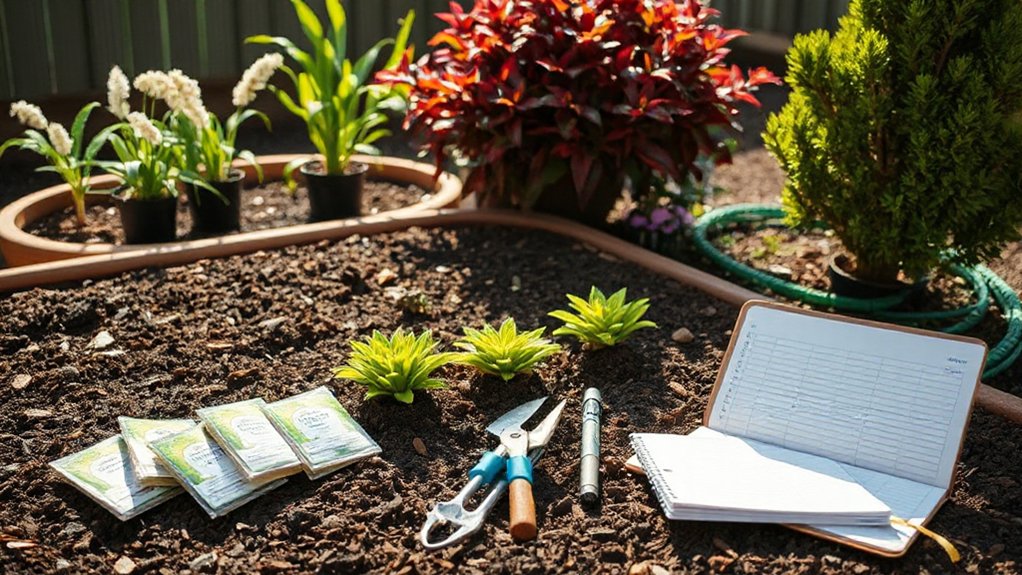
Choosing high-value plants and tools starts with smart pairing: select resilient, versatile species that deliver color, structure, and season-long interest, and pair them with durable, multi-use tools that survive frequent use.
In practice, map a garden layout that concentrates on low-maintenance perennials and modular annuals, so you don’t overcommit resources.
Prioritize plants with drought tolerance, pest resistance, and compact or upright growth to maximize space and reduce pruning needs.
Pair these with tools designed for longevity: sharpened blades, comfortable grips, and corrosion-resistant metal.
Focus on soil preparation: amend with compost and a balanced slow-release fertilizer to boost vigor before planting.
Choose containers or beds that match your climate zones, and label groups to simplify ongoing care and budgeting.
Forecast Realistic Costs With a Buffer
Forecasting costs with a built-in buffer keeps your gardening makeover on track and prevents surprises. You’ll apply cost estimation and budget planning to every phase, so you know what to expect before you buy.
Start by cataloging essentials, then add a 10–20% contingency for plants, soil, tools, and delivery.
Track seasonal sales and bulk discounts to shave numbers without skimping on quality.
Use conservative estimates for labor and permits if applicable, and document assumptions so you can adjust quickly.
Revisit the buffer monthly as prices shift and projects move forward.
This disciplined approach gives you a realistic baseline, reduces stress, and protects your overall budget.
- Identify fixed versus variable costs upfront
- Apply a consistent contingency percentage
- Leverage bulk buying and promotions
- Review and adjust estimates regularly
DIY Fixes to Save Big Without Sacrificing Impact
For DIY fixes that save big without skimping on impact, start by prioritizing high-return updates you can tackle yourself and reuse where possible. Target tasks that add function without major cost, like improving soil health, upgrading lighting, and revitalizing plant beds with mulch you already have.
Use gardening tools you own rather than renting, and select scalable changes you can expand later. Before you lift a shovel, run soil testing to guide amendments precisely, avoiding waste and over-spending.
Rework existing structures—edge beds, weed barriers, and drip lines—before buying new. Choose low-cost materials: salvaged stones, simple wooden borders, and paint for fences.
Track savings with a simple spreadsheet, and document improvements to measure impact over time. Prioritize projects that yield visible results quickly.
Plan in Flexible Stages That Fit Your Lifestyle

- Break tasks into monthly milestones
- Schedule seasonal planting windows and reviews
- Reserve a contingency fund for quick updates
- Reassess aesthetics after each season
Pick Area-Appropriate, Affordable Plants
Focus on budget-friendly plant choices that thrive in your specific area, so you get more color and impact without overspending. Start by identifying zone, sun exposure, and soil type.
Then pick area-appropriate selections that perform well under those conditions and won’t break your budget. Consider groupings of affordable perennials, annuals, and hardy shrubs to create a cohesive, low-maintenance backbone for your makeover.
Budget-Friendly Plant Choices
Looking for plant options that save you money without sacrificing impact? You’ll focus on hardy, area-adapted choices that perform well with minimal care. Choose perennials and groundcovers that bloom across seasons and reduce replanting costs.
Favor native or well-adapted ornamentals that resist local pests and thrive in your soils. Consider container mixes you can reuse and long-lived shrubs with steady growth.
Plan for seasonal pruning to keep plants compact and healthy, lowering waste and replacement needs. Maintain a simple pest-control routine with preventive steps like spacing plants for air flow and removing debris.
Prioritize plants that fit your sun, soil, and water conditions to minimize supplements and irrigation.
- Native perennials with repeat bloom
- Drought-tolerant shrubs for year-round form
- Groundcovers that reduce soil erosion
- Container-friendly, long-lived options
Area-Appropriate Selections
Start with reliable, low-cost perennials and well-adapted annuals that seasonally fill gaps without fuss. Consider local nurseries, swapping cuttings, and selecting cultivars noted for drought or heat tolerance if relevant.
Group plants by water needs to simplify irrigation and pest control, reducing waste and effort. Prioritize budget-friendly options like native grasses, flowering perennials, and evergreen structure for year-round appeal.
Plan for garden decor that complements the palette without overpowering it. Use mulch to suppress weeds and retain moisture, then monitor pests early to prevent costly interventions.
Maintain healthy soil to sustain growth and affordability.
Track Progress and Adapt to Changes
Tracking progress keeps your makeover on track and prevents wasted effort. You’ll monitor outcomes and compare them to your plan, noting what works, what doesn’t, and what to tweak next. Keep a simple log: dates, costs, plant performance, and seasonal maintenance tasks completed.
If results lag, adjust by reallocating budget, swapping plants, or altering layouts before costs surge. Regular checks help you catch pest control issues early and prevent spread, saving time and money.
Don’t shy away from small tweaks; they compound into real savings over a season. Stay flexible, but document decisions to avoid repeat mistakes and honor your budget.
- Track costs and outcomes monthly with a concise log
- Schedule seasonal maintenance to prevent waste
- Reallocate funds for underperforming areas
- Note pest control steps and responses for future reference
Common Budget Pitfalls to Avoid (and How to Prevent Them)
You’ll want to spot budgeting mistakes early and set a clear cost ceiling before you start shopping.
Expect hidden costs like soil amendments, delivery, and tools, and build in a small contingency for surprises.
Use prevention tactics—prioritize essentials, compare specs, and track every dollar to keep savings real.
Budgeting Mistakes to Dodge
Avoiding common budgeting mistakes starts with a clear plan and honest numbers. You’ll guard your funds by listing everything you’ll need, estimating costs realistically, and tracking every purchase.
Don’t overshoot on trends; favor durable items that hold value. Plan for hidden needs like garden furniture and pest control, budgeting a sensible module for these essentials rather than scrambling later.
- Budget for garden furniture thoughtfully, prioritizing quality over flash
- Reserve a separate line for pest control to prevent surprise spikes
- Compare tools and soil amendments before buying, avoiding “good enough” impulse buys
- Build a small contingency (5–10%) for weather-related delays and price changes
Hidden Costs To Expect
Hidden costs can quietly derail a makeover if you don’t spot them early. You’ll want a tight worksheet that tracks more than seed costs. Expect delivery fees, disposal charges, and soil amendments you didn’t plan for, then add a small buffer for weather-related delays.
Look beyond the price tag on each plant or tool—note installation needs, irrigation tweaks, and potential permits that can surface after you’ve started.
Maintenance costs tend to creep in after the thrill of a refreshed yard wears off, so estimate yearly care: pruning, mulching, pest prevention, and fertilizer cycles.
Build a contingency of 10–15% of your total budget to absorb unexpected fees. By forecasting these expenses, you keep your plan realistic and your project on track.
Prevention Tactics For Savings
To keep costs down, start by identifying the most likely budget traps and address them before you shop. You’ll save by planning, prioritizing, and avoiding impulse buys that blow the budget.
Prevention tactics focus on common missteps that inflate costs later, especially around garden maintenance and water conservation. By forecasting needs, you prevent overbuying plants, tools, and materials that won’t fit your space or climate.
Use durable, multi-purpose items and invest where they pay off over time. Track water use early to spot leaks, inefficient irrigation, and seasonal waste.
Prepare a simple maintenance calendar to prevent costly surprises and keep your garden thriving without constant overhaul.
- Budget-first planning and prioritization
- Multi-use tools and durable materials
- Early water-use monitoring and leaks
- Seasonal maintenance scheduling and tracking
Frequently Asked Questions
How Can I Measure the Real Lifespan of Budget Plants?
You can gauge budget plant lifespans by selecting perennials and sturdy annuals, comparing mature sizes, and tracking survival over seasons. Assess plant selection, observe growth rates, factor root health, and adapt watering techniques to reduce stress and extend longevity.
What Is the Best Way to Estimate Soil Improvement Costs?
You estimate soil improvement costs by starting with soil testing, then budget for amendments. Track amendment costs, compare suppliers, and choose economical options. You’ll prioritize essential tests, incremental improvements, and practical, cost-conscious adjustments within your garden plan.
Which Unexpected Items Often Blow a Garden Budget?
Budget overruns sneak in like a leak in a boat, you’ll spot them early. You’ll overspend on Garden decor and Pest control surprises, so budget for misfit items, installation delays, and recurring maintenance before you commit.
How Do I Prioritize DIY Over Paid Services Safely?
Prioritize DIY safely by outlining tasks you can handle, then hire pros for high-risk work. Garden design first, then DIY safety checks, plan budgets, and stagger purchases. Document measurements, use proper tools, and seek certifications for complex installations.
Can I Repurpose Existing Furniture for Garden Uses?
Yes, you can repurpose existing furniture for garden uses, turning Garden furniture with Recycled materials into durable, budget-friendly pieces. Start by cleaning, sealing, and staining; add weatherproof cushions, and adapt heights for practical, long-lasting outdoor spaces.
Conclusion
You’ve got a clear plan and a measured heart for saving. As your budget blooms, track every dollar like a careful gardener noting soil and rain. Stay flexible—weed out costly fads, prune big-ticket items, and reuse what you already own. Mulch, edging, and drought-tolerant choices stretch your dollars without sacrificing curb appeal. With steady steps and smart stalls for surprises, your garden makeover will flourish on time and within budget, turning tips into thriving, low-stress beauty.