
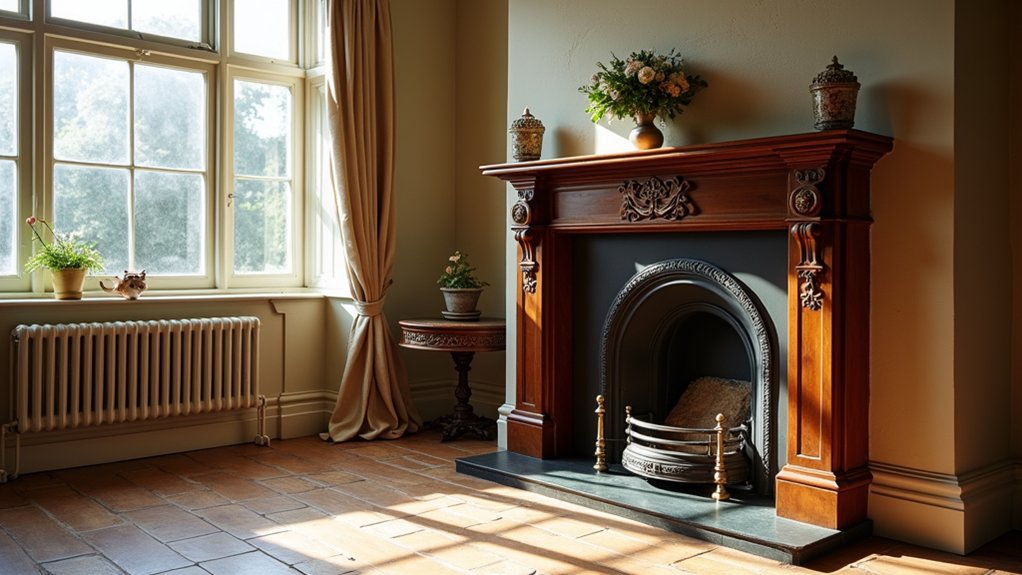

Edwardian fireplace makeovers add value by balancing authentic period detail with durable, efficient updates that boost safety and usability. Start with evaluating value through structure, brick, and mortar integrity, then decide between restoration and modernization to preserve charm while improving performance. Consider restoring marble mantels or refining surrounds, and choose finishes that honor the era. Add energy-efficient inserts that look period-correct. Track ROI with a clear budget and milestones; subtle details elevate curb appeal and space. Learn more as you progress.
Assessing Value: Criteria for Edwardian Fireplace Makeovers
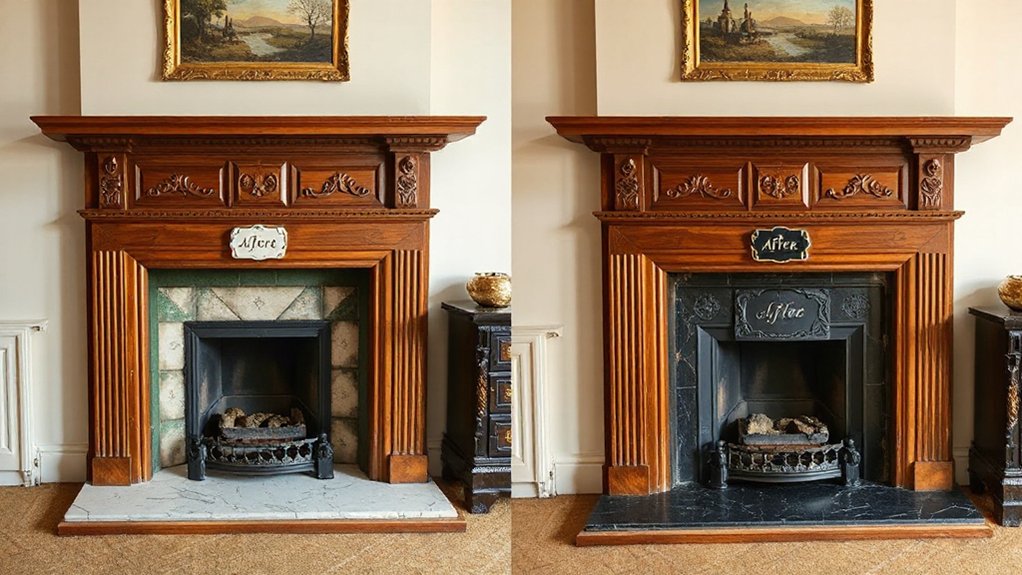
When evaluating value in Edwardian fireplace makeovers, start with what matters most: structural integrity, material quality, and potential for aesthetic impact. You assess load-bearing capability, brick and stone condition, and any subsidence risk, then appraise mortar joints for longevity.
Next, you examine material authenticity: are original or period-appropriate elements preserved or accurately replicated? You weigh the cost and feasibility of sourcing suitable mantels, tiles, and metals versus modern substitutes, ensuring they read as Edwardian to the trained eye.
Historical accuracy guides choices that affect resale and credibility, not just charm. You also consider finish quality, patina, and dust-free integration with surrounding trim.
Finally, you balance preservation intensity against practical constraints, aiming for durable value that respects the era and room scale.
Preserve or Modernize: Deciding Between Restoration and Simplification
You must decide whether to restore or modernize based on how restoration preserves period detail against the time and cost of updates.
We’ll weigh the cost and time balance, considering how each path impacts aesthetics and long‑term value.
This discussion sets the framework for balancing authentic charm with practical, contemporary use.
Restore Vs Modernize
Deciding between restoration and modernization hinges on your priorities for authenticity, function, and budget. You weigh historical accuracy against practical use, then decide how much of the original character to preserve.
If you value period detail, restoration keeps historical accuracy intact, emphasizing craftsmanship, patina, and compatible finishes. Yet you acknowledge material durability; some Edwardian components may demand careful conservation rather than full replacement.
Modernization offers streamlined operation, safer combustion, improved efficiency, and simpler maintenance, with less risk to structural integrity.
In practice, you often blend approaches: restore key focal elements, then selectively modernize auxiliary systems or nonessential details. Your aim is a fireplace that remains true to its era while meeting current daily needs.
Prioritize durable, compatible materials and professional assessment to balance authenticity with practicality.
Cost And Time Balance
Cost and time are the practical levers in weighing restoration against modernization. You weigh constraints, then decide where effort buys value, balancing authenticity with efficiency. Preservation rewards vintage charm, while modernization prioritizes safety and ease of maintenance.
Consider durability of materials and the anticipated lifespan of each approach. You’ll often gain clearer mechanics, improved insulation, and accessible re-use with careful restoration; or you’ll reduce complexity, material waste, and long-term upkeep with simplification. Use a disciplined checklist to avoid scope creep.
4-point quick guide:
1) Assess structural integrity and historical features for preservation feasibility.
2) Evaluate required updates for safety codes and energy efficiency.
3) Compare initial costs against projected maintenance savings.
4) Align choice with long-term residence plans and resale value.
Aesthetic And Value Impact
Choosing between restoration and simplification hinges on aesthetic impact and value. You evaluate whether preserving historical cues sustains authenticity or modernization improves usability and resale appeal.
Historical accuracy matters: retaining original detailing, proportions, and ornament signals respect for the Edwardian era, even if some elements are subtly updated. You balance the allure of period charm with practical upgrades that boost performance and longevity.
Material durability informs choice: firebox stability, brick integrity, and mantel support guide whether to repair or replace components.
If you keep the core silhouette, you can simplify surfaces or reface with durable, period-appropriate finishes to reduce upkeep while preserving character.
But if structural faults persist, a thoughtful modernization plan may deliver greater long‑term value without erasing the hallmark aesthetic.
Restore Marble Mantels or Refine Surrounds
If you’re restoring marble mantels or refining surrounds, start by evaluating the existing condition to determine the most effective approach. Marble restoration and surround refinement demand controlled methods, not guesswork, to protect historic character while improving function.
- Assess cracks, staining, and surface wear to prioritize treatments.
- Seal porous marble after cleaning to prevent future staining.
- Choose gentle abrasives and compatible compounds for restoration only when necessary.
- Refine surrounds with proportional profile updates that respect Edwardian lines.
This approach preserves authenticity, reduces overreach, and delivers durable results. You’ll gain improved visual cohesion and safer, easier maintenance.
Marble restoration and surround refinement should focus on longevity, tactile quality, and appropriate patination, never erasing provenance.
Choose Finishes That Honor the Era
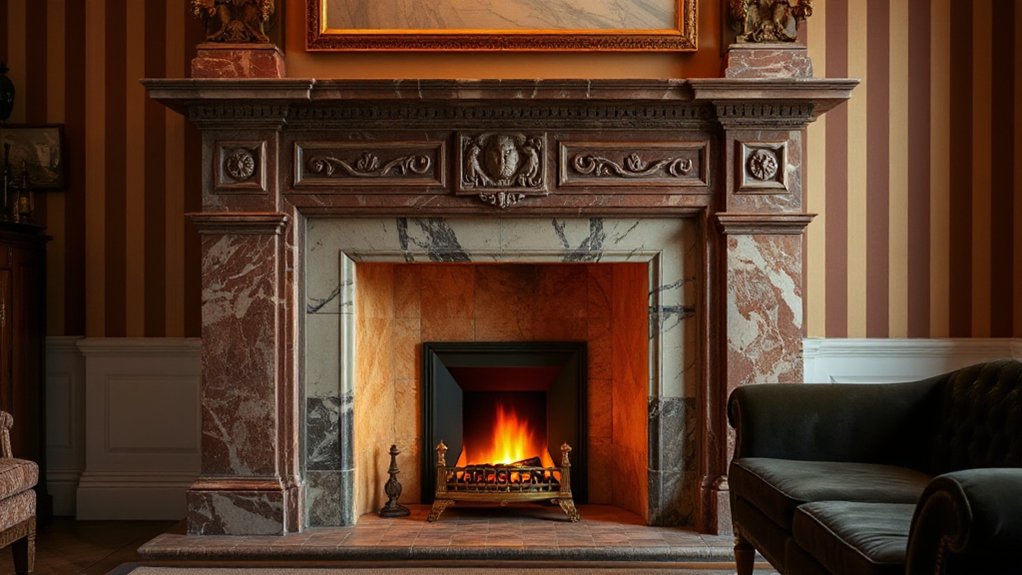
To honor the Edwardian era, select finishes that emphasize authentic materials, restrained palettes, and subtle patina. You’ll pair natural stone, warmed woods, and metal accents to echo the period without tipping into novelty.
Prefer low-sheen surfaces that reveal texture, not reflection, so the fireplace reads as a learned craft rather than a fashion statement. Use color sparingly: ivory, taupe, and smoky grays create a quiet backdrop for architectural detail.
Victorian influences should inform proportion and ornament without overpowering clean lines. For finishes, favor hand-applied limewash, shellac, or waxed surfaces over glossy coatings.
Embrace Modern reinterpretations that respect scale and period-appropriate restraint, ensuring new materials age gracefully beside antique elements.
The result: a cohesive, value-adding hearth that honors tradition while remaining current.
Energy-Efficient Inserts That Look Period-Correct
You can balance efficiency with period-correct charm by selecting energy-smart inserts that mimic traditional mantels and flame patterns.
Prioritize units with sealed combustion or 90+% AFUE ratings and look for authentic detailing—trim, firebox shape, and ember bed—that read as Edwardian rather than modern.
This approach gives you solid savings without sacrificing the era’s aesthetic cues.
Energy-Smart Inserts
- Choose period-accurate facades
- Optimize venting and clearances
- Prioritize efficient, quiet operation
- Schedule regular inspections
Period-Crompting Aesthetics
Balancing energy efficiency with period-appropriate visuals isn’t about sacrificing realism for modern tech; it’s about selecting inserts that convincingly mimic Edwardian design while delivering efficient performance. You’ll prioritize slender profiles, çed veneers, and ember-bed realism to respect Victorian influences without over-egging authenticity.
Seek firebox inserts that reproduce the glow of coal with programmable heat, adjustable flame height, and quiet operation. Consider venting compatibility and installation ease, ensuring the unit remains discreet inside a mantle that outwardly reads Edwardian.
Look for Art Deco integration cues—linear detailing, muted metal finishes, and symmetrical lines—that harmonize with earlier ornamentation. The goal is credible period prompting, where efficient heat delivery meets stylistic fidelity, enhancing value through seamless, low-maintenance performance rather than conspicuous modernization.
ROI and Budgeting for Edwardian Makeovers
Estimating ROI for Edwardian fireplace makeovers starts with a clear budget and realistic expectations about value. You assess costs up front, weigh expected performance, and set milestones to measure progress against market reality.
Historical accuracy and material durability drive long-term value, so invest in vetted components and period-appropriate finishes that endure. Your plan should bracket ROI around both resale uplift and enjoyment, not just aesthetics.
- Define non-negotiables for historical accuracy and durable materials to protect value.
- Itemize costs by category (materials, labor, permits, contingencies) with a 10–15% buffer.
- Prioritize high-impact updates that improve function and appeal without oversized spend.
- Track progress with quarterly reviews and adjust the budget to stay aligned with market signals.
Decorating Details to Elevate Curb Appeal and Living Space
A well-executed decorating plan ties your Edwardian fireplace makeover to curb appeal and the living space beyond, leveraging period-accurate details to create a cohesive, inviting look. You’ll emphasize proportional sculptural features and symmetry, aligning mantel accents with room geometry to reinforce classical order.
Introduce Victorian influences through delicate fretwork, turned newel posts, and subtly etched motifs, but balance them with clean lines for a fresh silhouette. For living spaces, curate a restrained palette that lets the fireplace remain the focal point while guiding furniture placement to enhance flow.
Use Contemporary contrasts—metallic trims against matte finishes, lacquered surfaces beside textured fabrics—to sharpen visual impact without clutter. This disciplined approach delivers timeless elegance fused with practical, value-driven design.
Frequently Asked Questions
How Can I Verify Authentic Edwardian Fireplace Dates?
To verify authentic Edwardian fireplace dates, you examine construction cues and provenance. Use Restoration techniques to test material authenticity, check joinery, inferred ages, and manufacturer marks. Compare with original plans, and consult archives or a conservator for precision.
What Safety Upgrades Are Invisible but Essential?
You should prioritize hidden reinforcements and fireplace safety by upgrading venting, securing chimney liners, and installing non-combustible barriers; these measures are invisible yet essential, reducing risk while preserving aesthetics, and ensuring reliable performance without altering appearances.
Can I DIY Finish Choices Without Harming Value?
Yes, you can DIY finish choices without harming value. Focus on Modern paint techniques, keep authenticity, and apply DIY restoration tips with precision, ensuring compatibility with existing materials and avoiding overpriced trends that undercut classic charm.
Which Local Regulations Affect Historic Fireplace Alterations?
You’ll need to consult local historic preservation codes and building authorities; regulations vary by jurisdiction. Restoration techniques must respect period authenticity, and material sourcing should favor compliant, non-harmful options to preserve value while meeting compliance.
How Do I Source Period-Accurate Mantel Accessories?
You source period-accurate mantel accessories by inspecting reputable dealers and museum catalogs, prioritizing decorative tile finishes and authentic antique tools, verified for provenance; ask for receipts, compare patina, and avoid over-restoration to preserve historical integrity.
Conclusion
You’ll finish with a fireplace that speaks Edwardian truth without shouting it. Start by evaluating value—costs against long‑term gains—and decide between restoration and simplification as your compass. If you restore marble mantels, you savor heritage; if you refine surrounds, you preserve proportion. Choose period‑honoring finishes and energy‑efficient yet period‑correct inserts. Think ROI like a careful gardener: one well‑placed bloom can elevate the whole bed. Your makeover becomes a measured investment that adds lasting curb appeal and daily warmth.