


To create a cosy townhouse living room, start with a neutral base, then layer warmth with textures you already own and a few budget-friendly accents. Plan a compact, multi‑purpose layout, add dimmable lights for mood, and choose durable fabrics that wear well. Keep storage smart and clutter-free, invite personal touches, and pace your progress—the right mix settles into place and invites you to keep tweaking until the space truly feels like home. You’ll see why small changes matter.
How to Define a Cozy Townhouse Living Room Style
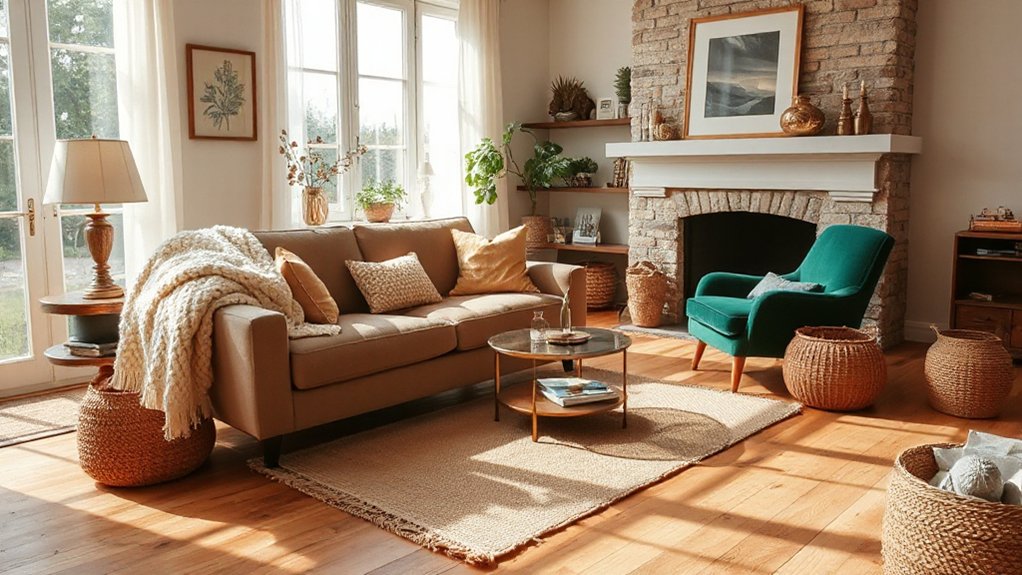
A cozy townhouse living room combines warmth with functional design, so start by defining a clear vibe and budget. You’ll pin down a specific mood—inviting, calm, or eclectic—and set a dollar cap for furniture, lighting, and textiles.
Choose a neutral base for walls and larger pieces, then add character with botanical accents to keep the space fresh without clutter. Prioritize durable fabrics and easy-care finishes that fit daily life in a townhouse, where space is precious.
Integrate vintage accessories as focal points or subtle personality cues, balancing old-world charm with modern practicality.
Plan lighting that layers warmth—soft ambient, task, and accent—to avoid harsh contrasts.
Finally, document measurements and a simple shopping list to prevent impulse buys.
Measure for Comfort: Plan a Comfortable Layout in Small Spaces
To maximize comfort in a small space, map clear traffic paths first so you don’t crowd key zones.
Define soft seating areas with scale-appropriate furniture and keep sightlines open. Using underused corners for extra seating or storage can help optimize the space.
Choose proportionate furnishings that fit your room’s footprint, balancing function and budget while you optimize flow.
Optimize Traffic Flow
How can you guarantee smooth movement through a small living room without sacrificing comfort or style? Start with deliberate furniture arrangement that preserves clear sightlines and easy foot paths. Place sofas and chairs away from doorways, and keep a generous 30-36 inch corridor to traffic hotspots.
Use low-profile pieces to prevent visual clutter and to maximize openness. Highlight traffic management by grouping seating into functional zones with a single flow line; avoid perpendicular clutter in the center.
Opt for multi-functional furniture, like a slim coffee table with rounded edges and built-in storage, to reduce trips for items you use often. Prioritize doorway clearance and consider wall-mounted lighting to minimize lamp clutter.
Finally, measure, re-evaluate, and adjust until movement feels effortless and budget remains intact.
Define Soft Seating Zones
In a small living space, define soft seating zones by grouping compact, low-profile pieces that invite conversation without crowding the room. You’ll want a primary seating cluster centered around a coffee surface, plus a secondary perch for flexibility.
Choose a compact sofa or loveseat, a pair of armless chairs, and a slim bench or ottoman that can double as extra seating. Maintain clear sightlines to traffic pathways and focal points, like a TV or fireplace.
Use vintage textiles on cushions and throws to add warmth without bulk, and layer decorative accents—lamps, trays, and a rug—to anchor zones.
Prioritize modular pieces that reconfigure easily for guests, naps, or work sessions, keeping budget in check while preserving comfort and cohesion.
Use Proportionate Furnishings
Smart furniture sizing matters: scale every piece to fit the room without crowding it. When you plan a comfortable layout, prioritize proportion over quantity. Choose sofas and chairs that share a similar footprint and avoid oversized anchors in tight spaces.
Measure doorways, walkway clearances, and rug edges, then place seating to create natural conversation zones without blocking traffic. Use a balanced mix of vertical and horizontal elements so each piece supports the next without competing for attention.
Add decorative accessories thoughtfully—one or two statement pieces keeps the room cohesive, not cluttered. Include statement artwork at eye level to anchor walls without overwhelming floor space.
Opt for versatile pieces, like coffee tables with storage, to maintain openness while staying budget-conscious.
The Art of Warm Light: Layer Lamps for Ambient Glow
Layer your lighting to create depth: start with a warm main lamp, then add softer accent options at eye level to bounce light around the room.
Use bulbs in the warm to soft white range and mix floor, table, and wall lamps to build a layered glow without harsh shadows.
This approach stays budget-friendly while giving you flexible mood control and practical ambience.
Layered Glow Techniques
Layered glow starts with identifying three essentials: ambient overhead light, task lighting, and a cozy accent glow. You’ll balance sources to avoid glare while keeping a soft, cohesive mood.
Begin with a dimmable ceiling fixture for ambient lighting, paired with a plug-in floor lamp for flexible task lighting near seating. Add a table lamp on a sideboard to cue decorative accents without overpowering the room.
Use warm bulbs in the 2700–3000K range to preserve a cozy tone. Keep shades simple to prevent uneven lighting and wasted glow.
Compute energy use and switch controls to fit routine: evenings, reading corners, and social moments. Label zones clearly, so you can adjust without hunting remotes.
This approach stays budget-conscious and practical.
Warm Tone Lamping
Warm tone lighting is all about stacking lamps to bath a room in inviting, uniform glow. You’ll balance ceiling, table, and floor lamps to avoid harsh pockets of shadow.
Prioritize warm bulbs (2700–3000K) and dimmers so you can tune mood without shouting brightness.
Choose lamp bases that visually relate to your minimalist decor: sleek shapes, matte finishes, and compact footprints that don’t clutter surfaces.
Use three light sources as a minimum to create depth, then add a fourth near artwork if you want accent drama.
Place a low, unobtrusive lamp beside statement artworks to pull color into the room without glare.
Keep cables hidden, and invest in a single, affordable dimmer for overall control.
This approach remains budget-conscious and practical.
Texture That Invites: Fabrics, Rugs, and Tactile Accents
Texture invites touch. You’ll pick fabrics, rugs, and tactile accents that endure daily life without fuss. Prioritize textural contrast and practical durability: weave, boucle, and brushed cotton pair well with low-pile rugs for easy cleanup.
Layer warmth with throws, cushions, and a medium-weight velvet pillow that survives frequent use. Choose rugs sized to anchor seating and add noise dampening without breaking the budget.
- Mix textures in a restrained palette for coherence
- Use a durable, washable rug for high-traffic zones
- Add tactile accents like knitted poufs or jute baskets
- Select cushions with different weaves on the same color
- Include one statement textile (contrast stitch or stitching detail)
This approach stays affordable, functional, and inviting.
Color Palettes for Intimate, Airy Rooms

Soft-hued neutrals keep the room calm, while light, airy contrasts prevent it from feeling flat.
Add warm wood accents to ground the space without breaking the budget.
Keep colors simple and scalable so you can adjust the look with small updates over time.
Soft Hued Neutrals
- Add depth with layered textiles in varying textures (linen, wool, cotton) within the same neutral family.
- Introduce vintage patterns through small accents like cushions or a textured rug.
- Choose statement curtains in a slightly darker neutral to frame windows.
- Mix wood tones for furniture to reinforce warmth.
- Use minimal metallic accents for a polished, budget-friendly lift.
Light, Airy Contrasts
Prioritize natural light by keeping window treatments light, minimal, and layered to reflect daylight without glare. Choose airy decor: linen textiles, sheer drapes, and woven rugs that soften edges while preserving airiness.
Use matte paints in pale tones to avoid glare, and reserve glossy finishes for small accents to prevent heaviness. Furniture should be slim, with exposed legs to enhance openness.
Limit heavy, bulky pieces; opt for multipurpose, budget-friendly options. This approach yields a calm, roomy feel without sacrificing function or comfort.
Warm Wood Accents
- Choose unfinished or lightly finished planks for a cost-friendly focal wall or coffee table.
- Pair vintage textiles with warm woods to soften edges and texture.
- Select a single statement lighting piece to anchor the room.
- Opt for furniture with slim silhouettes to preserve airiness.
- Refinish existing pieces instead of buying new to keep costs low.
Smart Storage Ideas That Stay Tucked Away
Smart storage can transform a cozy room without crowding it. You’ll keep essentials close while preserving flow, using clever, budget-friendly ideas.
Start with hidden compartments in ottomans, beds, and coffee tables to stash throws, remotes, and charging cables out of sight.
Multifunctional furniture earns its keep: a console that hides a slim shelf, a sofa bed that folds flat without bulk, or a wall-mounted desk with discreet drawers for paperwork.
Choose modular units you can rearrange as needs shift, avoiding permanent clutter traps.
Opt for slim profiles, light colors, and soft-close hinges to reduce noise and visual heaviness.
Label baskets or bins to locate items fast, and schedule a monthly tidy.
These choices deliver organized spaces that feel larger and calmer.
Seating Strategies: Maximize Comfort Without Crowding
Seat yourself up front: you don’t need a bulky sofa army to cozy a room. You’ll maximize comfort by thoughtful layout, compact silhouettes, and smart scale. Focus on flow, not fluff, and weave color psychology with practical placement guided by Feng shui principles.
- Use a sectional with a slim profile or two armless chairs to create flexible seating zones.
- Opt for a low-profile coffee table to maintain sightlines and ease of movement.
- Choose warm, cohesive hues to invite conversation and calm.
- Place seating to face a focal point without blocking doorways or grids.
- Add layered lighting and a compact ottoman for extra seating when needed.
Color psychology and Feng shui principles guide balance, distance, and social energy without overcrowding.
Soft Surfaces and Quiet Acoustics for a Calm Room

Soft surfaces absorb sound and create a calmer vibe, so start with a practical mix of textiles and textures. You’ll gain quiet by choosing surfaces that tame echo, like wool rugs, cork underlays, and linen curtains.
Prioritize dense weaves and low-pile options for floors and seating to minimize reflected noise, then add soft cushions to break up sound waves without clutter.
Fireplace placement matters: position any hearth so it isn’t the only noise source in a room and avoid hard, flat walls directly opposite seating.
Window treatments should be substantial enough to dampen outside noise while preserving light. Choose layered options—cellular shades plus heavy drapes—to control acoustics efficiently and stay within budget.
Maintain a calm, cohesive palette to reinforce the tranquil mood.
Layering Textiles: Throws, Cushions, and Blankets
Layering textiles is all about function and feel: start with a solid base of throws and cushions in durable fabrics, then add blankets for warmth and texture without clutter. You’ll achieve tactile accents that stay practical and affordable by choosing midweight, washable materials.
Aim for a cohesive palette and varied textures to avoid visual noise while maximizing comfort. Keep sizes modest and layering intentional, so each piece earns its keep rather than piling up.
- opt for a neutral base with a pop of color in one cushion
- mix weaves: knit, linen blend, and smooth cotton
- choose machine-washable throws for easy care
- place a lightweight blanket over the arm of furniture
- balance texture with subtle sheen in a single accessory
This approach delivers textile layering without overwhelming the room.
Greenery and Natural Elements for Warmth
Greenery and natural elements soften a room and add warmth without clutter. You can achieve this with practical placements and affordable choices.
Begin with a single, sturdy indoor plant on a corner table to anchor the space without overwhelming it. Choose low-maintenance varieties like pothos or ZZ plant to minimize care while maximizing lush effect.
Incorporate natural textures through jute or sisal rug, woven baskets, and linen curtains to echo outdoors. Use a small, neutral-toned vase of branches or dried stems to introduce vertical interest without crowding.
Position plants at eye level to draw attention and improve air quality. Keep décor focused and budget-conscious: replace seasonal stems, rotate containers, and maintain cleanliness for lasting warmth and essential.
Indoor plants complement natural textures beautifully.
Personal Touches: Art, Books, and Meaningful Accents

Personal touches make a living room feel lived-in without breaking the bank. You’ll curate a calm, intentional vibe by blending your art collection with selective, meaningful accents that echo your daily life.
Prioritize pieces that spark joy or conversation, not volume. Rotate a few favorites seasonally to keep the room fresh without buying more.
Use height, texture, and scale to create focal points that feel deliberate, not cluttered. Pair books with art—display a favorite novel spine beside a framed quote.
Choose meaningful accents that have purpose, like a travel memento or heirloom found-object, to tell your story.
- Curate an art collection with 2–4 statements, rotating pieces over time
- Display a few respected books as decor and conversation starters
- Mix metals and woods for cohesive contrast
- Include a personal memento or heirloom
- Place a small, heartfelt object at eye level for impact
Quick-Win Maintenance: Keeping a Cozy Room Clutter-Free
How can you keep a cozy room effortlessly clutter-free without a full makeover? Start with a daily 5-minute reset: clear surfaces, return items to their boxes or drawers, and straighten cushions.
Use hidden storage ideas—an ottoman with a tray, a coffee table with a lower shelf—to corral remote controls, magazines, and chargers.
Prioritize multi-use pieces: a bench that doubles as seating and storage, a console with drawers for small essentials.
Choose vintage decor sparingly; one well-placed piece reduces visual noise.
For walls, swap in a single statement artwork instead of multiple frames to maintain calm.
Schedule weekly audits: discard unused gadgets, donate surplus decor, and wipe surfaces with a microfiber cloth.
Keep maintenance predictable, affordable, and repeatable to preserve a cozy, clutter-free vibe.
Frequently Asked Questions
How Can I Create a Cozy Mood on a Budget?
Yes—you can create a cozy mood on a budget by mixing affordable accents with DIY decor, prioritizing warmth and texture. You’ll craft planet-friendly, practical charm, using affordable accents and DIY decor to maximize coziness for less.
What Are the Best Lighting Tips for Small Rooms?
“Less is more,” you should maximize ambient lighting with compact bulbs and smart controls, and add statement fixtures to draw eye upward. You’ll balance task lighting, keep costs low, and guarantee small rooms feel brighter and practical.
How Do I Balance Warmth With Natural Light?
You’ll balance warmth with natural light by pairing a bright palette with warm accents, and placing a fireplace decor focal point near windows. Choose affordable window treatments and layered lighting to keep the room cozy yet daylight-friendly.
Which Textures Feel Plush but Easy to Clean?
Plush fabrics plus easy to clean textures give you practical, pampering comfort. Prioritize microfiber, nylon blends, and performance suede; opt for stain-resistant finishes. You’ll stay stylish, budget-conscious, and breezily balanced between plushness and wipe-clean practicality.
How Can I Disguise Storage in a Stylish Way?
You can disguise storage with hidden compartments and decorative baskets, keeping surfaces clear. Opt for furniture with built-in hidden compartments, pair with decorative baskets for texture, and choose budget-friendly hides that blend in while staying practical and tidy.
Conclusion
In this cozy townhouse, your room is a small compass, pointing you home with every detail. Each scarf-thick throw, each lamp’s warm halo, is a steady needle guiding comfort to your door. Your budget becomes the thread that weaves meaning into walls—art you love, a nook you actually use, a plant that breathes life. When clutter falls, calm rises like dawn. In this deliberate stillness, you find the warmth you’ve been shaping all along.