
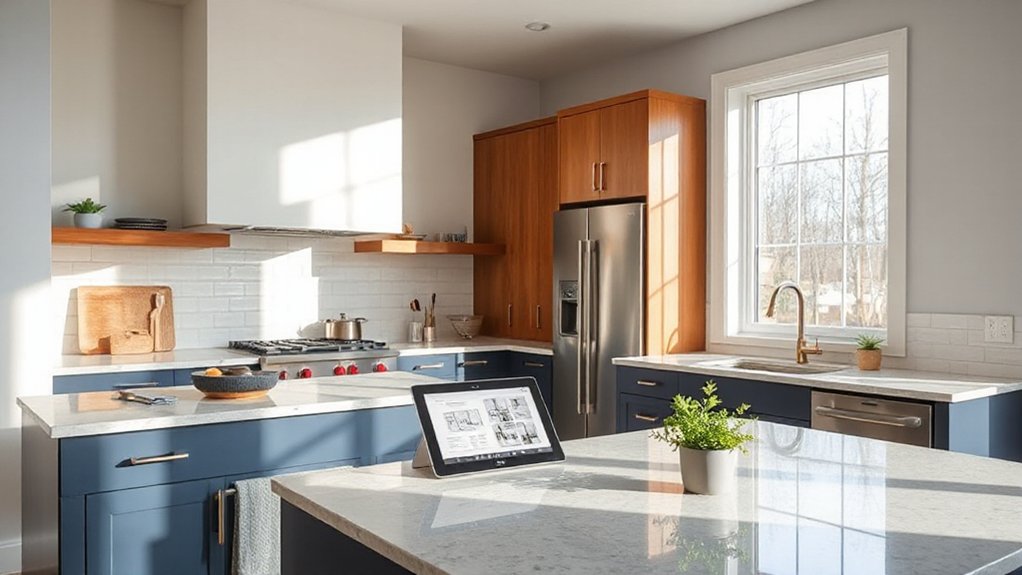

Think of your kitchen as a well‑oiled studio where every dollar must earn its keep. You’ll map zones, set a phased budget, and choose durable, affordable surfaces that read high‑end. You’ll rework the layout for flow and swap hardware to elevate the look without a full remodel. But there’s more to it than surface tricks—smart storage, lighting layers, and resale‑friendly choices all matter. Build the plan, then tighten the details as you move forward.
Start Here: Build a High-Impact Budget Kitchen Plan
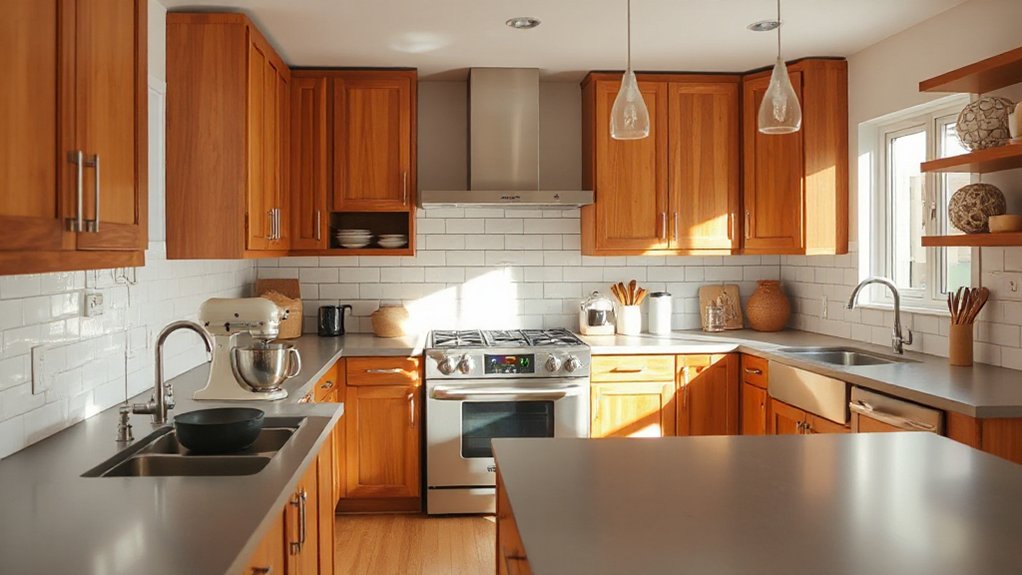
Starting a budget-friendly kitchen makeover starts with a clear plan and smart prioritization. You’ll map must-haves, nice-to-haves, and contingency funds, then quantify costs to avoid surprises.
Begin by defining your kitchen’s core functions: cooking, storage, and cleanup, and align them with your lifestyle.
Choose Eco friendly appliances that deliver performance without drain on energy or pocketbook, focusing on size, efficiency, and warranty.
Prioritize durable materials and simple layouts that reduce renovation time and ongoing maintenance.
Incorporate Vintage decor in restrained doses to achieve personality without overcommitting spend.
Create a phased timeline with milestones, vendor quotes, and a baseline budget, plus a method for tracking changes.
Document decisions, keep receipts, and reassess weekly to stay aligned with your targets and avoid scope creep.
Define Your Budget and Zone Allocations
Set a clear budget and define your zones to prevent scope creep and misaligned decisions. You’ll map total funds to specific areas, so every choice aligns with your plan and milestones.
Start with budget constraints for cabinetry, appliances, and utilities, then assign each dollar to a zone—prep, cooking, cleaning, storage—so you can measure progress quickly.
Use zoning strategies to limit scope drift: designate fixed tasks per area and set decision deadlines to avoid last‑minute swaps.
Tie allowances to realistic timelines, and build a contingency buffer for unforeseen fixes.
Document each zone’s goals, constraints, and required finishes, then review monthly to catch deviations early.
This disciplined approach keeps the makeover focused, cost‑controlled, and outcome‑driven.
Prioritize Durable, Affordable Materials for Visible Surfaces
Great choice to start with materials that balance durability and cost for what guests see first. Consider surfaces that resist nicks while staying within budget.
Look for options with solid warranties and low maintenance. I’ll share practical tips on selecting durable, affordable materials and maximizing visible-surface longevity.
Durable, Budget-Friendly Materials
What durable, budget-friendly materials will hold up under daily kitchen use without breaking the bank? You’ll prioritize surfaces that survive heat, moisture, and daily abuse while staying affordable.
Choose solid-surface composites or quartz-look laminates for countertops, offering durability and easy care at lower cost.
For cabinetry, thermofoil or thermo-foil veneer provides moisture resistance and consistent finishes without the premium price of real wood.
Backsplashes benefit from ceramic or porcelain tiles, which resist stains and scratches and are easily replaceable if needed.
Flooring should balance wear resistance and cost; look to porcelain tile or luxury vinyl plank with a sturdy wear layer.
Sustainable materials, vintage accents, and a tight installation plan help you achieve lasting, budget-smart elegance.
Prioritize warranties and finish quality to maximize value.
Visible-Surface Longevity Tips
When choosing visible surfaces, prioritize durable, affordable options that tolerate heat, moisture, and daily use without breaking the bank. You’ll benefit from materials that resist stains and scratches while staying within budget, and you’ll simplify upkeep with straightforward cleaning routines.
- Select surfaces with sealed edges and nonporous finishes to minimize staining and moisture intrusion.
- Pair heat-tolerant options with compatible sealants and clear coats for longevity.
- Establish simple surface maintenance and cleaning routines to keep color and texture consistent.
Focus on practical performance over perfection, and document care steps to extend life. In your layout, align materials with real-world use, not just aesthetics.
Your goal is durable, easy-to-clean surfaces that support a fresh kitchen look without frequent replacement. Surface maintenance and cleaning routines become your reliable toolkit.
Reimagine Layout for Better Flow Without a Full Remodel
To improve flow without a full remodel, start by rethinking traffic patterns and work zones you already have. You’re aiming for smoother progressions between prep, cooking, and cleanup, not bigger walls. Observe how you move through the kitchen during typical tasks, then map a simple triangle that minimizes distance between fridge, sink, and range.
Adjust appliance placement if needed so you can access prep surfaces without weaving around obstacles. Create creative storage that reduces clutter in high-traffic areas, like vertical dividers, pullout trays, and labeled bins near the main work zones.
Consider leveling counter heights for seated tasks and dedicating a dedicated landing area for small appliances you use daily. Let lighting angle and outlet placement support clear sightlines and quick access.
Budget Cabinet Upgrades That Look Luxe
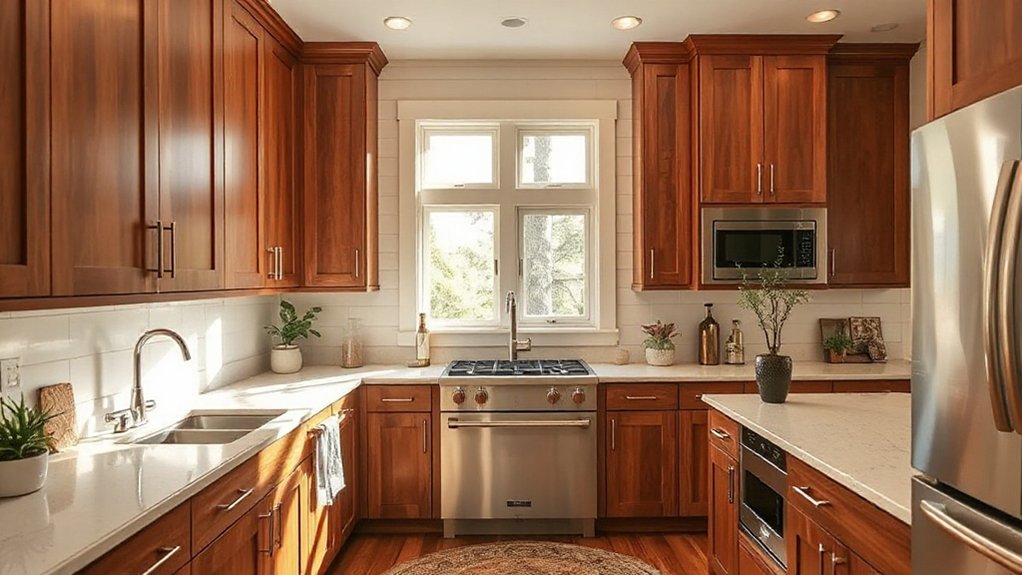
If you want a luxe look on a budget, start with your cabinets. You’ll elevate the room by prioritizing finish, hardware, and lighting cues that read upscale without a full rebuild. Focus on small, meaningful changes that feel premium and durable, not gimmicky.
- Add decorative accents on open shelves and cabinet pilasters to mirror higher-end details.
- Swap modern hardware for brushed nickel, matte black, or brass pulls to transform the silhouette.
- Integrate under-cabinet lighting to create depth and highlight color depth.
Pair cabinet upgrades with practical choices: choose durable paint or veneer, and plan for long-lasting hinges and soft-close drawers.
Appliance upgrades can finish the look with cohesive hardware and finish, ensuring a polished, cohesive kitchen.
Affordable Countertop Options That Punch Above Their Price
You can get budget-friendly countertop options that still look great, balancing cost with durability. We’ll explore surfaces that offer durable performance and aesthetic value on a budget, so you don’t have to compromise.
From practical picks to smart investments, these choices deliver more style per square foot than you’d expect.
Budget-Friendly Countertop Picks
Looking for countertop options that save money without sacrificing style? You’ve got practical, high-value choices that perform. For budget-friendly picks, consider solid-surface composites, laminated options, and ceramic tile with careful edging. These materials deliver clean looks, solid stain resistance, and easy repair paths when needed.
When you select any option, weigh maintenance tips against your kitchen routine to maximize longevity and curb ongoing costs. You’ll appreciate fast installation times and lower upfront investments compared to premium stone.
- Solid-surface composites with integrated color and seamless joints
- Laminated countertops updated with durable, heat-resistant finishes
- Ceramic tile with coordinated grout maintenance and edge treatments
Keep in mind Countertop materials and maintenance tips guide ongoing care and depreciation.
Durable Yet Affordable Surfaces
Essential balance: you can get durable countertops that don’t bust your budget. Choose materials known for longevity and low upkeep, like quartz composites, solid-surface blends, or high-pressure laminate with a granite-pattern finish. These options resist stains, heat, and scratches while remaining affordable and easy to install.
Pair them with a simple edge profile to reduce costs without sacrificing finish quality. Installation timing matters: proper sealing and substrate prep prevent warping and delamination, preserving value over time.
When planning, consider how surfaces handle daily use and cleaning routines, not just look. This keeps your project efficient.
Tie in appliance upgrades and decorative accents later to elevate style without reworking the core durable surface.
Aesthetic Value On Budget
Think you can get standout style without breaking the bank? You can, by choosing affordable countertops that look premium with smart finishes and clever sourcing. Seek materials that balance durability, care, and visual impact, then pair them with confident edge profiles and kitchen lighting.
Your goal is artistic expression that doesn’t drain funds, leveraging texture and color to evoke high-end vibes. Cultural influences can guide selection, from rustic butcher-block warmth to sleek concrete or quartz veining that mimics costlier stones.
Prioritize consistent grout lines, sealants, and maintenance plans so longevity matches price. This approach keeps your project credible, measurable, and repeatable.
- Reclaimed wood and laminate combos for character
- Porcelain-look surfaces with durable resin cores
- Matte finishes that reduce glare and fingerprints
Kitchen-First Backsplash Ideas That Save Money and Style
If you’re redesigning on a budget, start with a backsplash that combines durability, easy maintenance, and style. A kitchen-first approach saves money by reducing future repairs and simplifying cleaning.
Choose materials aligned with your routine: ceramic or porcelain tiles tolerate splashes, heat, and humidity without fuss. For impact without overspending, look at creative tile options that punch up personality without a premium price.
Consider stacked or herringbone layouts to create visual depth without costly custom work. You can also spotlight unique patterns, mixing subway tiles with accent bricks or glass inserts to achieve high-end vibes on a practical budget.
Keep color cohesive with cabinetry, and seal grout to curb staining. Prioritize installation ease and warranty coverage to protect your investment.
Functional Upgrades That Don’t Break the Bank

Upgrading a kitchen on a budget doesn’t require a full remodel—start with practical, high-impact changes that improve everyday use. Focus on durability, efficiency, and feel, and you’ll see noticeable gains without breaking the bank.
You’ll benefit from prioritized, visible upgrades that align with a streamlined workflow and lasting style. Consider retrofits that maintain value, like vintage appliances chosen for reliability and charm, paired with smart storage tweaks to reduce clutter.
Integrate statement lighting to transform ambience without a full overhaul, and guarantee finishes resist wear. By sequencing upgrades from essential to cosmetic, you maintain momentum and budget control.
- Swap in vintage appliances for character and reliability
- Reorganize cabinets and add pull-outs for better reach
- Install energy-efficient fixtures and a bold, economical statement lighting fixture
Lighting That Transforms the Space on a Dime
Lighting plays a pivotal role in making a compact kitchen feel larger and more functional, without a full remodel. You’ll improve task efficiency and ambiance with a focused lighting plan that highlights work zones and storage without clutter.
Start with layered lighting: under-cabinet LEDs for prep, ceiling tracks for general illumination, and a pendant or two to define the dining area. Opt for dimmable options so you can shift mood from bright for cleanup to softer for meals.
Smart lighting lets you tailor brightness and color temperature via an app or voice control, saving energy and effort. Pair mood lighting with brighter task lighting to keep accuracy, reduce shadows, and preserve color perception while you cook.
Color and Finish: Affordable Drama for Kitchens
Color and finish set the mood without breaking the bank, so start with a clear color strategy that complements your cabinetry and countertops. You’ll benefit from basic finishing techniques that add depth—think sheen choices, subtle glazes, and durable coatings—while keeping budget in mind.
We’ll explore budget-friendly drama elements that punch up contrast and warmth, guiding you to practical decisions you can implement this week.
Color Strategy Basics
Color and finish instantly shape the mood of a kitchen, even on a budget, by controlling light reflection, perceived size, and style continuity.
Color strategy basics give you practical guidance to maximize impact with minimal spend. You’ll leverage color psychology to influence energy and calm, then pair it with durable paint finishes for everyday wear. Choose wall hues that complement cabinetry, countertops, and hardware for cohesive rhythm.
Start with light neutrals to enlarge small spaces, then introduce an accent color through accessories or a single feature wall.
- Align color choices with room function and lighting
- Prefer washable paint finishes for kitchens (eggshell, satin)
- Test swatches in multiple lighting moments before committing
Finishing Techniques 101
Finishing techniques can transform a kitchen from ordinary to inviting without breaking the bank. You’ll leverage color and sheen to control mood, reflect light, and hide wear. Start with durable paints or veneers in semi-gloss or satin sheens for easy cleanup.
Choose surface textures that contrast with smooth elements, like a matte cabinet door paired with glossy hardware, to add depth without clutter. For countertops, consider budget-friendly laminate with a faux stone texture or a treated wood-look finish; sealants preserve color and resist stains.
When selecting finishes, document finish schedules and care requirements to prevent mismatches over time. Test samples under your lighting to judge color shifts and glare.
Finishing techniques should emphasize cohesion, practicality, and long-term durability over trend whims.
Budget-Friendly Drama Elements
Looking to make a statement without breaking the bank? Budget-friendly drama comes from color and finish choices that read high-end without costing a fortune. You’ll create contrast and focal points with simple, affordable decisions that still feel curated.
Prioritize durable finishes and scalable palettes; matte blacks, brushed metals, and warm woods can elevate the space instantly. Use vintage accents and artistic accessories to anchor the look without heavy investment.
Keep glare to a minimum with well-placed lighting and cohesive cabinet hardware.
- Vintage accents that echo a theme to unify the room
- Artistic accessories placed as focal points and balance
- Finishes that pair durability with dramatic contrast for impact
Quick DIY Hardware Swaps That Make a Big Impression

Swapping out a few cabinet pulls or knobs can transform a kitchen in hours, with minimal cost and mess. You’ll achieve a high‑impact look by pairing vintage hardware with modern silhouettes, balancing form and function.
Begin by measuring hole centers and ordering a matching set of sizes; mismatched spacing wastes time and spoils alignment. Choose finishes that echo your faucet, lighting, and appliances to create cohesive contrast.
Quick swaps let you test styles without committing to a full remodel, so you can pivot from brushed nickel to matte black or bronze as your taste evolves. For drama, introduce statement lighting or a single accent hinge that complements the hardware.
Keep screws color‑matched and tighten securely to prevent wobble and resale concerns.
Resale Value: Features That Maximize Your Budget
When you plan a makeover with resale in mind, focus on features that deliver solid Return on Investment and stand the test of time.
Prioritize timeless kitchen elements—quality cabinets, durable countertops, efficient layouts—that keep value high without overhauling the entire space.
You’ll gain clarity on where to invest now to protect future equity while enjoying daily usability.
Return on Investment
Are you maximizing your kitchen’s resale value by prioritizing features with the best return on investment? You should transfer budget to high-impact upgrades that buyers notice, not merely trendy looks. Focus on durable, honest improvements that improve daily use and long‑term costs.
- Creative storage solutions that declutter counters and boost perceived space
- Eco friendly materials that appeal to buyers while lowering lifecycle costs
- Efficient appliances and solid cabinetry upgrades that reduce energy use
A practical ROI plan pairs function with appeal: prioritize cabinets, hardware, and reliable surfaces that endure. Choose finishes and fixtures with broad market appeal, not faddish accents. Document warranties and energy ratings to support resale confidence.
Stay data‑driven: compare costs versus anticipated sale premiums, and track payback periods to refine future decisions.
Timeless Kitchen Elements
Prioritize solid cabinetry, durable countertops, and reliable appliances with broad appeal; these choices reduce future renovation costs and attract buyers. Keep hardware subtle and cohesive, which preserves a clean, integrated look while allowing occasional updates.
Vintage accents can add warmth without overpowering the space, provided they’re selectively integrated and harmonized with modern basics. Artistic murals, if used, should be restrained and reversible—think a single feature wall or a tasteful, low-contrast design.
With thoughtful balance, you maintain style longevity and preserve resale value as a practical, credentialed design choice.
A Pragmatic Shopping Checklist to Stay on Track
A pragmatic shopping checklist keeps your kitchen makeover on track by turning plans into action. You’ll confirm scope, set a budget, and prioritize purchases that deliver the most impact per dollar. Use a tight list to avoid impulse buys and schedule delivery windows, installation, and return timelines to prevent delays.
Keep measurements on hand for appliances and fixtures, and verify compatibility with existing wiring, plumbing, and cabinets. Track warranties, delivery fees, and service options so you don’t miss hidden costs that blow budgets.
- Appliance upgrades: scope, compatibility, and energy ratings
- Window treatments: light control, privacy, and mounting needs
- Core fixtures: sinks, faucets, and storage solutions
This approach keeps decisions deliberate, supports vendor negotiations, and aligns purchases with your design goals.
Troubleshooting Common Budget Makeover Pitfalls
Even with a solid plan, budget pitfalls can derail a kitchen makeover if you don’t anticipate them. Start by identifying nonessential upgrades versus must-haves, and hold firm on decisions that don’t add lasting value.
Track costs weekly and freeze scope if numbers drift more than 10 percent. When shopping, compare warranties, not just prices, and prioritize durable, easy-to-clean finishes.
Plan for hidden expenses like delivery fees, extra materials, and tool rentals. Implement creative storage solutions early to maximize space without expanding cabinets, and favor eco-friendly materials that reduce long-term costs and environmental impact.
Don’t underestimate contractor communication; document decisions, timelines, and approvals. If delays occur, renegotiate schedules rather than chasing perfection.
Stay disciplined, flexible, and focused on measurable outcomes to finish strong.
Frequently Asked Questions
How to Estimate Hidden Costs Not in the Plan?
To estimate hidden costs, you should build a contingency fund and track potential overruns. Cost estimation requires detailing line items, while monitoring hidden expenses like permits, delivery delays, and unforeseen labor, then adjust your budget promptly.
Which Budget Mistakes Ruin the Makeover Value?
As you plan, avoid these budget mistakes that ruin makeover value: neglect functional flow, overestimate resale impact, and skip durable finishes. Think like a pro: decorative accents and appliance upgrades should reinforce function, not overwhelm space, like seasoning.
How to Measure ROI for Small Changes?
To measure ROI for small changes, track cost per install and user impact. Focus on decorative accents and lighting improvements, noting increased perceived value, faster resale, and energy savings to justify modest investments. You’ll quantify payback and credibility.
What Pitfalls Derail a Quick DIY Project?
Watch for common DIY decor traps like overloading shelves or rushed paint techniques; plan, breathe, and pace yourself. You’ll avoid costly delays and finish stronger, using patient prep, quality brushes, and measured, practical paint techniques.
How to Prioritize Projects Under Severe Budget Constraints?
Prioritize projects by impact, cost, and feasibility. You assess quickly, you decide efficiently, you act decisively. Focus on material selection, then negotiate with contractors, then tighten scopes. You compare options, you budget carefully, you preserve value under constraint.
Conclusion
You’ve mapped zones, slashed waste, and upgraded with bargain bravado. But don’t let the thrill eclipse reality: budgets bend, not snap. If you must choose, pick durability over flash, and plan for contingencies rather than miracles. Remember the mantra: persistent planning beats impulsive splurges, every time. So yes, you can get a high-impact kitchen without a miracle loan—and yes, your future self will thank you for the smart, stubborn restraint you showed today. Now get to those measurements and mockups.