
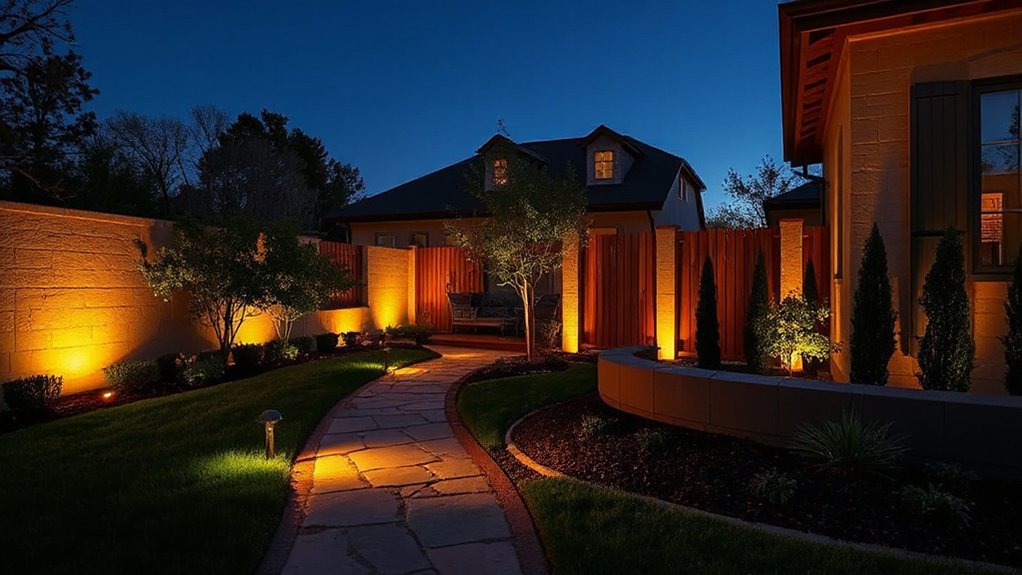

Outdoor lighting can transform your curb by guiding footsteps, highlighting textures, and adding warmth after dark. You’ll want a layered approach—path, accent, and boundary lighting—paired with energy-smart LEDs and simple controls. Match fixtures to your home’s style, plan for maintenance, and leave room to tweak as seasons change. Start with a practical layout and steady your plan with real-world tweaks; the next steps reveal exactly how to implement it.
Set the Stage: Why Outdoor Lighting Elevates Nighttime Curb Appeal
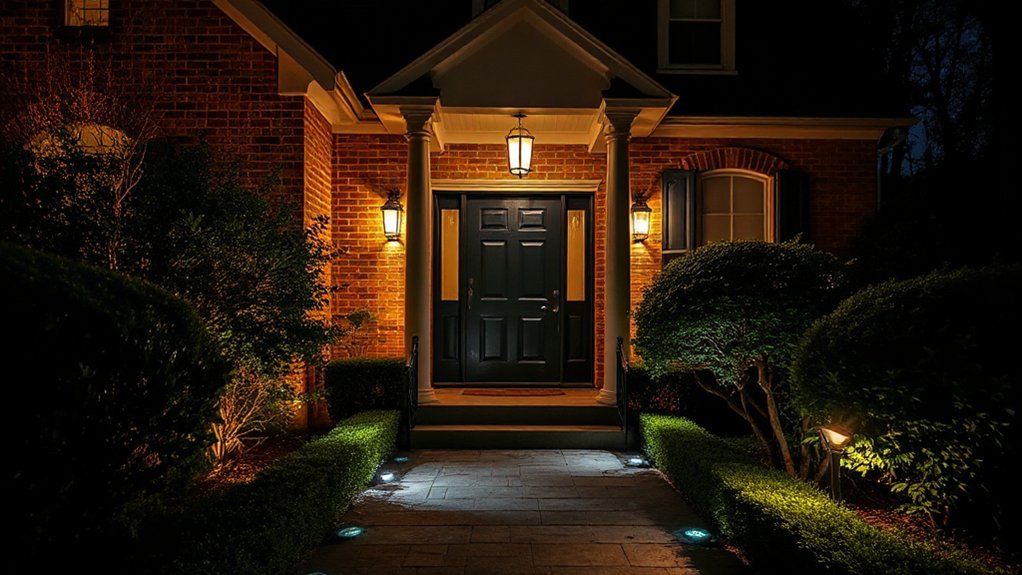
Outdoor lighting isn’t just about visibility; it’s about creating a welcoming, secure first impression that lasts after dark. You’ll see how lighting frames your home’s architecture, guiding visitors with confidence and reducing mystery at entryways.
When you plan for garden aesthetics, you emphasize form, texture, and color contrasts that highlight landscape features without glare. Practical placement matters: low glare fixtures near walkways, focal accents on key trees, and ambient glow to soften shadowed corners.
Address safety considerations by outlining clear paths, ensuring even illumination, and minimizing dark spots where trips could occur. By prioritizing warmth, balance, and function, your curb appeal becomes memorable yet understated.
You gain curbside confidence, improved security, and an inviting, polished nighttime presentation.
Plan Layered Lighting: Path, Accent, and Boundary in Practice
To bring your curb appeal to life after dark, plan a layered lighting scheme that coordinates path, accent, and boundary lighting. A practical layout guides visitors along garden pathways, highlights feature accents, and defines edges for safety.
Start with low-level path lights that lead the eye and set rhythm. Add targeted accents to draw attention to architectural details or specimen trees. Conclude with boundary lighting to create a clear perimeter without glare. Keep consistent color temperature and beam angles to avoid visual clash. Test at dusk to confirm brightness feels welcoming, not harsh.
- Map routes and focal points, aligning path lights with walkways and garden beds.
- Place accent fixtures near textures, plant silhouettes, or architectural features for depth.
- Use boundary lighting to illuminate edges while preserving dark sky ambiance.
Choose Energy-Smart Fixtures and Simple Controls
Choosing energy-smart fixtures and simple controls saves power without sacrificing warmth or usability. You’ll start by selecting LED fixtures with high efficacy and long life, cutting energy use while maintaining glow.
Lean toward solar options for low installation impact and reliability in sunny climates; even with battery storage, they reduce grid demand.
Pair your lights with smart sensors that detect movement or ambient light, guaranteeing illumination only when and where you need it.
Opt for dimmable options to adjust brightness for different evenings and tasks, enhancing ambience without waste.
Keep controls intuitive: programmable schedules, gradual ramping, and scene presets simplify daily routines.
Regularly test sensors and replace aging drivers to sustain performance and ensure you meet curb appeal goals efficiently.
Match Fixtures to Your Architecture: Exterior Styles and Garden Vibes
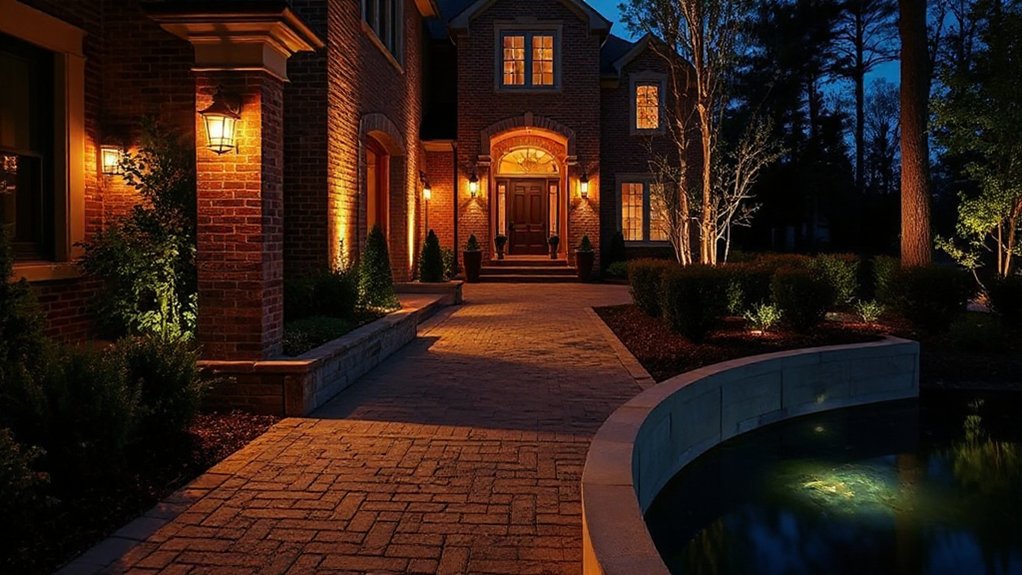
If your home’s architecture defines its mood, let your exterior lighting echo that same language—without overpowering it. You’ll align fixtures with architectural lines and materials, creating a cohesive night silhouette that reinforces character rather than competing with it.
Focus on proportional scales, matte finishes, and warm temperatures to preserve Architectural harmony while highlighting textures.
For garden zones, choose low-profile fixtures that blend with pathways and borders, supporting Garden aesthetics without stealing the spotlight.
Aim for layered lighting—downlights for entries, grazing lights for walls, and subtle uplights to accent trees.
- Match fixture scale to façade elements for balanced proportions
- Use warm, consistent color temperatures to reinforce harmony
- Place garden lights to guide paths and reveal plant structure without glare
Budget, DIY Tips, and Maintenance for Easy, Lasting Results
Budget-friendly, DIY-leaning planning starts with a simple, practical plan that respects your architecture and garden zones. Start with a lighting map: mark focal points, paths, and entryways, then assign zones for sunny, shaded, and damp spots.
Choose cost effective solutions like LED fixtures, low-voltage systems, and solar accents for off-grid areas. Prioritize wiring safety and weatherproof ratings, and consolidate wiring runs to reduce install time.
For DIY maintenance tips, schedule seasonal checks: clean lenses, tighten connections, and replace bulbs promptly. Use spray-on camera-friendly detailing to hide cords behind trim or mulch.
Document changes with photos and notes to guide future updates. Reassess after major seasons, adjusting brightness and timers to balance curb appeal with energy efficiency.
Frequently Asked Questions
How Can Zoning Laws Affect Outdoor Lighting Installations?
Zoning restrictions can limit fixture types, heights, and brightness, requiring you to choose compliant designs. Check lighting regulations for permitted hours and shielding. Plan with permits in mind, document setbacks, and coordinate with neighbors to avoid conflicts.
What Maintenance Schedule Keeps Fixtures Performing Best?
Anecdotally, like a lighthouse keeper’s clock, you’ll maximize fixture longevity by a consistent schedule: inspect monthly, clean lenses quarterly, test sensors annually, and replace bulbs before failure. Schedule bulb replacement and maintenance in spring for ideal fixture longevity.
Which Color Temperatures Suit Different Architectural Styles?
You should tailor color temperature to your architectural style: cooler temps (3500–4000K) suit modern lines, while warmer temps (2700–3000K) blend with traditional textures. This creates architectural harmony and practical, visually cohesive lighting throughout your facade.
Can Smart Controls Integrate With Existing Home Systems?
Smart integration is typically seamless with most modern systems, and you’ll enjoy smooth home compatibility. About 80% of households report fewer conflicts after upgrading controls. You can wirelessly sync, automate, and control exterior lights with confidence.
How Do Seasonal Changes Impact Lighting Design Decisions?
Seasonal changes impact you by requiring flexible lighting levels and color temperatures to match daylight variation and seasonal foliage. You’ll adjust brightness and angles, schedule shifts, and use adaptive controls to preserve visibility while enhancing curb appeal.
Conclusion
Brighten your home with a layered lighting plan that guides visitors, highlights textures, and elevates curb appeal. Use energy-efficient LEDs, smart controls, and a mix of path, accent, and boundary lights to create safety and warmth after dark. Fun fact: lighting can add up to 20% perceived value to a home’s exterior. With a practical, DIY-friendly approach and regular maintenance, you’ll enjoy effortless beauty and lasting nighttime charm without breaking the bank.