


Think of Bristol’s rental market as a busy harbor, where small upgrades can steer demand toward you. You’ll want practical tweaks that boost durability, appeal, and efficiency—without overhauling every room. Prioritize kitchen durability, energy savings, and compliant updates, then layer in smart features and inviting outdoor space to stand out. The challenge is balancing cost with impact while staying within regulations, so you’ll want a clear plan that keeps vacancies low and tenants happy—and that’s where this starts.
Assess Bristol Rental Demand: Where to Start

Evaluating Bristol rental demand starts with a clear picture of who’s renting now and what they’re looking for. You map current tenants by property type, price band, and neighborhoods with rising employment or university presence.
Next, you quantify demand indicators: vacancy rates, days-on-market, and seasonality. You assess renter priorities—proximity to transit, parking, outdoor space, and lease flexibility—to gauge which features move rents most.
Then you examine Market trends to benchmark rents, identify up-and-coming areas, and spot supply gaps. You align this with Investment strategies by testing scenarios—short-term lets versus long-term lets, rent-to-own options, and value-add opportunities.
Finally, you translate insights into a prioritised action list: where to invest, what amenities matter, and how to time renovations for max occupancy.
Kitchen Upgrades for Rentability in Bristol
Looking to boost rentability in Bristol? Your kitchen is a high-impact upgrade, so plan with market data in mind. Prioritize durable, easy-to-clean surfaces and modern storage solutions that appeal to multitasking tenants.
Install quality cabinetry with soft-close hardware and ample lighting to reduce clutter perception. Choose a neutral color palette and timeless materials, then pair with a splash of character through tasteful hardware.
Luxury fixtures can justify higher rents if they’re consistent with build quality and tenant expectations. Integrate an efficient layout that enhances workflow, especially near the fridge, sink, and hob.
Focus on aesthetics with under-cabinet lighting and a cohesive faucet set, while ensuring reliable plumbing and ventilation. Document costs, expected rent uplift, and maintenance plans for a competitive edge.
Energy-Efficient Upgrades Tenants Notice
You’ll want to outline landlord-tenant notice timelines for energy-efficiency upgrades so tenants can plan ahead and minimize disruption.
We’ll include clear calculations of potential energy savings to justify costs and set expectations.
Finally, we’ll flag compliance and regulations to keep upgrades on track and protect you from common legal pitfalls.
Tenant Notice Timelines
When planning energy-efficient upgrades, you must provide tenants with clear notice timelines that align with local regulations and lease terms. You’ll establish predictable lead times, minimize disruption, and protect legal compliance as you coordinate installations around busy periods and access windows.
- Define upfront notice periods in line with tenancy type and local rules, outlining start dates, expected duration, and access needs.
- Communicate clearly about any rent impacts, temporary relocation options, and safety considerations to satisfy tenant notice requirements and reduce disputes.
- Create a documented confirmation process, including written receipts and a contact point for questions or changes, to maintain legal compliance and build trust.
Tenant notice and legal compliance are central to smooth renovations that boost demand and keep leases attractive.
Energy Savings Calculations
Estimating energy savings is core to justifying upgrades and communicating value to tenants and investors. You’ll quantify impacts using baseline consumption, either historical utility data or standardized benchmarks, then model post-upgrade usage with conservative assumptions.
For solar panels, calculate projected solar generation, local tariffs, and net metering credits, translating output into annualized bill reductions. Compare to current energy spend to determine simple payback and internal rate of return.
For insulation improvements, estimate heat loss reductions through wall, roof, and floor areas, and apply typical U-value improvements to forecast heating demand declines. Consider occupancy patterns and appliance usage to avoid overestimating savings.
Present a transparent methodology, including sensitivity ranges for weather and occupancy, and attach a clear tenant notice outlining anticipated benefits and any uncertainties.
Compliance And Regulations
Compliance with energy-efficient upgrades isn’t optional—it’s a mandate that shapes tenant experience and value realization. You must navigate regulatory expectations while planning upgrades, ensuring operations stay compliant and marketable.
Below, focus on clear timelines, notice procedures, and documentation to reduce disputes and delays.
- Prepare Legal documentation and notices in plain language, detailing upgrade scope, impact, and expected timelines.
- Align upgrades with Safety standards, obtaining required certifications and confirming contractor qualifications.
- Communicate changes proactively to tenants, outlining access windows, compensation, and post-install maintenance responsibilities.
Bathroom Remodels That Add Lasting Value
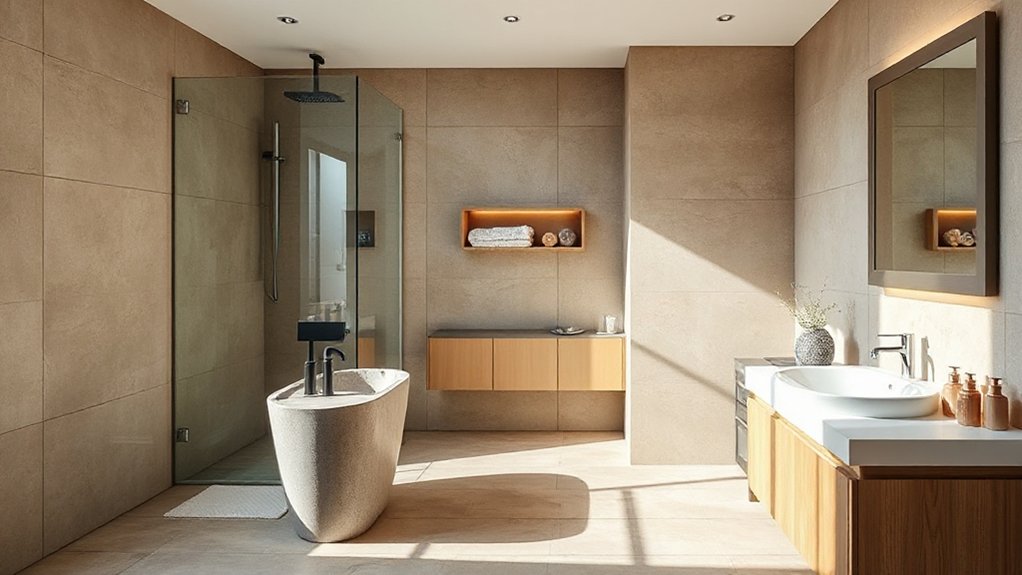
Focus on timeless style over trends to reduce upgrade churn and appeal to a broad tenant base. Prioritize efficient fixtures—low-flow toilets, LED vanity lighting, and controlled humidity options—to lower utility costs and maintenance calls.
Plan storage that minimizes clutter, like recessed niches and medicine cabinets with integrated outlets. When selecting materials, opt for eco-friendly materials that withstand moisture and heavy use.
Install luxury fixtures judiciously to signal quality without overcapitalizing. A well-executed bathroom remodel supports higher rents and quicker occupancy.
Smart Home Upgrades That Drive Demand
Smart home upgrades are a practical extension of a well-planned bathroom remodel, adding measurable rental appeal without overcapitalizing. You’ll attract tech-minded tenants while preserving simplicity and low maintenance. Focus on reliability, easy integration, and clear value.
1) Smart security features: door locks, cameras, and motion alerts installed with a simple app to monitor from anywhere.
2) Automation systems: heating, lighting, and window shades that respond to occupancy, lowering energy waste and enhancing comfort.
3) Compatibility and support: choose widely adopted platforms, offer guest modes, and provide clear user guidance for ongoing peace of mind.
Prioritize intuitive controls, strong Wi‑Fi coverage, and transparent disclosures about data use to minimize friction and maximize demand.
Communal Spaces for Shared Housing
In Bristol’s shared housing, you’ll prioritize inviting, well-sized social areas that support daily interactions without crowding.
Focus on a practical communal kitchen design that streamlines workflow, stores groceries securely, and keeps cleaning simple for varied resident schedules.
These layouts should balance sociability with privacy, maximizing occupancy appeal and rental competitiveness.
Shared Social Areas
Build flexible zones that can host work, study, and leisure, with durable furnishings and easy-clean surfaces. For tenants, reliable tech, good lighting, and climate control translate to higher satisfaction and longer tenancies.
Implement outdoor and indoor flow that minimizes friction between residents and visitors. Include visible safety features and clear signage to support a sense of security.
- Outdoor landscaping enhances curb appeal and outdoor usability
- Parking improvements streamline arrivals and reduce congestion
- Flexible furniture configurations support multiple activities and group sizes
Communal Kitchen Design
A well-designed communal kitchen is the backbone of a successful shared home in Bristol, tying together comfort, practicality, and long-term appeal. You’ll maximize demand by zoning for flow, safety, and maintenance efficiency.
Plan durable, easy-clean surfaces, with a clear prep zone, sanitation station, and ample counter space to reduce crowding during peak hours. Choose energy-efficient appliances sized for occupancy and implement smart storage to minimize clutter.
Prioritize robust ventilation and adjustable lighting to improve mood and visibility during cooking and cleanup. Integrate outdoor landscaping cues near entrances to extend dining seasons and promote socializing, while preserving indoor-visual appeal.
Align interior lighting with task and ambient layers, ensuring consistent color temperature across work zones for accurate food prep and a welcoming atmosphere.
Budget-Driven Renovation Plan: Priorities and Compliance
To maximize value on a tight budget, you’ll prioritize renovations that boost rental demand and align with local codes and market needs. A budget-driven plan focuses on compliance, efficiency, and appeal, ensuring every pound supports occupancy and revenue. You’ll balance upfront costs with long-term savings and tenant satisfaction, reducing vacancy risk.
- Prioritize essential updates (smoke detectors, battery backups, wiring) that meet Bristol’s safety standards and minimize future rework.
- Invest in durable finishes and efficient fixtures to lower operating costs and attract longer tenancies.
- Integrate clear lease provisions and tenant screening processes to streamline turnover and protect cash flow.
Key compliance moves include documented permits, energy efficiency upgrades, and accessible design. Pair these with solid Lease agreements and transparent communication to sustain demand.
Frequently Asked Questions
How Quickly Do Bristol Renters Respond to Property Photos Online?
You’ll typically get inquiries within hours after posting photos online. Use virtual tours and social media to accelerate responses, showcasing layouts, features, and neighborhood perks; respond promptly, schedule viewings quickly, and tailor messages to local renter priorities.
Which Bristol Neighborhoods Outperform Others for Rental Demand Now?
Neighborhoods like Stokes Croft and Bishopston outperform others now, you’ll notice stronger demand. You’ll price properties competitively, adjust Property pricing thoughtfully, and tighten tenant screening to attract reliable renters efficiently. It’s market-focused, practically framed, and action-oriented. Simile: like magnets.
Do Local Councils Require Planning for Common-Area Renovations?
Yes, you typically need planning for common-area renovations; you’ll engage the community and secure Renovation permits, coordinating with local council to address impact, timelines, and compliance, ensuring practical, market-focused updates that minimize disruption and maximize rental appeal.
What Lease Terms Maximize Occupancy in Bristol Market?
In Bristol, offering flexible lease terms boosts occupancy by 15% on average; you should use lease incentives and rigorous tenant screening to lock reliable occupants, minimize turnover, and tailor terms to seasonal demand while maintaining profitability.
How Do Maintenance Response Times Affect Rental Appeal?
Maintenance response times heavily impact rental appeal: quicker fixes boost Tenant satisfaction and reduce vacancy risk. You optimize by streamlined Maintenance scheduling, set clear SLAs, and communicate progress, showing tenants you’re reliable and market‑competitive.
Conclusion
You’ll see higher demand when you pair practical upgrades with savvy constraints. Upgraded kitchens and bathrooms entice tenants who value efficiency, while energy features cut costs—a win for cash flow. Yet it’s the contrast that matters: durable, timeless finishes against the quick trend of smart tech. Prioritize safety, compliance, and usable communal spaces, because a well-lit garden can outshine a glossy brochure. Balance investment with risk: plan, measure, adjust, and let market signals guide every decision.