
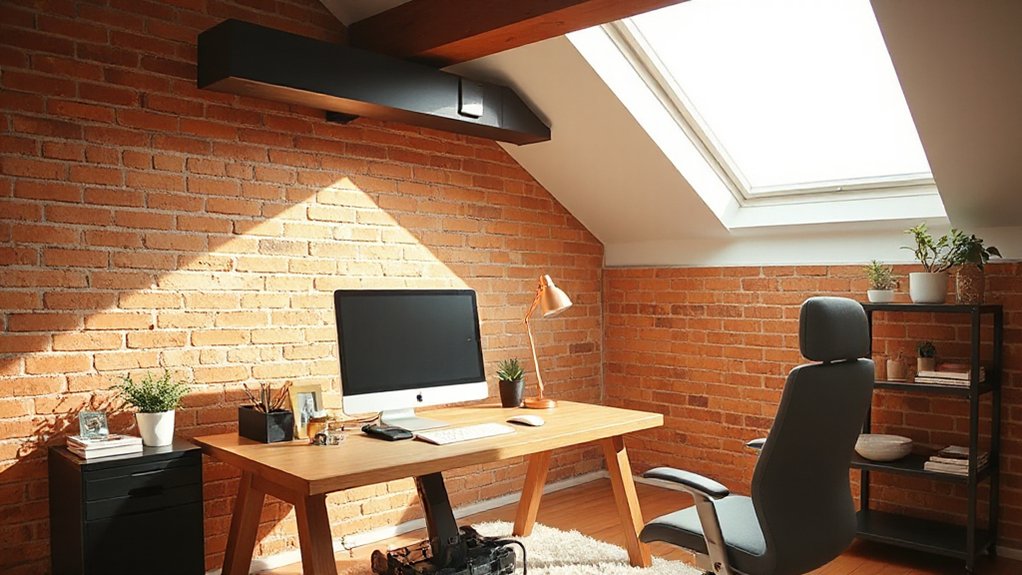

You’re converting a loft into a functional office, so start by identifying your must-haves and how you’ll zone the space for tasks, meetings, and storage. Think compact, multi-purpose furniture, diffused light, and layered lighting that avoids glare. Prioritize ergonomic comfort and sound control, weave in hidden storage, and preserve loft character with thoughtful updates. Want to balance style and efficiency while keeping routines simple and sustainable? The next steps will map out concrete choices you can implement now.
Define Loft Office Goals and Zone Your Space
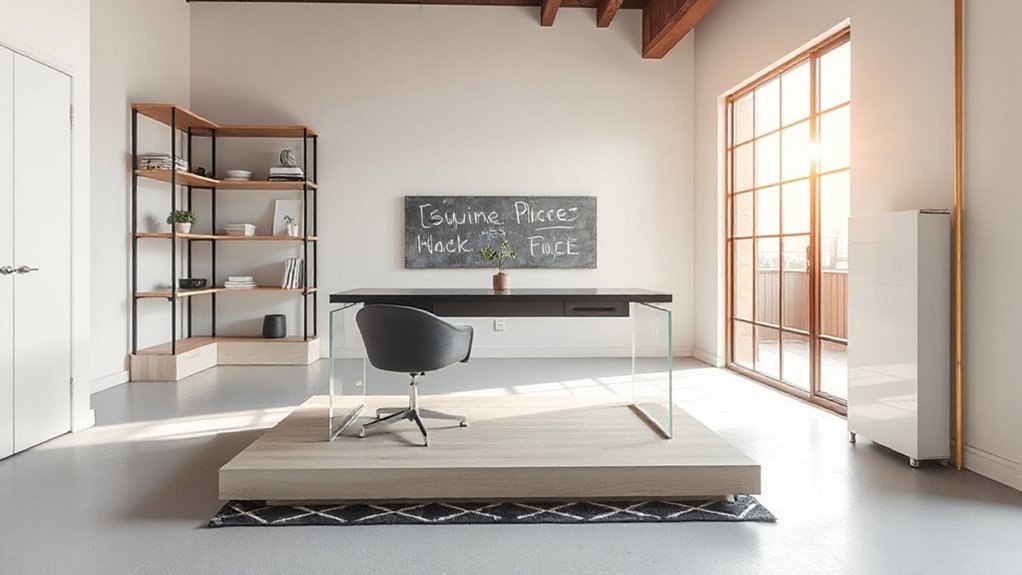
To define your loft office goals and effectively zone the space, start by clarifying what you need from your workspace: tasks, equipment, and preferred workflow. Identify core functions first: drafting, coding, meetings, or focused writing.
Map adjacency needs: printer near desk, secondary monitor, power outlets, and cable management routes. Assess work hours, noise tolerance, and preferred climate to determine zones, such as quiet task areas and occasional collaboration corners.
Consider access to ventilation and light control as you plan, since these affect comfort and productivity. Outline required Loft insulation considerations and how ventilation systems will serve multiple zones without drafts.
Create a simple, scalable layout grid, then assign each zone a specific purpose, equipment bundle, and ergonomic placement. Validate your plan against daily routines and revise as needed.
Maximize Natural Light While Avoiding Glare
Maximizing natural light while avoiding glare is about balancing brightness with comfort as you join the loft office plan. You’ll optimize layout and finishes to boost natural light without creating hot spots or eye strain.
Use window treatments that diffuse rather than block light, and position screens to reduce glare during peak sun hours. Choose materials with low reflectivity and neutral tones to maintain clarity while preventing harsh reflections.
Regularly assess daylight patterns across seasons and adjust shading as needed.
- Diffuse window coverings that soften glare without sacrificing daylight
- Matte surfaces and cool, non-reflective neutrals for accurate color rendering
- Screen placements and desk angles tuned to the sun’s path for stable illumination
Natural light meets glare reduction through deliberate, data-driven choices and ongoing tweaks.
Choose Space-Saving Furniture That Feels Spacious
When space is at a premium, choose furniture that fulfills multiple roles and fits snugly without crowding the room. Opt for space saving furniture that blends storage with seating, like ottomans with hidden compartments and sofa beds that don’t overpower walls.
Prioritize pieces with slim profiles, low height, and integrated shelves to reduce clutter. Pick a compact desk with a pull-out keyboard tray and cable-management channels to keep cords out of sight.
Use wall-mounted units or floating consoles to free floor space while preserving surface area. Choose light, neutral finishes and glass or acrylic accents to enhance a spacious feel.
Guarantee seating arrangements promote circulation, so you can move freely without avoiding the room’s focal light or window. This approach creates a spacious feel without sacrificing function.
Create an Ergonomic, Comfortable Work Setup
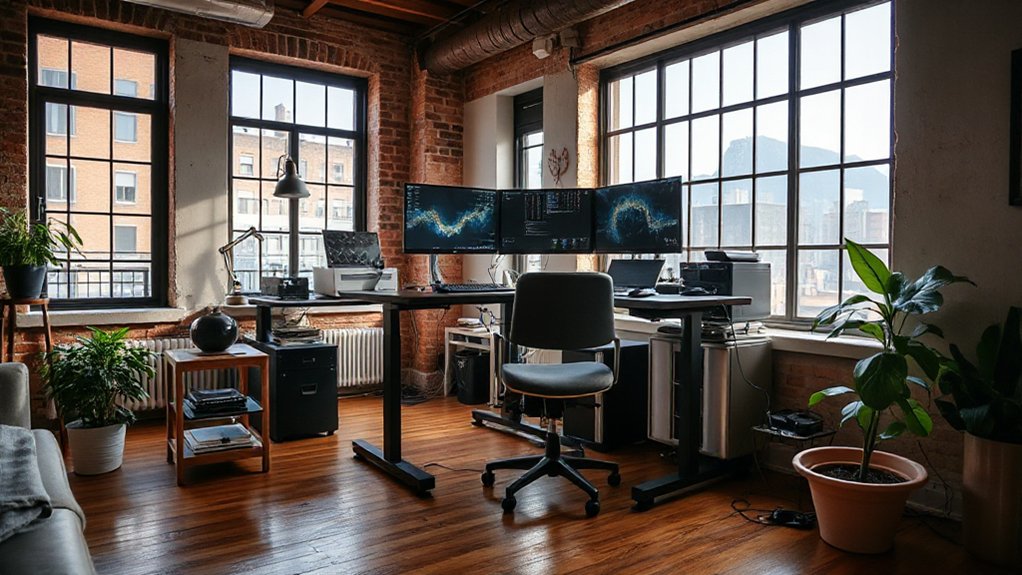
After selecting compact, multi-purpose furniture, you’ll want an ergonomic setup that supports long work sessions without crowding the space. Prioritize proper desk height, chair posture, and monitor alignment to reduce strain.
Opt for ergonomic accessories like a keyboard tray, a lumbar-support pillow, and a footrest to tailor support to your body.
Guarantee comfortable seating with adjustable armrests and a seat depth that keeps feet flat on the floor.
Arrange cables neatly for smooth movement and safety.
Position the monitor at eye level, about an arm’s length away, to prevent neck strain.
Use task lighting that minimizes glare and shadows.
- Ergonomic accessories
- Comfortable seating
- Cable management tips
Build Acoustic Comfort: Practical Sound Tweaks
To reduce echo and distractions in your loft workspace, start with a targeted sound plan: treat walls, floor, and ceiling surfaces to absorb or diffuse reflections, and add soft materials that dampen high-frequency noise.
Begin with acoustic wall panels at primary reflection points, such as behind your monitor and along side walls, to reduce flutter echoes without overpowering the space.
Choose soundproof curtains for windows and doorways to suppress outside intrusion and mid-frequency spill.
Layer floor comfort with a dense rug or carpet squares, ensuring edges meet air barriers to limit toe-kick bounce.
For ceiling considerations, use breathable panels or diffusers to scatter sound.
Maintain balance between aesthetics and function, verifying gains with quick listening tests after each addition.
Plan Discreet, Efficient Cable Management
Discreet, efficient cable management starts with a clear plan: map every device to its power and signal needs, then route cords along walls or under furniture to keep them out of sight. You’ll group cords by function, label ports, and anticipate future additions so you don’t rework the setup later.
Use cable concealment techniques like raceways, cable covers, and under-desk channels to maintain a clean surface and safer footing. Prioritize wireless charging where possible to reduce visible cables, and choose outlets with USB-C fast-charging to minimize adapters.
Test reach, heat, and airflow after placement, then secure with cable clips and zip ties. Regularly re-evaluate as devices evolve.
- Plan, label, and group by function
- Implement raceways and under-desk channels
- Prefer wireless charging and USB-C where feasible
Pick a Focused Color Palette for Concentration

Choosing a focused color palette sets the tone for concentration in a loft workspace. Start with a neutral base—cool grays or warm beiges—that reflects light and reduces eye fatigue.
Introduce two accent colors at most, chosen for intentional color coordination: one to energize (a muted blue or green) and one to calm (a soft charcoal or taupe). Avoid high-contrast pairings that disrupt flow.
Apply colors strategically: walls set the ambiance, furniture accents highlight focal points, and accessories provide quick visual cues for tasks.
Consider color psychology to align hues with your work demands, such as cooler tones for deep focus and warmer tones for collaboration zones.
Test swatches under natural and artificial light, then refine until the palette supports steady productivity.
Preserve Loft Character While Modernizing Function
Preserve the loft’s original character while upgrading its layout and systems to meet modern needs. You’ll balance form and function by smartly integrating new essentials without erasing historic cues.
Start with a discreet mechanical plan: low-profile wiring, compact HVAC, and improved loft insulation that doesn’t crush the ceiling lines.
Choose vintage decor accents that complement existing beams and brick, avoiding heavy overhauls.
Prioritize daylight and acoustics to keep the space productive, not oppressive.
- Use period-appropriate hardware and finishes for doors, fixtures, and shelving
- Conceal modern tech in built-ins that echo traditional woodworking
- Highlight original textures (brick, timber) with selective lighting and soft, neutral tones
This approach preserves character while delivering a practical, modern workflow.
Optimize Storage Without Clutter
Think about hidden storage solutions that fit your loft’s nooks and under-eaves space, so every inch serves a purpose.
Use multi-use furniture to swap between work and storage modes without crowding the room.
Set up clutter-free zones that keep tools out of sight yet within reach.
Start with a plan that prioritizes labeled, easily accessible storage to maintain a clean, functional workflow.
Hidden Storage Solutions
Hidden storage can transform a loft office from cluttered to efficient, so start by measuring every nook under the eaves and along the walls to map out where items belong.
Prioritize hidden compartments and concealed shelving to keep surfaces clear and workflows smooth.
Install shallow, pull-out trays in knee walls for misc supplies, and hang concealed shelves behind doors to preserve desk space.
Use labeled bins that fit snugly in alcoves to minimize visual clutter.
Consider magnetic strips for small tools and a slim vertical organizer beside the desk for documents.
- Hidden compartments in wardrobe zones
- Concealed shelving behind cabinet doors
- Slim, pull-out organizers under the eaves
Multi-Use Furniture Ideas
Multi-use furniture can turn a compact loft office into a flexible, clutter-free workspace. You’ll prioritize pieces that perform double duty without stealing floor area.
Choose a convertible sofa for guests or a temporary work surface, and make certain it folds smoothly to reveal a hidden desk or tray. When selecting storage, lean on modular shelving that can be reconfigured as your needs evolve, keeping vertical space productive.
Opt for a wall-mounted desk that folds away, paired with nesting tables to minimize footprint. Consider a coffee table with integrated drawers or a raised platform to hide cables and chargers.
Control clutter with labeled bins baked into shelving units, keeping frequently used items within arm’s reach and infrequently used gear tucked neatly above. Focus on compatibility and ease of use.
Clutter-Free Zoning Tips
Ever wonder how to carve out order in a small loft without cramping style? Clutter-free zoning starts with clear zones: a dedicated desk area, a compact filing nook, and a resting alcove. Assign each zone a simple purpose, then keep decor organization tight by using uniform bins, labels, and a single color palette.
Prioritize vertical storage to free floor space and reduce clutter. Think modular shelves, under-desk drawers, and wall-mounted organizers that blend with the loft’s aesthetic.
Short routines prevent buildup—daily tidying and weekly reviews.
- Use labeled, uniform containers for papers and supplies
- Group related items near their tasks and store above eye level
- Implement a hidden charging station and cable management system
Layer Lighting for Productivity and Ambience
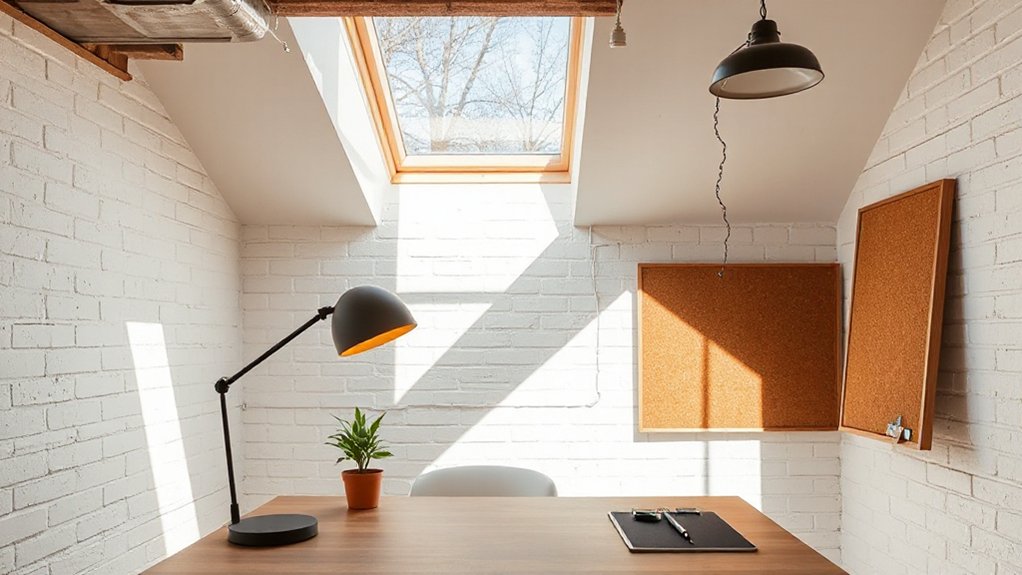
Layer lighting combines task, ambient, and accent sources to support focus and mood. You’ll assess ambient light metrics, place layered task lights for screens and desks, and set dimming zones to shift from bright work to relaxed evenings.
Start by mapping zones, selecting controllable luminaires, and testing glare, color temperature, and brightness to optimize both productivity and atmosphere.
Layered Task Lighting
- Ceiling fixtures provide broad, even coverage for general visibility and flow.
- Desk lamps target reading and precision tasks with adjustable brightness.
- Accent lights highlight architecture and reduce contrast fatigue for long sessions.
Choose color temperatures around 3000–3500K for warmth with enough punch to stay productive. Use dimmers and zones to tailor intensity, prevent shadows, and maintain comfort during different tasks. This setup supports sustained focus, reduces eye strain, and adapts to your changing workflow.
Ambient Light Metrics
Use lux meters to benchmark work surface illumination between 300 and 500 lux, and ambient levels around 150 to 250 lux for comfortable evening scenes. Track color rendering index (CRI) above 80 to preserve true hues in papers and screens.
Document bias lighting to reduce contrast fatigue on monitors. Incorporate window treatments and light diffusers to control glare and distribution, adjusting angles seasonally.
Establish a short review cycle each month to confirm targets hold under changing daylight, noting any drift and the impact of new fixtures. Keep records simple, actionable, and repeatable.
Dimming And Zoning
- Select compatible dimmers for recessed, track, and pendant lights
- Assign labeled zones for desk, seating, and storage areas
- Pair dimming with color temperature shifts for focus or calm
This approach streamlines mood shifts, boosts productivity, and minimizes eye strain.
Personalize Your Loft Office With Sustainable Habits
To personalize your loft office sustainably, start by aligning your habits with daily workflow choices that reduce waste and energy use—without sacrificing comfort or productivity. Commit to a routine that minimizes disposable items: use durable, refillable supplies, and select energy-efficient devices with sleep modes.
Keep a compact recycling bin labeled recycling paper to guarantee correct disposal, and place a separate bag for composting waste near the desk to handle coffee grounds and food scraps.
Optimize light and temperature with smart controls, and power down equipment after meetings.
Create a weekly review to prune unused cables and unused paper, shifting toward digital notes where practical.
Track progress with simple metrics, like energy bills and trash volume, adjusting practices as needed for ongoing efficiency.
Frequently Asked Questions
How Can I Maximize Vertical Space in a Loft Office?
Maximize vertical space by using tall shelving, wall-mounted cabinets, and pegboards. Install floating desks with shallow depth, use fold-away or drop-down desks, and place storage solutions up high. Choose lighting options that minimize shadows and glare.
What Budget-Friendly Insulation Reduces Glare and Noise?
Affordable insulation options include lightweight mineral wool or recycled denim batts, plus acoustic panels. You’ll reduce glare with matte finishes and noise with door seals. Choose noise reducing materials, install seals, and layer insulation for budget-friendly comfort and efficiency.
Which Compact Desks Fit Angled Ceiling Spaces Best?
You’ll want compact desks with angled clearance, and adjustable legs to fit sloped ceilings. Choose convertible furniture that tucks neatly when not in use, and ergonomic designs that position monitor height and keyboard reach for long work sessions.
How Do I Control Humidity for Electronics in a Loft?
Humidity control matters; keep your loft electronics safe. You’ll use a dehumidifier, monitor with a hygrometer, and maintain 40–60% RH. Guarantee proper ventilation, avoid heat spikes, and unplug devices during extreme moisture for electronic safety.
What Are Easy Color Schemes With Low Maintenance?
You’ll want easy, low-maintenance color schemes like neutrals or muted blues, because color psychology guides calm focus, and paint durability keeps spaces tidy; pick satin finishes for washability, and pair with durable accent accents for lasting impact.
Conclusion
You’ve planned, prioritized, and perfected your loft oasis. Practical, precise steps—zone your space, maximize light, choose space-saving staples, and craft ergonomic comfort—create a productive, serene workflow. Sound softly soothes, storage stays slim, and sustainable habits sustain. Layered lighting lends focus and ambiance, while character remains charmingly intact. Sustainable, stylish, and spotless, your loft office stands as a smart, scalable sanctuary: something bright, something balanced, something beautifully you. Build bold routines; bloom with disciplined, delightful daylight.